
Asking Appropriate Questions Worksheets
These worksheets strengthen students' ability to engage in meaningful dialogue across grade levels. These free, ready-to-print PDF worksheets are designed for immediate classroom use in advisory, SEL lessons, or academic discussions. Students build skills in inquiry, tone awareness, empathy, clarification, and topic relevance.
About This Collection of Worksheets
Asking appropriate questions is foundational to collaborative discussion, critical thinking, and academic success across K-12 grade bands. Students must learn to clarify ideas, stay on topic, adjust tone, and deepen inquiry in ways that align with Common Core Speaking and Listening standards. These worksheets support developmental progression from identifying relevant questions to generating layered, higher-order inquiry suitable for structured academic dialogue.
This collection works well in advisory periods, social-emotional learning lessons, debate preparation, literacy discussions, and classroom norm-setting activities. Teachers can use the worksheets for whole-group modeling, partner practice, small-group intervention, or reflective independent work. They also provide practical reinforcement for digital citizenship, respectful peer collaboration, and conflict resolution skills.
Each worksheet features a clear, organized layout with straightforward directions and space for written responses. The printable PDF format ensures easy implementation with minimal preparation and clean classroom copies. Designed for flexibility across grade levels, these resources support both structured analysis and authentic discussion practice.
Paul’s Teacher Tip
Strong discussions don’t just happen-students need to be taught how to ask better questions. Model this by turning student comments into questions (e.g., “You said it was hard-what made it challenging?”). Post simple question stems like “Can you explain…?” or “What do you mean by…?” to support students during conversations. Over time, this helps shift talk from surface-level answers to deeper thinking and real dialogue.
Worksheet Collection Skill Spotlights
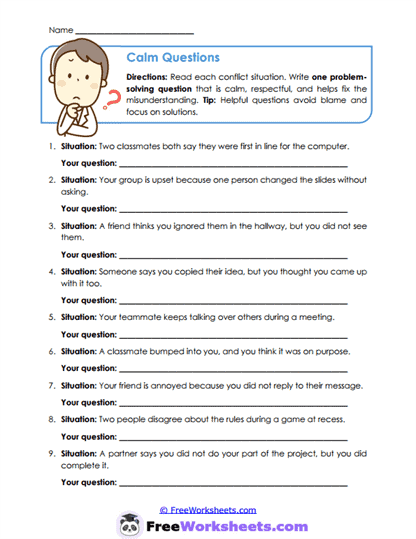
Calm Questions
• What Kids Do – Students read conflict scenarios and write calm, respectful questions to address the issue.
• Target Skill – Builds constructive questioning for conflict resolution.
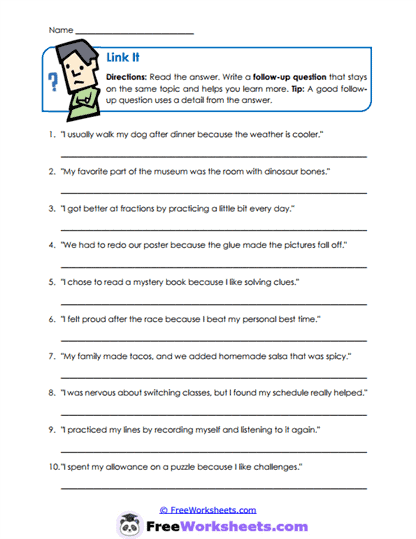
Clarify It
• What Kids Do – Students read vague statements and write questions to get more information.
• Target Skill – Develops ability to ask clear, clarifying questions.
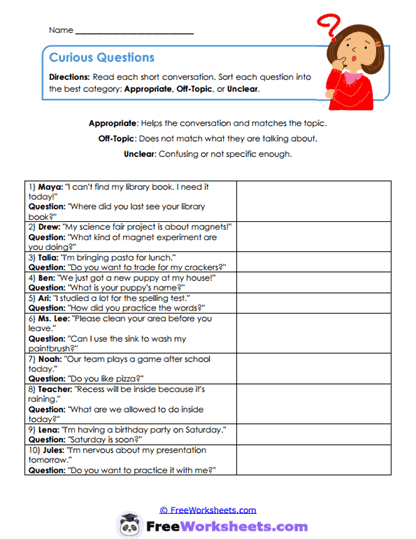
Curious Questions
• What Kids Do – Students evaluate questions as appropriate, off-topic, or unclear.
• Target Skill – Builds understanding of relevant and meaningful questions.
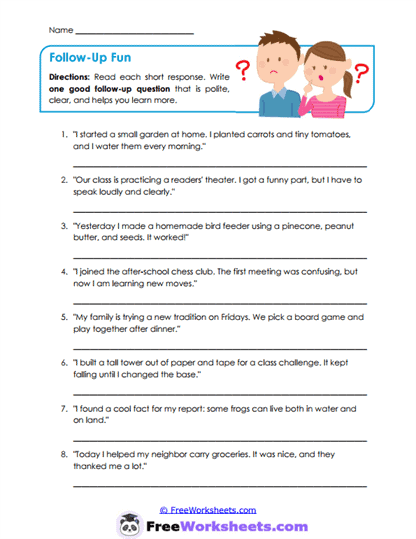
Follow-Up Fun
• What Kids Do – Students write follow-up questions based on a given statement.
• Target Skill – Develops ability to extend conversations with on-topic questions.
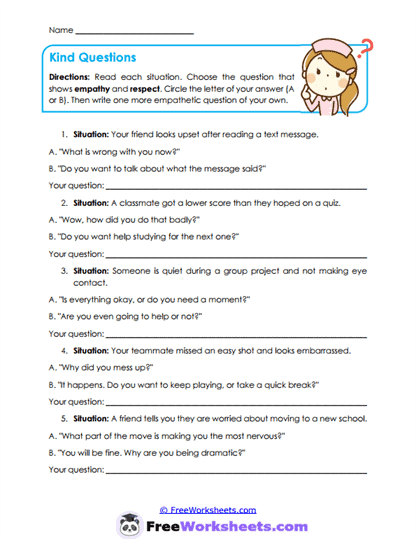
Kind Questions
• What Kids Do – Students choose and create questions that show empathy and kindness.
• Target Skill – Builds respectful and emotionally aware communication.
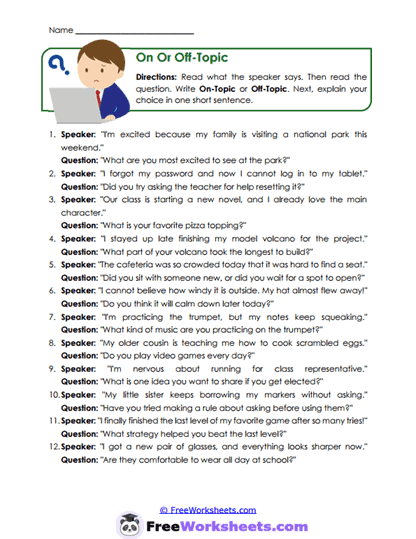
On Or Off-Topic
• What Kids Do – Students decide whether questions connect to the topic and explain why.
• Target Skill – Develops topic awareness and conversation focus.
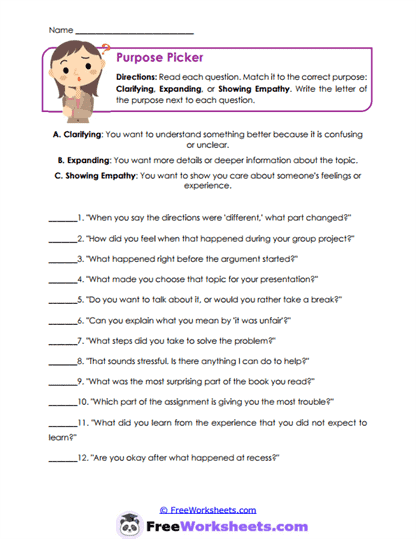
Purpose Picker
• What Kids Do – Students match questions to their purpose (clarify, expand, empathize).
• Target Skill – Builds understanding of why questions are asked.
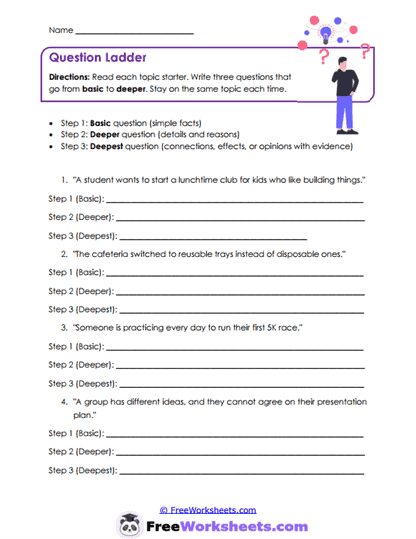
Question Ladder
• What Kids Do – Students create a series of questions that go from basic to deeper thinking.
• Target Skill – Develops higher-order questioning skills.
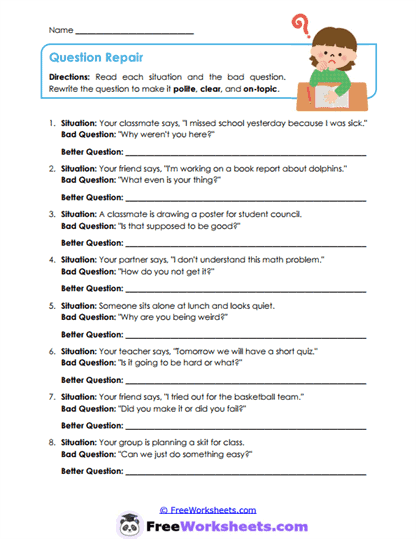
Question Repair
• What Kids Do – Students rewrite unclear or rude questions to make them polite and clear.
• Target Skill – Builds clarity and respectful communication.
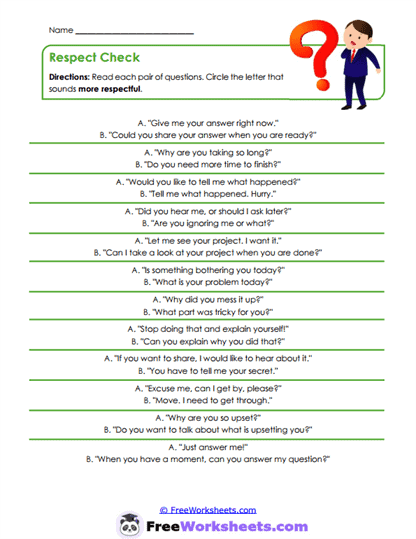
Respect Check
• What Kids Do – Students choose the more polite question between two options.
• Target Skill – Develops awareness of respectful tone.
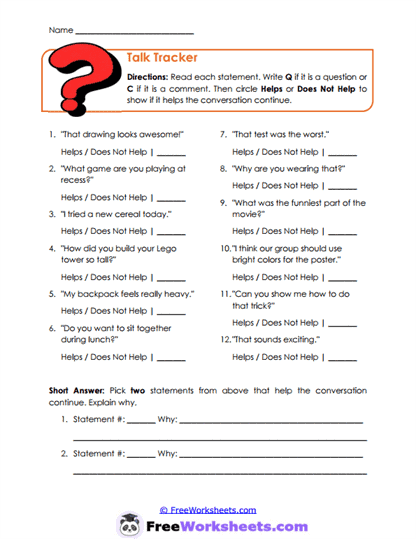
Talk Tracker
• What Kids Do – Students evaluate whether comments or questions help continue a conversation.
• Target Skill – Builds understanding of productive discussion behaviors.
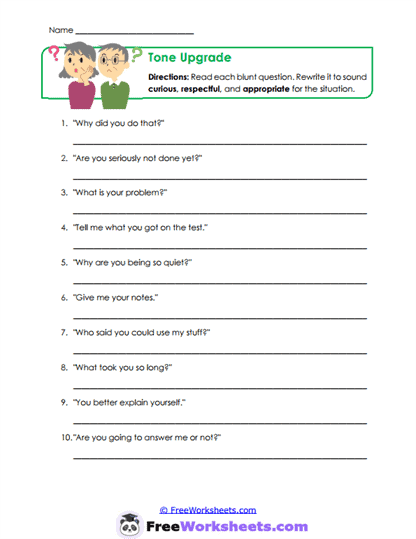
Tone Upgrade
• What Kids Do – Students rewrite blunt or harsh questions to sound more respectful and thoughtful.
• Target Skill – Develops tone awareness and positive communication.