
Speaking With Confidence Worksheets
A collection of worksheets that help students develop clear, confident communication in discussions and presentations. These free, ready-to-print PDF format activities are designed for immediate classroom use or at-home practice. Students strengthen skills like voice clarity, body language, and organized speaking aligned to key speaking and listening standards.
About This Collection of Worksheets
This collection helps students understand that confidence in speaking is a skill they can learn and practice over time. Each worksheet focuses on a different part of confident communication, including voice, posture, pacing, and word choice. Students begin to recognize how both verbal and nonverbal behaviors affect how their message is received.
Through engaging activities, students practice identifying strong speaking habits, improving weak ones, and applying strategies in real situations. They explore how to speak clearly, respond thoughtfully, and stay calm even when they feel nervous. These experiences help students build both skill and confidence in a supportive way.
Teachers and parents will find these worksheets helpful for building both communication and social-emotional skills. The flexible format supports independent practice, partner work, and guided discussion. Together, these activities help students become more confident, prepared, and effective speakers.
Paul’s Teacher Tip
Confidence in speaking grows with practice, not perfection. I always tell students to focus on one small goal at a time-maybe today it’s eye contact, tomorrow it’s speaking a little louder. Modeling helps a lot, especially when you show both a nervous version and a confident version of the same response. Give students simple tools like sentence starters or a short pause before speaking to help them feel more in control. Also, celebrate effort, not just performance-students need to know trying matters. Over time, those small wins really build strong, confident speakers.
Worksheet Collection Skill Spotlights
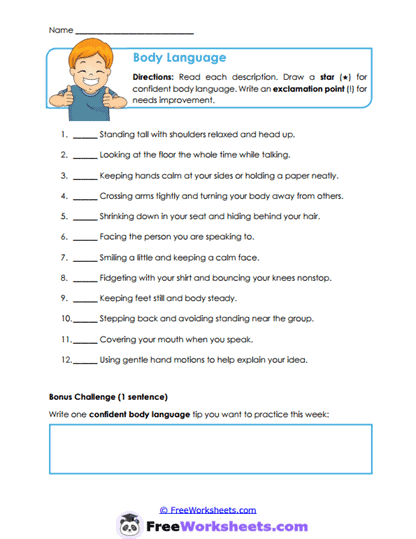
Body Language
- What Kids Do:
Students read descriptions of different physical behaviors and decide which ones show confidence. They reflect on posture, movement, and facial expressions, and consider how these signals affect how others understand them. - Target Skill:
This activity builds awareness of nonverbal communication. Students learn how body language supports confident speaking and effective participation in conversations.
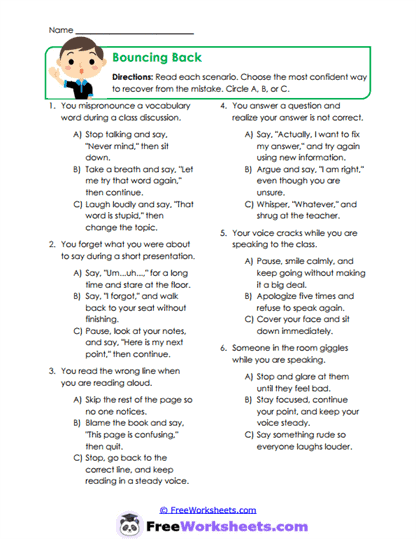
Bouncing Back
- What Kids Do:
Students read situations where something goes wrong while speaking and choose the most confident response. They practice staying calm and continuing instead of giving up. - Target Skill:
This worksheet strengthens resilience and self-confidence. Students learn how to recover from mistakes and keep communicating effectively in discussions.
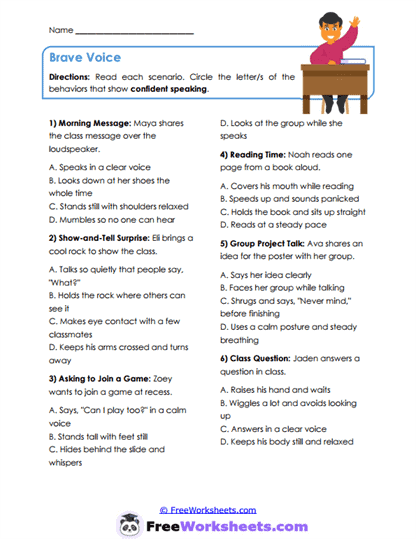
Brave Voice
- What Kids Do:
Students analyze short scenarios and identify which behaviors show confident speaking, such as clear voice, steady pace, and eye contact. They compare effective and ineffective habits. - Target Skill:
This activity develops awareness of strong speaking behaviors. Students learn how voice and body language work together to improve communication.
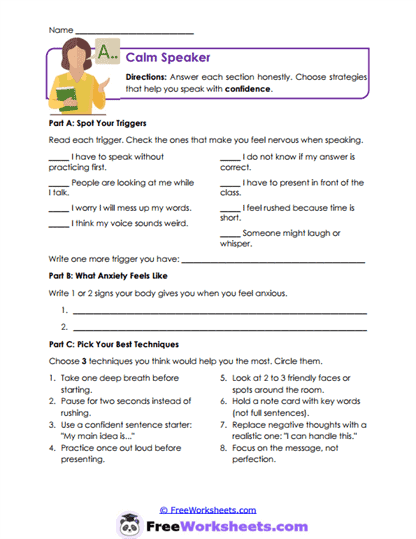
Calm Speaker
- What Kids Do:
Students read scenarios about feeling nervous and choose strategies to stay calm while speaking. They reflect on which techniques they can use in real situations. - Target Skill:
This worksheet builds self-regulation and confidence. Students learn practical ways to manage nervousness and speak clearly.
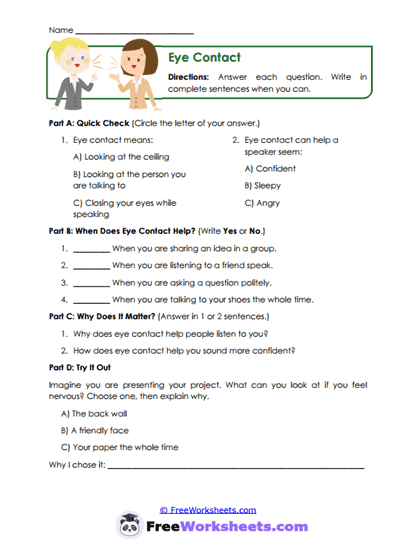
Eye Contact
- What Kids Do:
Students answer questions about when and why eye contact is important. They reflect on how it helps show attention and confidence during conversations. - Target Skill:
This activity strengthens nonverbal communication skills. Students learn how eye contact supports clear and respectful interaction.
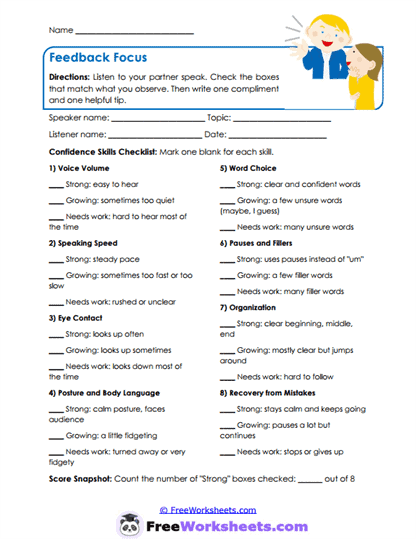
Feedback Focus
- What Kids Do:
Students observe a partner’s speaking and complete a checklist of communication skills. They write one compliment and one helpful suggestion. - Target Skill:
This worksheet builds listening and feedback skills. Students learn to give specific, respectful feedback that supports improvement.
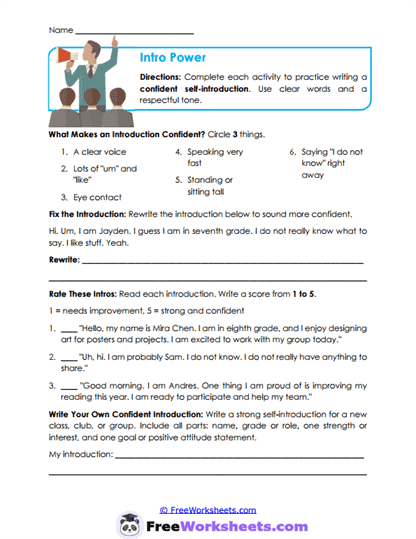
Intro Power
- What Kids Do:
Students evaluate sample introductions and rewrite them to sound more confident. They then create their own clear and strong self-introduction. - Target Skill:
This activity develops structured speaking and presentation skills. Students learn how to introduce themselves clearly and confidently.
Presentation Practice
- What Kids Do:
Students plan a short presentation by organizing key points and thinking about delivery. They reflect on how they will speak clearly and confidently. - Target Skill:
This worksheet supports organization and preparation skills. Students learn how planning leads to more confident and effective speaking.
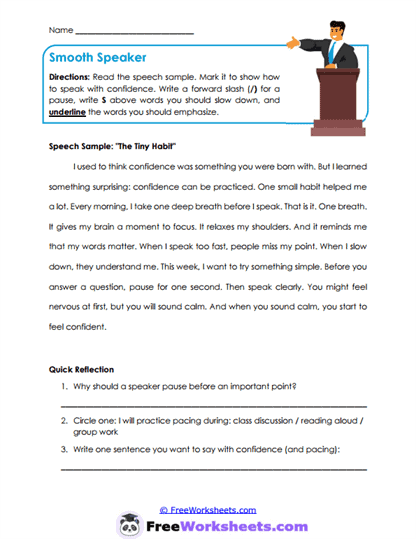
Smooth Speaker
- What Kids Do:
Students read a sample speech and mark where to pause and emphasize words. They reflect on how pacing affects understanding. - Target Skill:
This activity builds fluency and delivery skills. Students learn to use pacing, pauses, and emphasis to improve clarity.
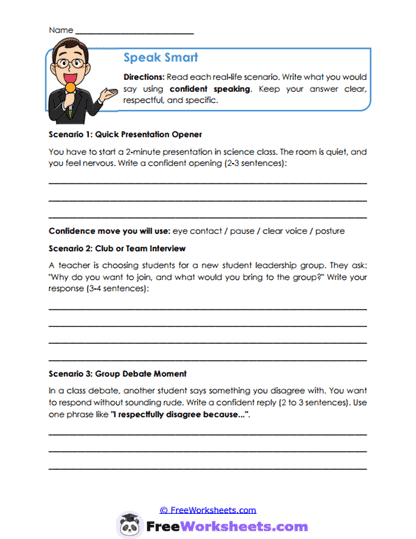
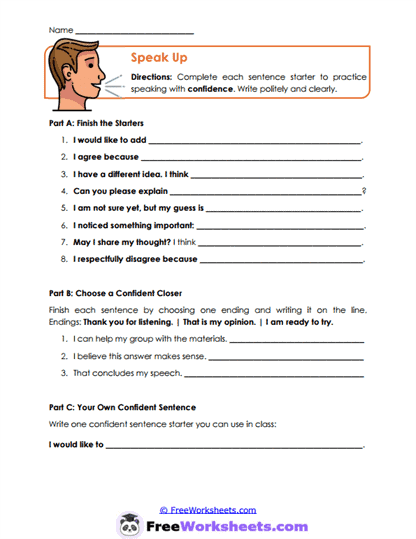
Speak Up
- What Kids Do:
Students complete sentence starters and practice writing confident responses for class discussions. They also create their own sentence starters. - Target Skill:
This worksheet strengthens participation and expression skills. Students learn how to begin speaking clearly and confidently in group settings.
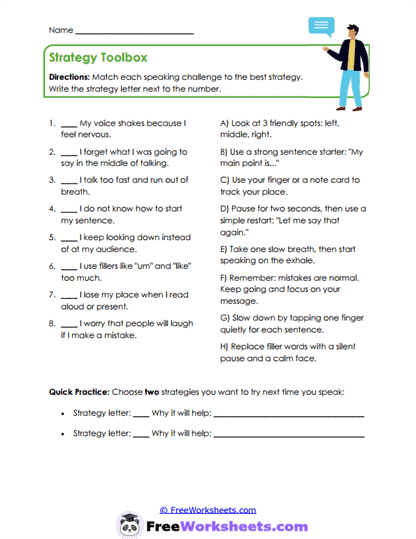
Strategy Toolbox
- What Kids Do:
Students match common speaking challenges with helpful strategies. They reflect on which strategies they can use to improve their own speaking. - Target Skill:
This activity develops problem-solving and self-awareness. Students learn practical ways to build confidence and improve communication.
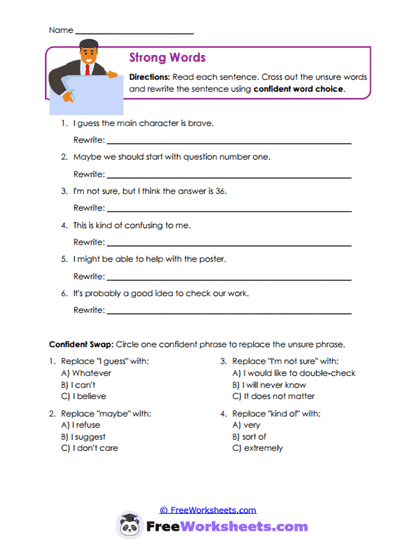
Strong Words
- What Kids Do:
Students rewrite sentences to replace unsure language with stronger, more confident wording. They focus on tone and clarity. - Target Skill:
This worksheet builds word choice and communication confidence. Students learn how language affects how their ideas are received.