
Active Listening Skills Worksheets
These worksheets help students build strong communication habits and understanding across everyday conversations. These free, ready-to-print PDF format activities are designed for immediate classroom use or at-home learning support. Students strengthen skills like paraphrasing, identifying tone, and asking clarifying questions aligned to key speaking and listening standards.
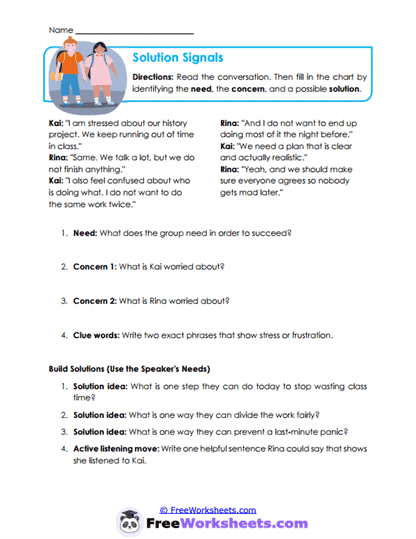
About This Collection of Worksheets
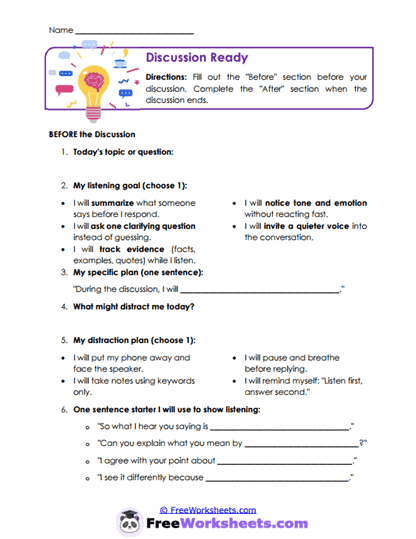
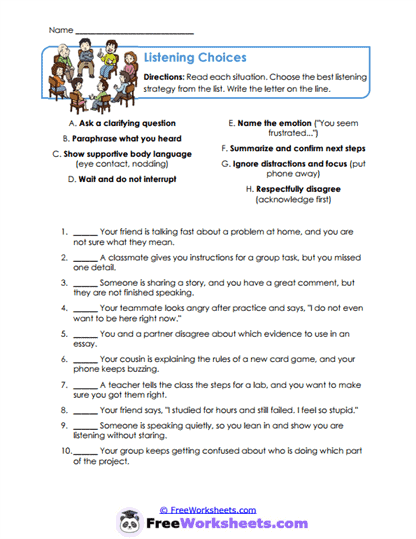
This collection focuses on helping students become thoughtful, engaged listeners in both academic and real-world settings. Each worksheet targets a different part of the listening process, from recognizing body language to summarizing key ideas after hearing information. The activities are designed to be practical, relatable, and easy for students to connect to their daily interactions.
Students work through scenarios that mirror real conversations, allowing them to practice skills they can immediately apply. Whether they are identifying distractions, rewording someone’s message, or spotting emotional tone, learners are encouraged to think carefully about how communication works. This approach helps move beyond passive hearing into active understanding.
Teachers and parents will appreciate how these worksheets support both social-emotional growth and academic development. The structure allows for independent work, partner discussions, or guided instruction. Together, these activities build confidence in speaking, listening, and responding appropriately in a wide range of situations.
Paul’s Teacher Tip
When teaching active listening, model it out loud before expecting students to do it independently. Let them hear what it sounds like to paraphrase, ask a thoughtful question, or respond with care. I’ve found that short role-play moments-just 2-3 minutes-can make a huge difference in helping kids “feel” what good listening looks like. Also, pause during discussions and ask, “What did you hear your partner say?” to reinforce accountability. Over time, this builds a classroom culture where students truly listen instead of just waiting to talk. Keep it simple, consistent, and tied to real conversations they care about.
Worksheet Collection Skill Spotlights
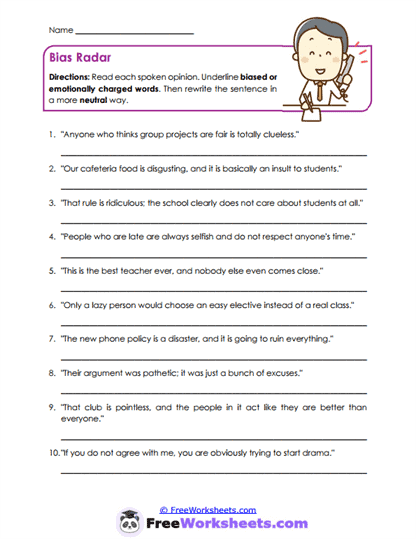
Bias Radar
- What Kids Do:
Students read opinion-based statements and closely examine the language used, identifying words that feel overly strong, emotional, or unfair. They underline these words and then rewrite each sentence in a more balanced way. This pushes them to think about tone, word choice, and how language shapes meaning in everyday communication. - Target Skill:
This activity strengthens students’ ability to evaluate arguments and recognize bias in language, aligning with skills related to analyzing claims and evidence. Learners practice revising statements to maintain meaning while improving neutrality, supporting clearer communication and critical thinking in discussions and written responses.
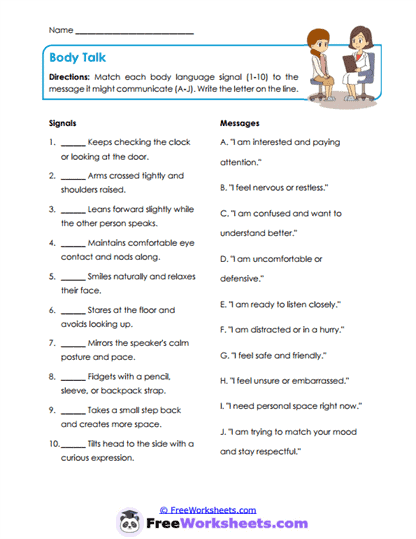
Body Talk
- What Kids Do:
Students match different body language cues, such as posture, gestures, and facial expressions, with the message those signals might send during a conversation. They analyze subtle differences between actions and consider how context changes meaning. This helps them better understand how people communicate without words. - Target Skill:
This worksheet builds awareness of nonverbal communication and supports effective participation in discussions. Students learn to interpret physical cues accurately and understand how body language contributes to meaning, improving both comprehension and their ability to respond appropriately in social interactions.
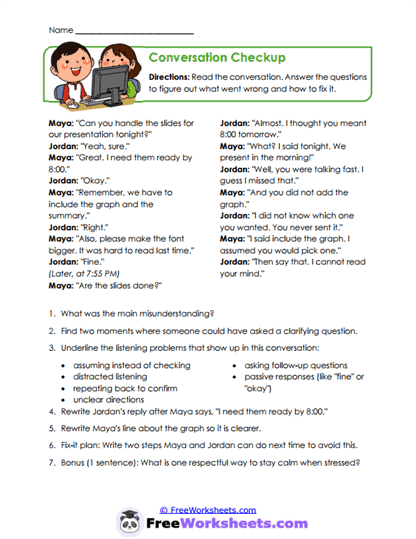
Conversation Checkup
- What Kids Do:
Students read a short dialogue between two people and identify where communication breaks down. They pinpoint misunderstandings, missed cues, or unclear statements, then suggest ways to improve the interaction. In some cases, they rewrite parts of the conversation to make it clearer and more effective. - Target Skill:
This task develops students’ ability to analyze conversations and identify breakdowns in communication. It supports skills related to collaborative discussions by helping learners recognize the importance of clarity, tone, and confirmation in building understanding during interactions.
Distraction Detectives
- What Kids Do:
Students examine short scenarios and identify distractions that interfere with listening. They decide whether each distraction is internal, like daydreaming, or external, like noise or devices. In some cases, they explain how the distraction affects the listener’s ability to understand the message. - Target Skill:
This activity builds self-awareness and focus by helping students recognize barriers to effective listening. It supports skills tied to active participation in discussions by encouraging learners to monitor their attention and reduce distractions that impact comprehension.
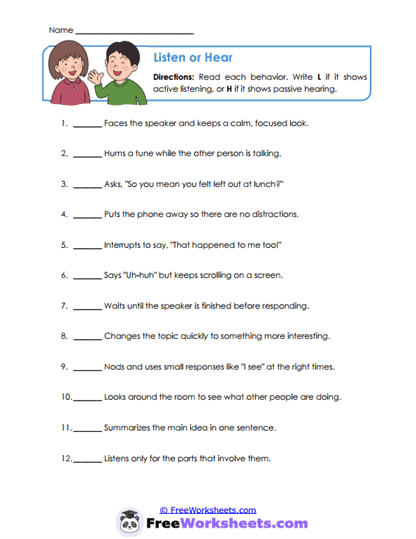
Listen or Hear
- What Kids Do:
Students read a variety of behaviors and decide whether each one shows true listening or just passive hearing. They carefully consider actions like eye contact, interruptions, or body movement, learning to distinguish between surface-level attention and genuine engagement. - Target Skill:
This worksheet strengthens understanding of active listening behaviors and supports communication skills related to collaborative discussions. Students learn to recognize what effective listening looks like, building a foundation for meaningful participation in conversations.
Listening Ladder
- What Kids Do:
Students evaluate a list of listening behaviors and rank them from least effective to most effective. They compare actions that may seem similar and justify why one shows stronger engagement than another, encouraging deeper thinking about what makes listening truly effective. - Target Skill:
This activity supports the development of advanced listening skills by helping students analyze and compare levels of engagement. It aligns with discussion participation goals by reinforcing the importance of thoughtful responses, questioning, and attentive behavior.
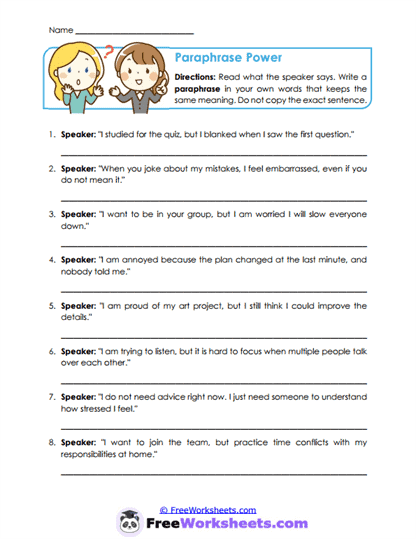
Paraphrase Power
- What Kids Do:
Students read short statements and rewrite them in their own words while keeping the original meaning intact. They must avoid copying and instead focus on understanding the idea well enough to restate it clearly using different language. - Target Skill:
This worksheet builds paraphrasing and comprehension skills, helping students interpret and explain information accurately. It supports communication goals by encouraging learners to process what they hear and respond in a clear, respectful, and meaningful way.
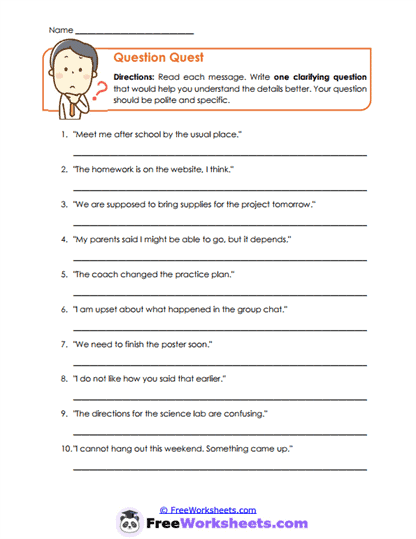
Question Quest
- What Kids Do:
Students read unclear or incomplete messages and write thoughtful questions to gather more information. They focus on being polite, specific, and helpful, making sure their questions would lead to better understanding in a real conversation. - Target Skill:
This activity strengthens the ability to ask clarifying questions, a key part of active listening. Students learn to identify missing information and respond appropriately, supporting effective participation in discussions and collaborative learning.
Quick Recap
- What Kids Do:
Students read short pieces of information and write brief summaries that capture the most important ideas. They practice leaving out unnecessary details and focusing on what matters most, helping them sharpen their listening and recall skills. - Target Skill:
This worksheet supports summarizing and comprehension skills by helping students identify main ideas and key details. It aligns with listening standards that emphasize processing and restating information clearly and concisely.
Signal Sort
- What Kids Do:
Students sort examples of listening behaviors into verbal and nonverbal categories. They analyze each example carefully, considering how both spoken responses and physical actions show engagement during a conversation. - Target Skill:
This activity builds understanding of different communication signals and supports effective participation in discussions. Students learn how both verbal and nonverbal cues contribute to active listening and meaningful interaction.
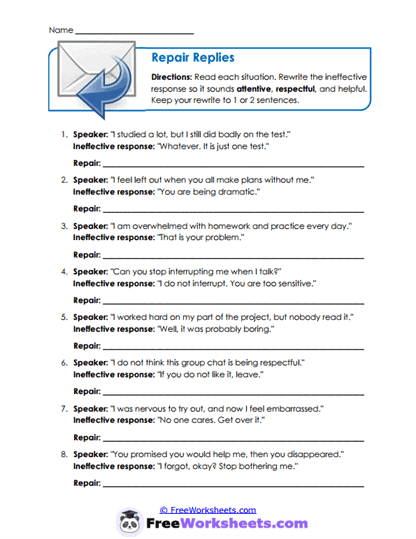
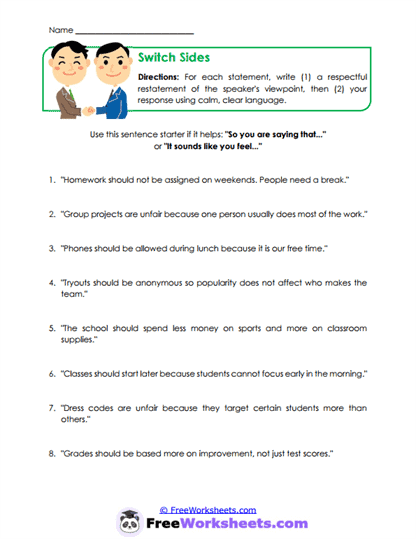
Switch Sides
- What Kids Do:
Students read opinion statements and first restate the speaker’s viewpoint to show understanding. Then they write their own response in a calm and respectful way, practicing how to disagree or agree thoughtfully. - Target Skill:
This worksheet develops perspective-taking and respectful communication skills. It supports structured discussion practices by helping students listen carefully, acknowledge others’ ideas, and respond in a clear and constructive manner.
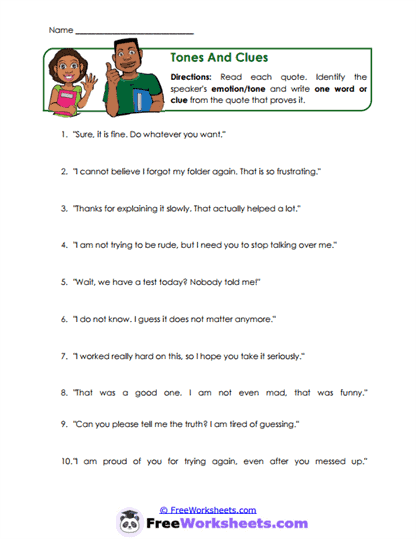
Tones And Clues
- What Kids Do:
Students read short quotes and identify the speaker’s emotion, then find a specific word or phrase that supports their choice. They practice connecting language to feeling and recognizing how tone is conveyed through word choice. - Target Skill:
This activity strengthens students’ ability to analyze tone and use evidence to support their thinking. It supports comprehension and communication skills by helping learners interpret meaning beyond literal words.