
Starting Conversations Worksheets
These worksheets help students initiate respectful, confident dialogue across social and academic settings. These free, ready-to-print PDF worksheets are designed for immediate classroom use in SEL lessons, advisory, and community-building activities. Students strengthen greeting selection, tone awareness, audience adaptation, conversational flow, and social confidence.
About This Collection of Worksheets
Starting conversations is a foundational SEL skill that supports relationship building, collaboration, and academic discussion from elementary through high school. Students must learn to adjust tone, choose appropriate greetings, consider audience, and communicate with clarity and confidence in alignment with Common Core Speaking and Listening standards. These worksheets provide a developmental progression from basic greeting selection to advanced professional and purpose-driven conversation starters.
This collection is ideal for advisory periods, morning meetings, leadership courses, digital citizenship lessons, and career readiness units. Teachers can use the activities for modeling, role-play, partner discussions, small-group social skills support, or reflective independent practice. The worksheets also serve as valuable tools for counselors and intervention groups focused on social confidence and communication growth.
Each worksheet is designed with a clean, organized layout that supports thoughtful responses and discussion. The printable PDF format ensures easy implementation with minimal preparation required. Flexible across grade levels, these resources allow educators to reinforce practical, real-world communication strategies in both academic and social contexts.
Paul’s Teacher Tip
Students don’t improve conversation skills just by reading-they need to practice out loud. After completing a worksheet, have students role-play in pairs using their revised conversation starters. Encourage feedback like “Did that sound friendly?” or “Would you want to keep talking?” This turns written practice into real-world skill building and helps students gain confidence quickly.
Worksheet Collection Skill Spotlights
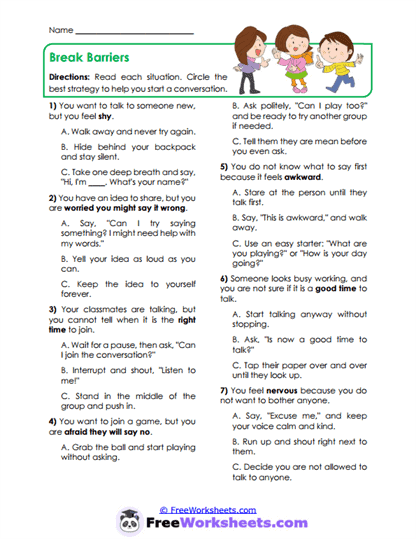
Break Barriers
• What Kids Do – Students read social scenarios and choose the best way to start a conversation.
• Target Skill – Builds confidence and strategy for initiating conversations.
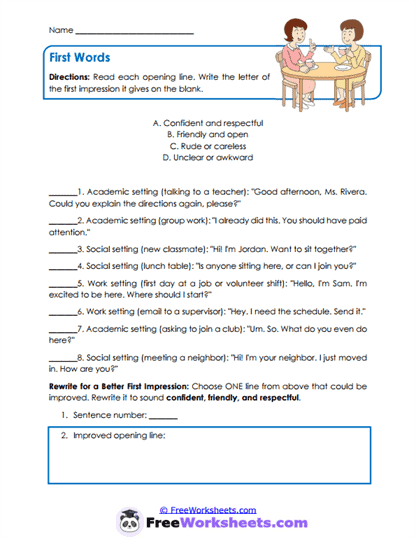
First Words
• What Kids Do – Students evaluate conversation starters and revise them to improve tone and clarity.
• Target Skill – Develops awareness of first impressions and effective openings.
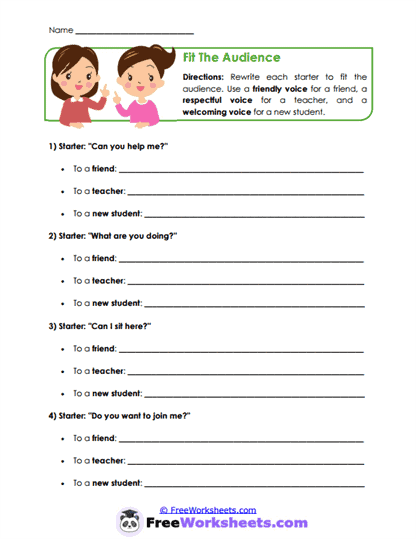
Fit The Audience
• What Kids Do – Students rewrite the same conversation starter for different audiences (friend, teacher, peer).
• Target Skill – Builds ability to adjust tone and language based on audience.
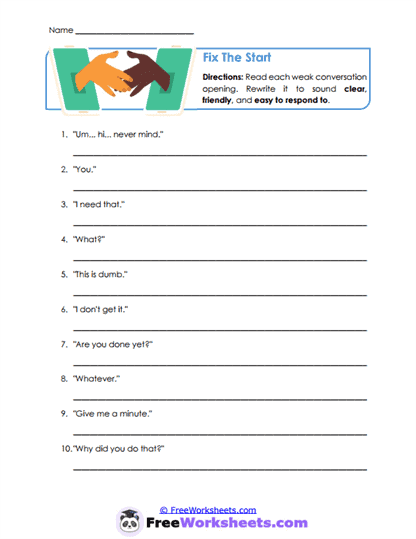
Fix The Start
• What Kids Do – Students improve weak or unclear conversation starters by rewriting them.
• Target Skill – Develops clarity, friendliness, and effective communication openings.
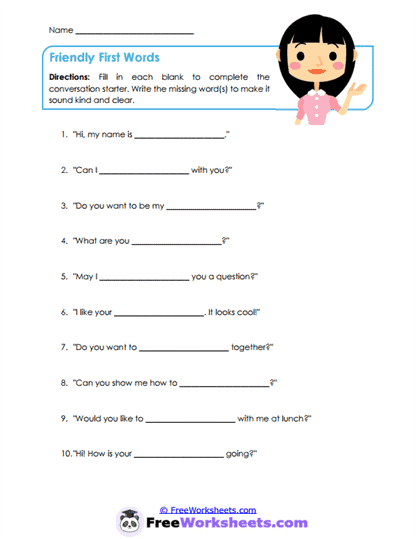
Friendly First Words
• What Kids Do – Students complete sentence starters to practice introductions and greetings.
• Target Skill – Builds confidence with polite conversation beginnings.
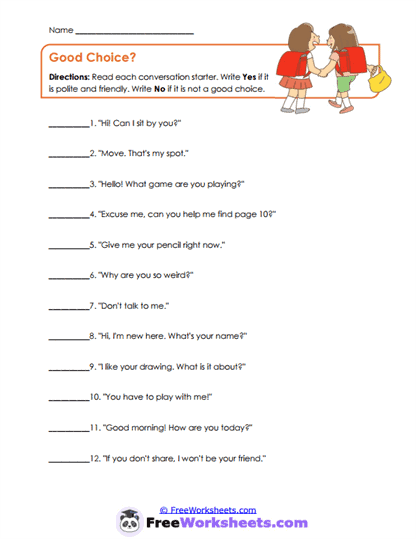
Good Choice?
• What Kids Do – Students decide whether a conversation starter is appropriate and explain why.
• Target Skill – Develops judgment of respectful and appropriate communication.
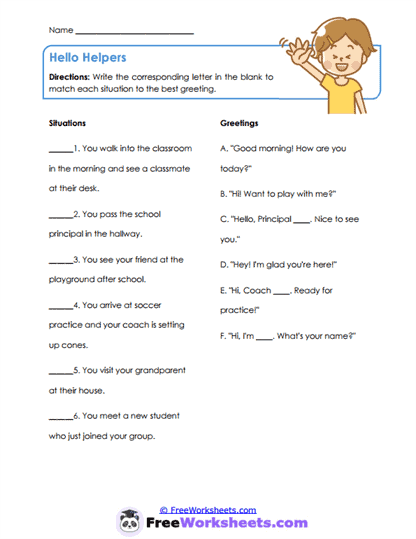
Hello Helpers
• What Kids Do – Students match greetings to different situations and people.
• Target Skill – Builds understanding of context-appropriate greetings.
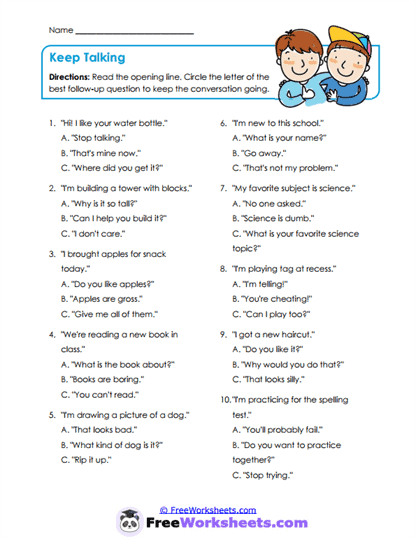
Keep Talking
• What Kids Do – Students choose responses that help continue a conversation.
• Target Skill – Develops conversation-building and engagement skills.
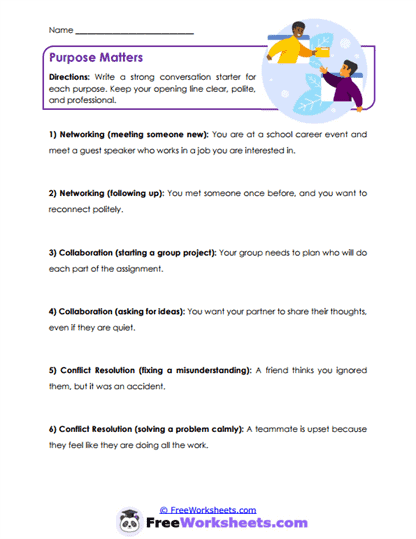
Purpose Matters
• What Kids Do – Students write conversation starters based on specific goals (help, friendship, teamwork).
• Target Skill – Builds purposeful and goal-driven communication.
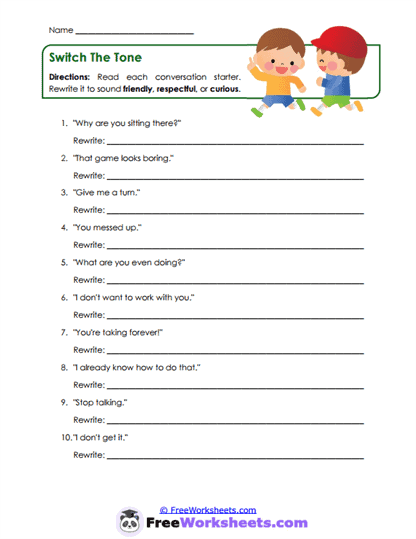
Switch The Tone
• What Kids Do – Students rewrite negative or blunt statements into friendly ones.
• Target Skill – Develops tone awareness and respectful communication.
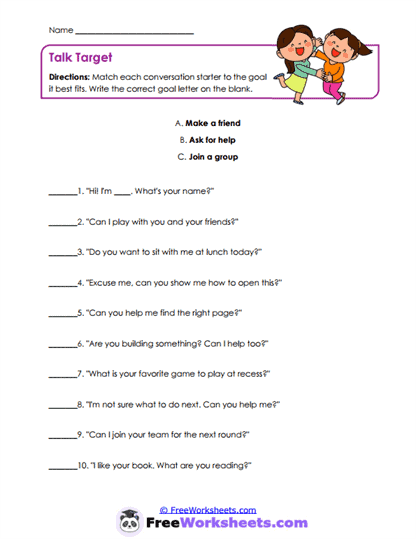
Talk Target
• What Kids Do – Students match conversation starters to their purpose (e.g., making friends, asking questions).
• Target Skill – Builds understanding of intent behind communication.
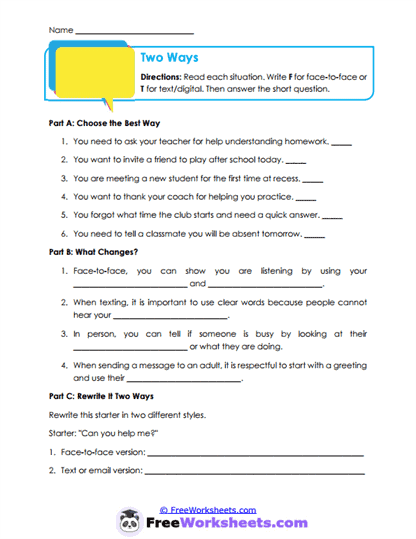
Two Ways
• What Kids Do – Students decide whether to use in-person or digital communication and rewrite starters for both.
• Target Skill – Develops adaptability across communication formats.