
Social Emotional Worksheets
This comprehensive (SEL) collection is thoughtfully designed to strengthen communication, self-awareness, relationship skills, and responsible decision-making-all while reinforcing core academic standards. Aligned with CASEL frameworks and grade-level expectations, these engaging activities build speaking, listening, critical thinking, and inquiry skills that support success across Language Arts, Math, Science, and Social Studies. By nurturing confidence, collaboration, and real-world problem-solving, this collection empowers students to grow both socially and academically.
Communication & Conversation Skills
About This Collection of Worksheets
Strong social skills are just as important as academic skills in the classroom. This Social Emotional Learning (SEL) collection helps students practice communication, emotional awareness, self-control, relationship-building, and respectful interaction through structured, age-appropriate activities.
The worksheets focus on real classroom and everyday situations that help students learn how to start conversations, ask appropriate questions, express feelings clearly, solve conflicts, and work cooperatively with others. Activities are designed to strengthen confidence, communication, and decision-making while supporting positive behavior and classroom participation.
Students practice listening skills, emotional regulation, perspective-taking, self-reflection, and problem-solving in ways that feel practical and easy to apply both at school and at home. These printable worksheets help reinforce the interpersonal skills students need for collaborative learning, peer relationships, and long-term personal growth.
Why Teachers Use This Collection
- Social skills practice activities
- Conversation starter worksheets
- Emotional regulation skill support
- Conflict resolution practice pages
- Classroom behavior reinforcement
- Group discussion skill building
- Counseling and SEL resources
- Independent reflection activities
- Low-prep printable materials
- Positive classroom culture support
Why Homeschoolers & Parents Use This Collection
- Emotional awareness skill building
- Communication practice activities
- Confidence-building social exercises
- Respect and empathy reinforcement
- Printable behavior support worksheets
- Screen-free SEL learning
- Friendship and conversation practice
- Problem-solving skill development
- Daily reflection activities
- Real-world social skill support
A Look at the Categories of Worksheets
Communication & Conversation Skills
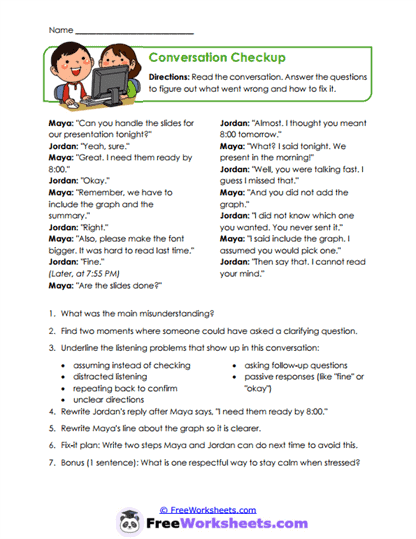
Active Listening Skills
Strong listening skills help children better understand instructions, conversations, and classroom discussions. A helpful way to practice is by asking your child to repeat back important information after a conversation or direction. These activities build active listening, attention, and social communication skills.
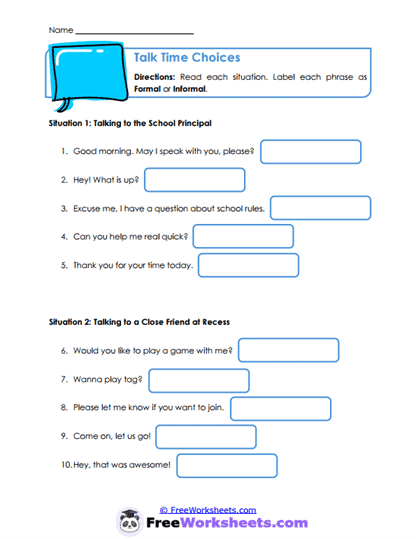
Adjusting Communication For Different Situations
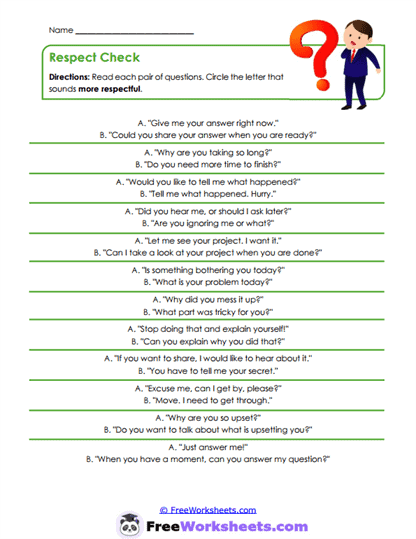
Learning to change how we speak depending on the situation helps children communicate more respectfully and effectively. Try talking about how we might speak differently to a teacher, a friend, or a grandparent to help your child understand audience awareness. These worksheets strengthen social communication, perspective-taking, and conversational flexibility.
Asking Appropriate Questions
Asking thoughtful questions helps children stay engaged and build stronger conversations with others. Encourage your child to think about questions that help them learn more instead of questions that stop the conversation. These activities support communication skills, curiosity, and social awareness.
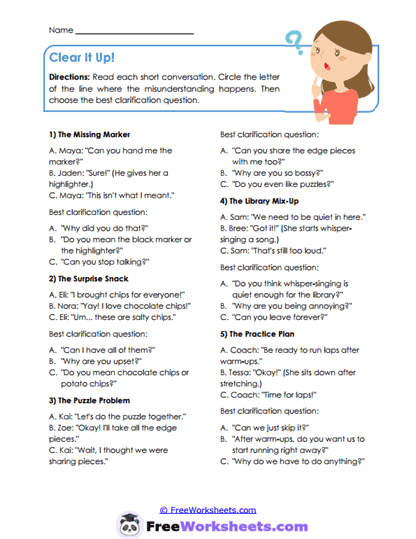
Clarifying Misunderstandings
Learning how to ask for clarification helps children handle confusion without frustration or shutting down. Practice simple phrases like “Can you explain that another way?” or “I’m not sure I understand yet.” These worksheets strengthen problem-solving, self-advocacy, and communication skills.
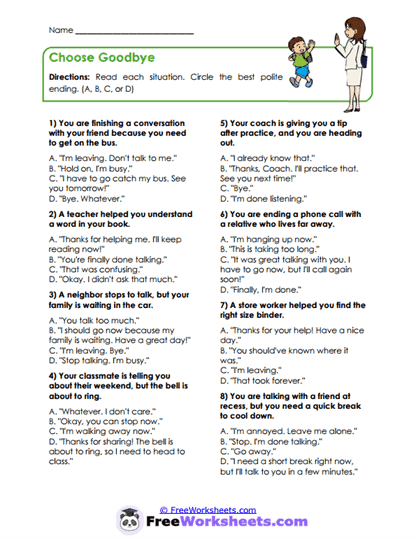
Ending Conversations Politely
Knowing how to end a conversation politely helps children build stronger social relationships and show respect to others. A simple strategy is to practice short phrases like “It was nice talking to you” or “See you later” during everyday interactions. These activities support social communication and conversational awareness.
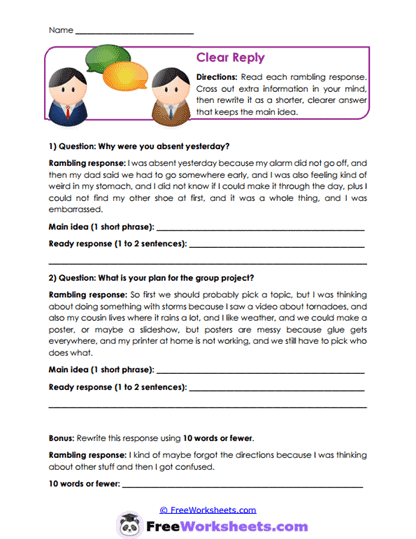
Expressing Thoughts Clearly
Being able to clearly explain ideas helps children feel more confident at school and in social situations. Encourage your child to slow down and explain their thinking step by step when answering questions or telling stories. These worksheets strengthen communication, organization, and verbal expression skills.
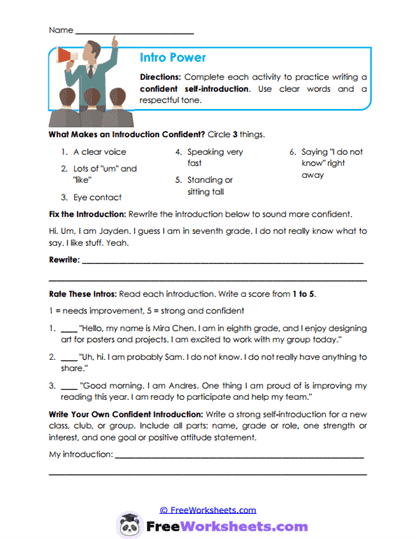
Speaking With Confidence
Speaking with confidence helps children participate more comfortably in class, conversations, and group activities. Practicing eye contact and speaking in a clear voice at home can help your child feel less nervous when talking to others. These activities build self-confidence, verbal communication, and presentation skills.
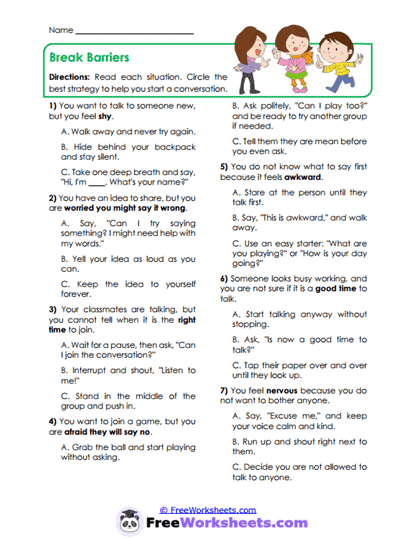
Starting Conversations
Starting conversations can feel challenging for some children, but it’s an important part of building friendships and social confidence. Practice simple conversation starters at home so your child feels more comfortable approaching others. These worksheets strengthen social interaction, communication, and relationship-building skills.
Staying On Topic
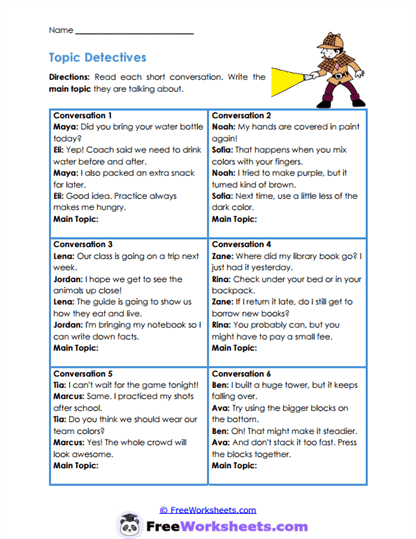
Staying on topic helps children communicate their ideas more clearly and keeps conversations easier to follow. A helpful strategy is to gently remind your child to connect their comments back to the main subject during discussions. These activities build focus, active listening, and conversational organization skills.
Taking Turns While Speaking
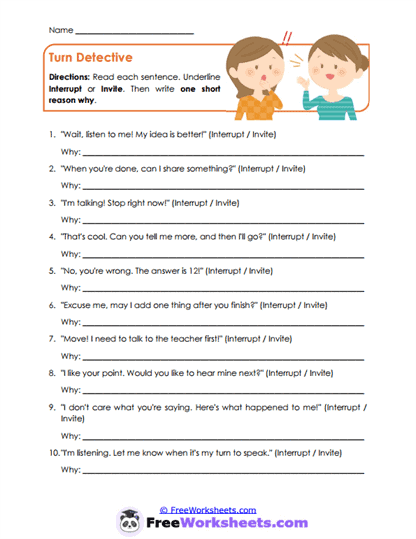
Taking turns during conversations teaches children how to listen respectfully and communicate cooperatively with others. Practice family conversations where everyone gets a chance to speak without interruptions. These worksheets strengthen patience, social awareness, and group communication skills.
Emotional Awareness & Empathy
Building Emotional Awareness
Building emotional awareness helps children notice, name, and better understand what they are feeling. A helpful way to practice is by asking your child to describe how their body feels when they are happy, nervous, frustrated, or excited. These activities strengthen self-awareness, emotional vocabulary, and self-regulation skills.
Bullying Prevention
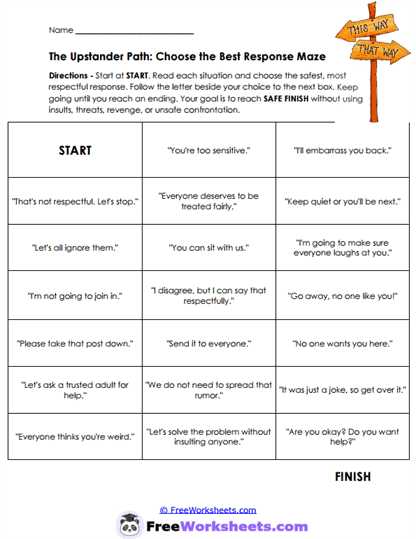
Learning about bullying helps children recognize unsafe or unkind behavior and understand how to respond appropriately. Talk through simple situations together and discuss when to speak up, walk away, or ask a trusted adult for help. These worksheets support personal safety, empathy, assertiveness, and responsible decision-making.
Expressing Emotions Appropriately
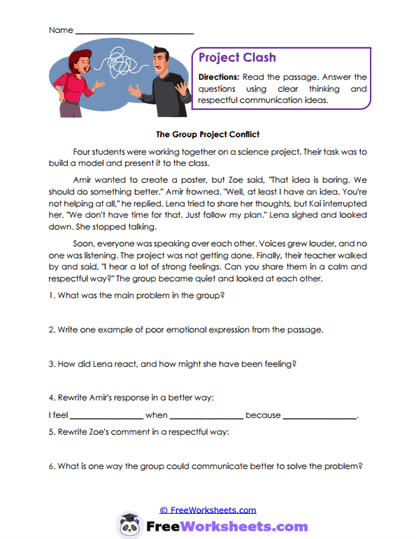
Learning to express emotions in healthy ways helps children communicate their needs without hurting themselves or others. Encourage your child to use words like “I feel…” and explain what happened instead of yelling or shutting down. These activities build emotional regulation, communication, and self-advocacy skills.
Managing Emotional Reactions
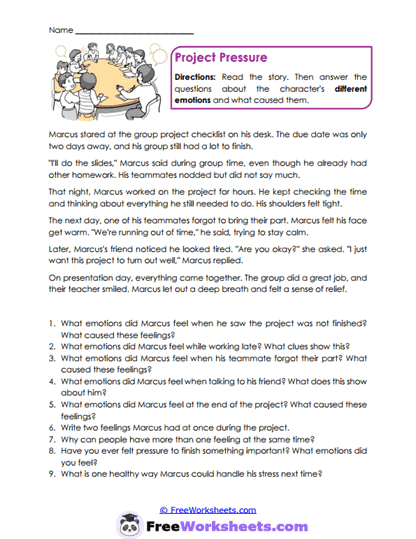
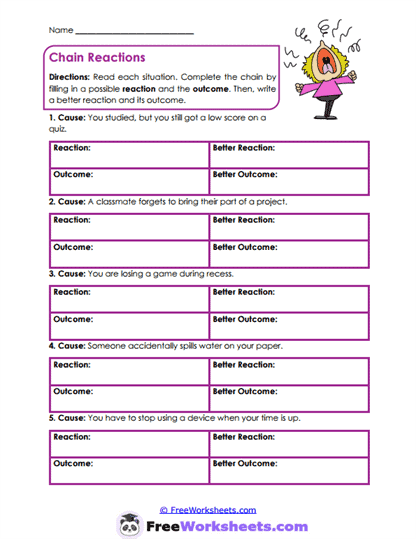
Managing emotional reactions helps children slow down and make better choices when feelings become intense. Practice simple calming strategies like taking deep breaths, counting slowly, or stepping away for a moment before responding. These worksheets strengthen self-control, coping skills, and emotional regulation.
Showing Kindness And Compassion
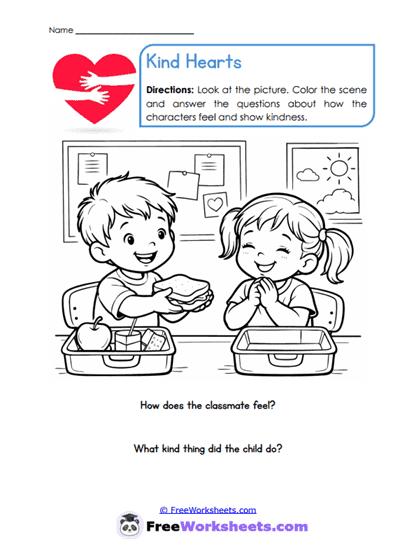
Showing kindness and compassion helps children understand how their words and actions can affect the people around them. Encourage your child to notice when someone may need help, encouragement, or a thoughtful gesture. These activities support empathy, social awareness, and positive relationship-building skills.
Understanding Empathy
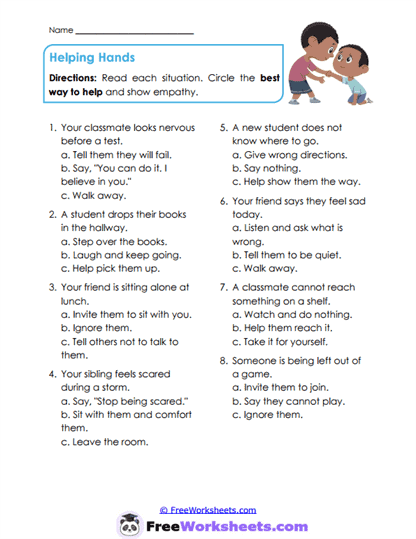
Understanding empathy helps children recognize how other people may be feeling and respond with care and respect. A helpful strategy is to ask, “How do you think that person feels, and why?” when reading stories or talking about everyday situations. These worksheets strengthen perspective-taking, compassion, and social-emotional understanding.