
Clarifying Misunderstandings Worksheets
These worksheets help students recognize and fix confusion during conversations in real time. These free, ready-to-print PDF format activities are designed for immediate classroom use or at-home support. Students build skills like asking clarifying questions, paraphrasing, and identifying unclear messages aligned to key speaking and listening standards.
About This Collection of Worksheets
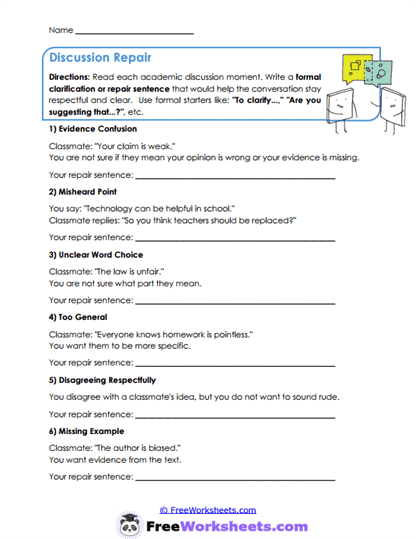
This collection helps students understand that misunderstandings are a normal part of communication-and something they can learn to fix. Each worksheet gives students practice spotting where confusion begins and thinking through how to respond in a helpful way. The activities focus on building awareness of unclear language and how small changes can make communication more effective.
Students work through realistic scenarios that mirror everyday conversations. They practice asking better questions, restating information, and identifying missing details that cause confusion. These experiences help them move from reacting to misunderstandings to actively solving them.
Teachers and parents will find these worksheets valuable for both academic and social-emotional development. The structure supports independent practice, guided discussion, and role-playing. Together, these activities help students become more confident, clear, and thoughtful communicators.
Paul’s Teacher Tip
When students struggle with misunderstandings, it’s often because they don’t realize confusion is happening until it’s too late. Try pausing conversations and asking, “What part might someone not understand?” to build that awareness. I like to teach simple sentence starters like “Can you explain…” or “Do you mean…” so students always have a way to respond. Quick partner practice works really well here-one student gives unclear directions, and the other must fix it. Over time, students start catching misunderstandings on their own. That’s when you know the skill is sticking.
Worksheet Collection Skill Spotlights
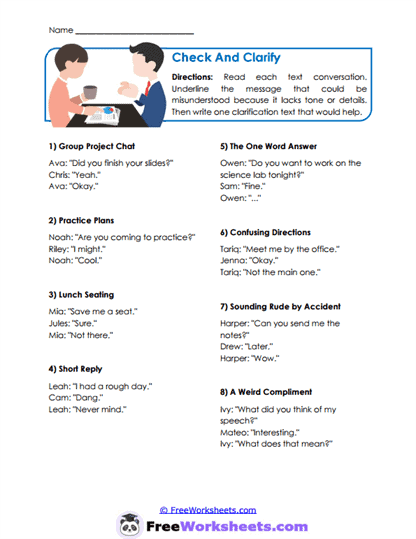
Check And Clarify
- What Kids Do:
Students read short conversations and carefully underline the exact part that causes confusion. They then write a clear and helpful question to fix the misunderstanding, focusing on identifying missing details and improving the flow of communication in real situations. - Target Skill:
This activity builds the ability to detect unclear communication and respond with purposeful questions. Students strengthen collaborative discussion skills by learning how to clarify meaning and improve understanding during conversations.
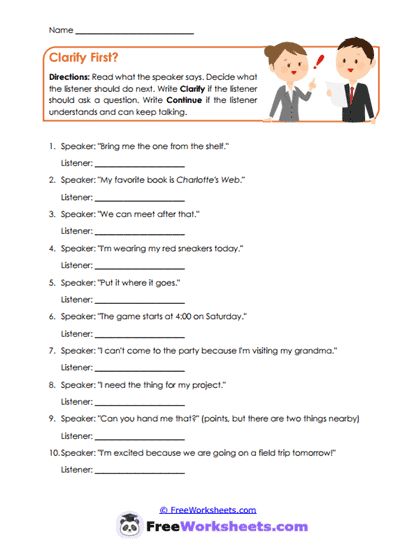
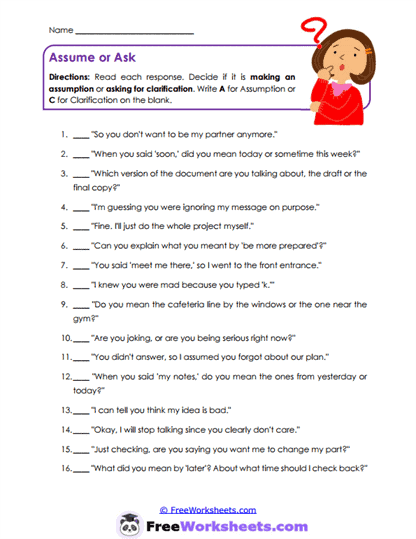
Clarify First?
- What Kids Do:
Students read statements and decide whether the listener should ask a clarifying question or continue listening. When needed, they create a question that would help improve understanding, practicing decision-making during conversations. - Target Skill:
This worksheet develops listening awareness and response judgment. Students learn when clarification is necessary and how to form appropriate questions, supporting effective participation in discussions and active listening skills.
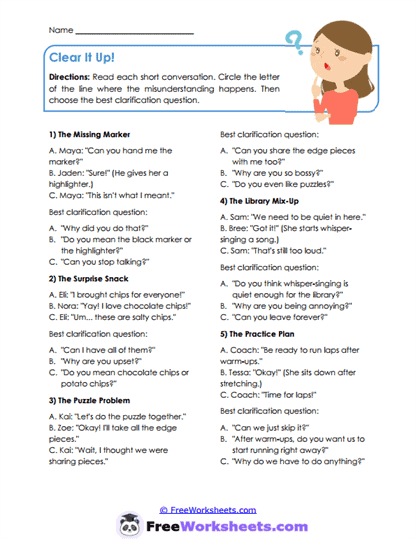
Clear It Up!
- What Kids Do:
Students analyze short dialogues to find the exact moment confusion begins. They then choose the best follow-up question from given options, practicing how to respond quickly and effectively when communication breaks down. - Target Skill:
This activity strengthens students’ ability to identify misunderstandings and select appropriate clarification strategies. It supports communication skills related to questioning, comprehension, and collaborative interaction.
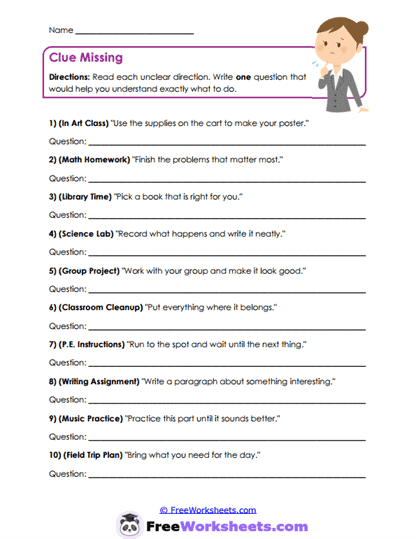
Clue Missing
- What Kids Do:
Students read unclear directions and identify what information is missing. They then write a specific question that would help clarify the task, focusing on improving understanding before taking action. - Target Skill:
This worksheet builds questioning and problem-solving skills by helping students recognize gaps in communication. It supports active listening and encourages students to seek clarity before responding.
Fix The Mix-Up
- What Kids Do:
Students read short conversations with misunderstandings and rewrite one line to fix the confusion. They must carefully adjust wording while keeping the original meaning intact and improving clarity. - Target Skill:
This activity develops communication repair skills. Students learn how to revise unclear or incorrect statements to restore understanding, supporting effective discussion and problem-solving abilities.
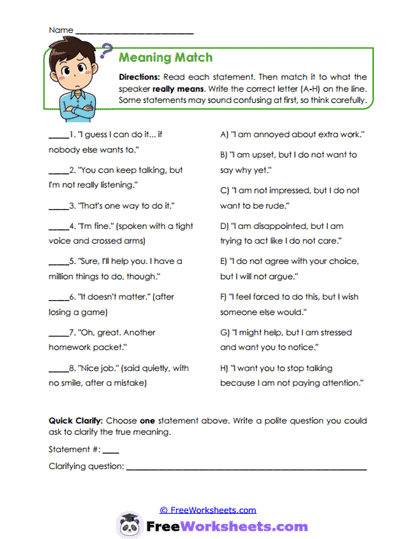
Meaning Match
- What Kids Do:
Students match statements to their true meanings by analyzing tone, context, and implied emotions. They consider how what is said can differ from what is meant and may also create a question to clarify meaning. - Target Skill:
This worksheet strengthens inference and interpretation skills. Students learn to read beyond literal language, supporting comprehension and communication abilities tied to tone and meaning analysis.
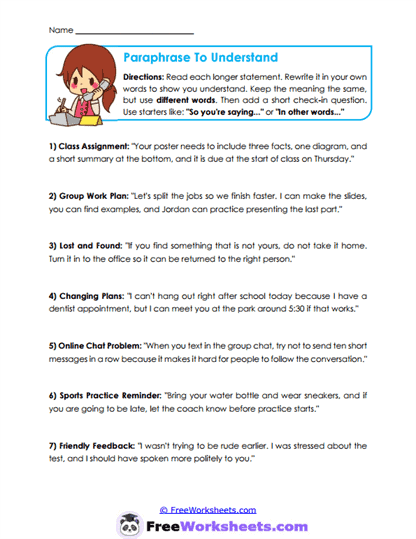
Paraphrase To Understand
- What Kids Do:
Students read longer statements and rewrite them in their own words while keeping the meaning the same. They also add a question to confirm understanding, combining paraphrasing with clarification. - Target Skill:
This activity builds comprehension and expressive communication skills. Students practice interpreting and explaining information clearly, supporting standards focused on summarizing and understanding spoken messages.
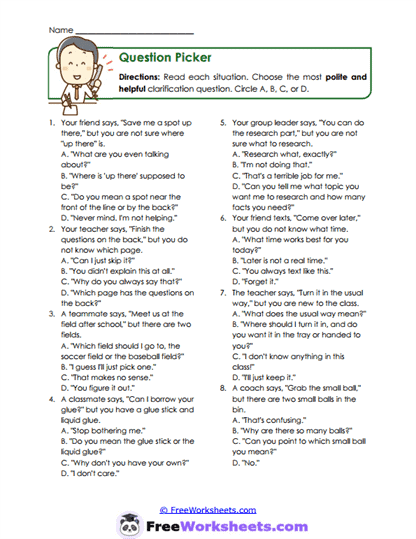
Question Picker
- What Kids Do:
Students read scenarios and choose the most helpful and polite clarification question from multiple options. They evaluate tone, usefulness, and clarity before selecting the best response. - Target Skill:
This worksheet develops decision-making in communication. Students learn to recognize effective questioning strategies that improve understanding and support respectful participation in conversations.
Real-Life Repair
- What Kids Do:
Students read real-life scenarios involving misunderstandings and write responses that fix the problem. They must consider tone, clarity, and respect while crafting their answers. - Target Skill:
This activity strengthens real-world communication skills by combining listening, tone, and clarification strategies. Students learn to respond thoughtfully and repair misunderstandings in everyday situations.
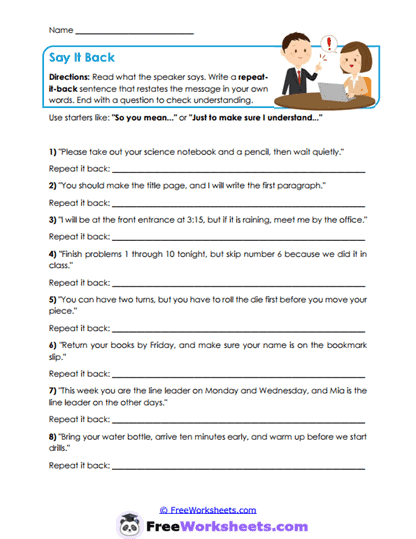
Say It Back
- What Kids Do:
Students read instructions and restate them in their own words, often adding a confirming question. This helps them practice checking their understanding before acting. - Target Skill:
This worksheet builds paraphrasing and confirmation skills. Students learn to process and restate information clearly, supporting comprehension and effective communication in discussions.
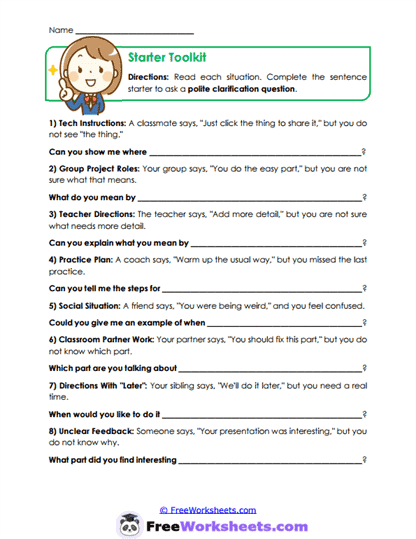
Starter Toolkit
- What Kids Do:
Students complete sentence starters to form clear and polite clarification questions. They analyze situations and use structured prompts to build effective responses. - Target Skill:
This activity supports question formation and communication confidence. Students practice using language structures that help them ask for clarification respectfully and clearly.
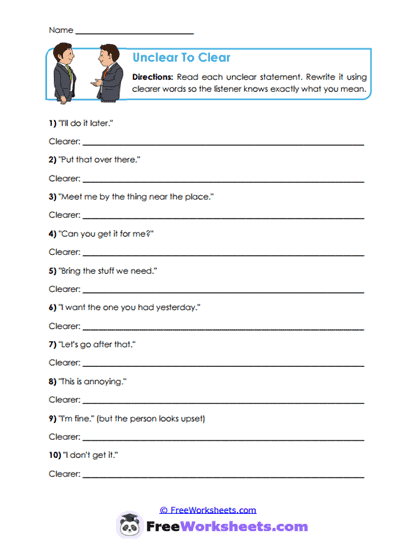
Unclear To Clear
- What Kids Do:
Students read vague statements and rewrite them to include clear and specific details. They focus on improving precision so the message is easy to understand. - Target Skill:
This worksheet builds clarity in communication by helping students recognize and revise unclear language. It supports speaking and writing skills related to organization and effective expression.