
Understanding Empathy Worksheets
These understanding empathy worksheets help students in grades 3-12 recognize other people's feelings, consider different perspectives, and respond with care. Every activity is Free, Ready-to-print, available in PDF format, and designed for immediate classroom use. Students strengthen CASEL-aligned skills in social awareness, relationship building, emotional reasoning, and responsible decision-making.
About This Collection of Worksheets
This collection helps students understand that empathy involves more than noticing when someone is upset. Learners practice identifying emotions, looking for clues in words and body language, considering another person’s thoughts, and choosing responses that communicate understanding. The worksheets also reinforce that people can experience the same event differently and that another person’s feelings remain valid even when our own reaction would not be the same.
The activities include short stories, caring-response prompts, behavior sorts, digital misunderstandings, perspective-taking scenarios, and reflective comparisons. Students examine loneliness, disappointment, embarrassment, overwhelm, exclusion, mistakes, online conflict, and group-work challenges. They also learn how listening, validation, patient questions, inclusion, and practical support can help someone feel heard without minimizing the problem or rushing to fix it.
These printable SEL resources work well during morning meetings, advisory periods, counseling groups, friendship lessons, digital citizenship instruction, homeschool learning, and classroom-community discussions. The collection supports the Collaborative for Academic, Social and Emotional Learning areas of self-awareness, social awareness, self-management, relationship skills, and responsible decision-making. Since the pages range from simple caring-action identification to deeper analysis of hidden thoughts and empathy barriers, adults can select worksheets that match each student’s age and emotional readiness.
Paul’s Teacher Tip
Remind students that empathy does not require them to feel exactly what another person feels. The goal is to understand why the emotion makes sense from that person’s point of view and respond respectfully. Encourage learners to listen before giving advice, since many people first need to feel heard rather than immediately corrected or rescued. When students make assumptions, help them replace certainty with a curious question. A simple response such as “That sounds difficult” or “Would you like help?” can communicate more care than a long explanation.
Worksheet Collection Skill Spotlights
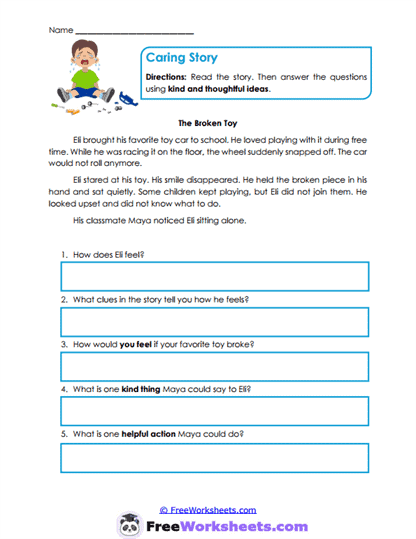
Broken Favorite
What Kids Do: Students read about Eli becoming quiet and withdrawn after his favorite toy car breaks. They identify his emotion using story clues, imagine how they might feel, and create one caring statement and one helpful action Maya could offer.
Target Skill: This activity develops emotional inference and attention to nonverbal behavior. Students learn that disappointment may appear through silence or withdrawal and that empathy often begins by noticing before trying to solve the practical problem.
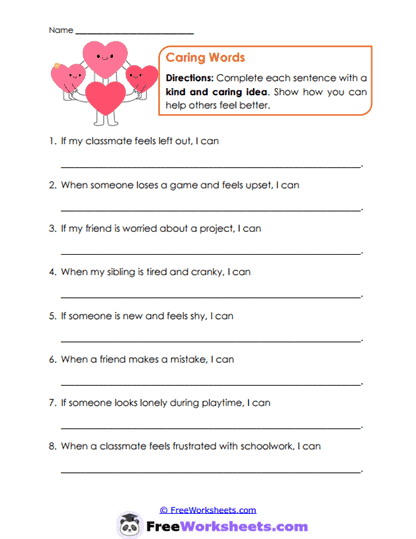
Caring Language
What Kids Do: Students complete eight open-ended prompts about classmates or family members experiencing worry, loneliness, mistakes, frustration, disappointment, or shyness. They create supportive words or actions that fit each person’s likely emotional need.
Target Skill: Learners strengthen validating communication and flexible thinking. The worksheet helps them avoid minimizing feelings or giving automatic advice and instead practice reassurance, inclusion, patient listening, and respectful offers of help.
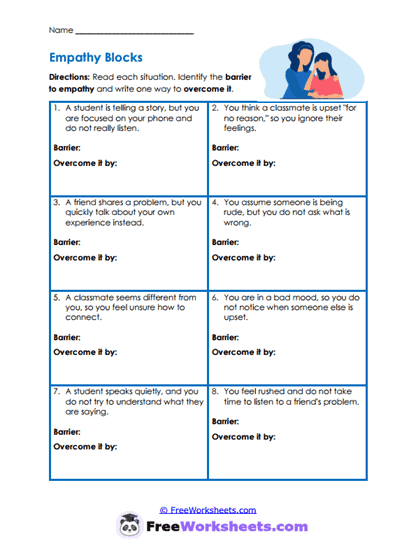
Empathy Barriers
What Kids Do: Students examine eight habits that interfere with empathy, including distraction, interruption, judgment, quick assumptions, refusal to listen, and being too emotionally upset to notice another person’s needs. They identify each barrier and plan a way around it.
Target Skill: This page develops self-awareness and stronger listening habits. Students learn that empathy can be blocked by impatience, mood, bias, devices, or certainty and that slowing down or asking one honest question can prevent misunderstandings.
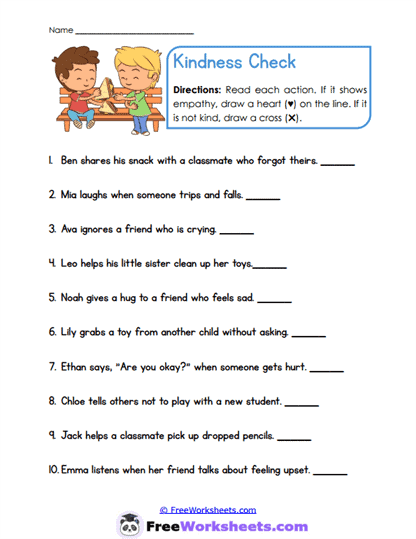
Empathy Check
What Kids Do: Students read ten everyday actions and mark whether each one shows empathy or a lack of care. The examples include sharing, listening, helping, laughing at someone’s mistake, checking on a hurt person, and excluding a new student.
Target Skill: This introductory activity helps learners connect empathy with visible choices. Students recognize that caring may appear through small actions such as listening, offering comfort, helping with a task, or asking whether someone is okay.
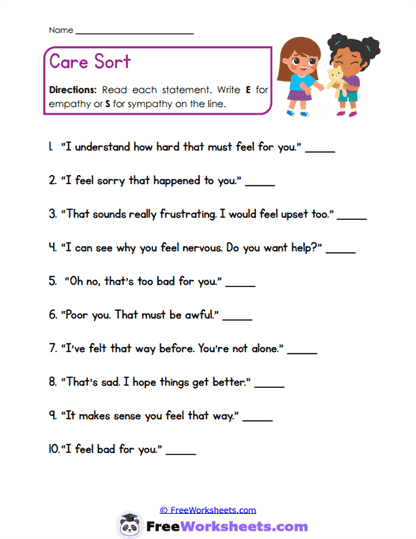
Empathy Sort
What Kids Do: Students classify ten statements as empathy or sympathy. They compare language that mainly expresses concern from a distance with responses that acknowledge and validate another person’s emotional experience.
Target Skill: Learners explore the subtle difference between feeling sorry for someone and communicating deeper understanding. The activity strengthens emotional language and encourages students to listen rather than rush toward advice.
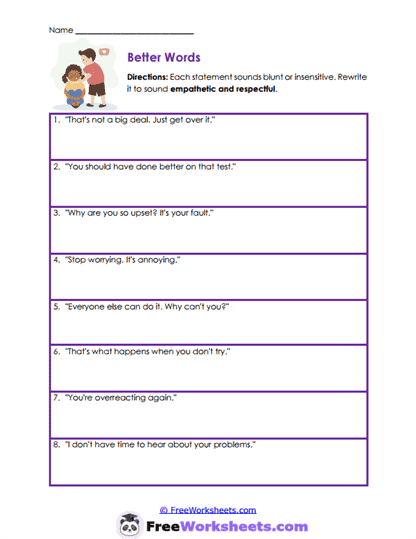
Gentler Words
What Kids Do: Students rewrite eight blunt, judgmental, or dismissive comments as kinder responses. They transform phrases that minimize feelings, blame the person, compare struggles, or refuse to listen into language that keeps communication open.
Target Skill: This worksheet develops emotional validation and conflict prevention. Students learn that empathy does not require agreement but does require wording that respects another person’s feelings, dignity, and willingness to continue talking.
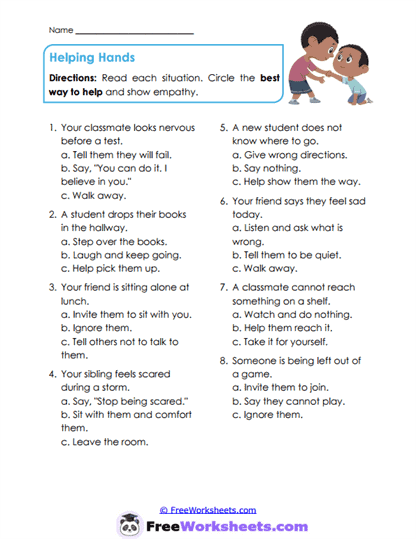
Helpful Choices
What Kids Do: Students choose the most caring response to eight situations involving nervousness, fear, sadness, dropped belongings, loneliness, confusion, exclusion, and practical difficulty. They consider which choice would help the person most in that moment.
Target Skill: This activity develops compassionate decision-making and practical empathy. Students learn that different needs call for different forms of support, such as encouragement, explanation, inclusion, patient listening, comfort, or direct assistance.
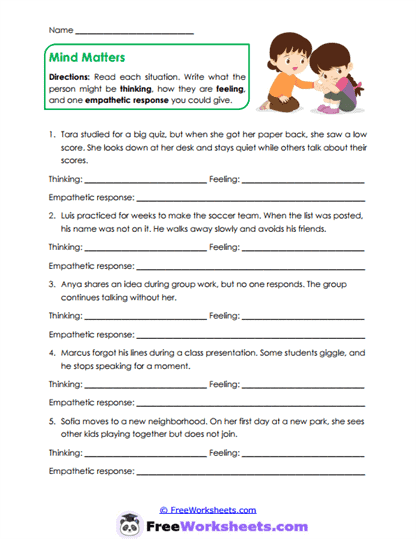
Hidden Perspectives
What Kids Do: Students examine situations involving disappointing grades, missed opportunities, ignored ideas, presentation mistakes, and loneliness in a new neighborhood. They infer possible thoughts and feelings, then write a natural empathetic response.
Target Skill: Learners look beneath visible behavior and consider the private meaning an event may hold. The worksheet strengthens emotional reasoning and teaches students to validate feelings before criticizing, dismissing, or immediately offering solutions.
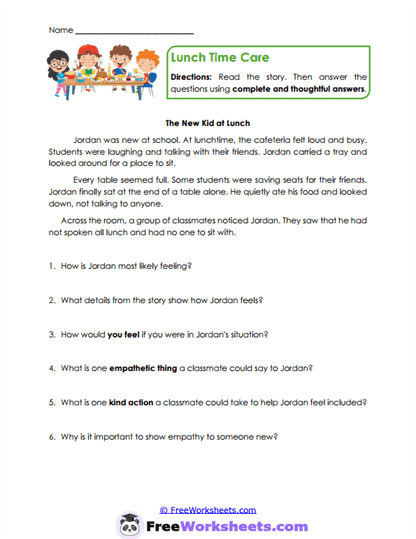
Lunch Inclusion
What Kids Do: Students read about Jordan, a new student sitting alone in a crowded cafeteria. They identify evidence of loneliness or nervousness and suggest an empathetic statement and an inclusive action a classmate could take.
Target Skill: This page develops social awareness and belonging. Students learn to recognize quiet signs of exclusion and understand how one invitation, conversation, or welcoming gesture can make an unfamiliar setting feel safer.
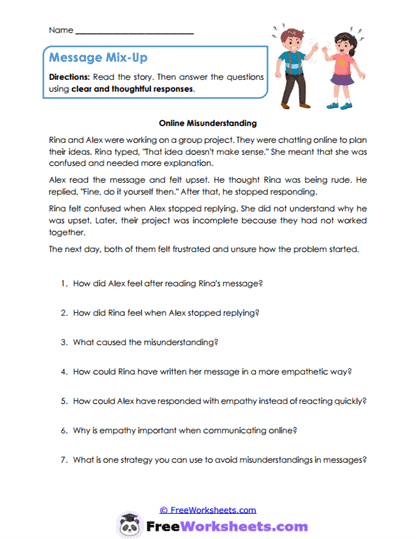
Online Understanding
What Kids Do: Students analyze a digital misunderstanding in which a brief message is interpreted as rude. They identify each person’s feelings, explain how missing tone creates confusion, and rewrite both messages using clearer and more empathetic language.
Target Skill: This activity strengthens digital citizenship, self-management, and perspective-taking. Students learn to ask for clarification before assuming harmful intent and to communicate carefully when facial expressions and tone are unavailable.
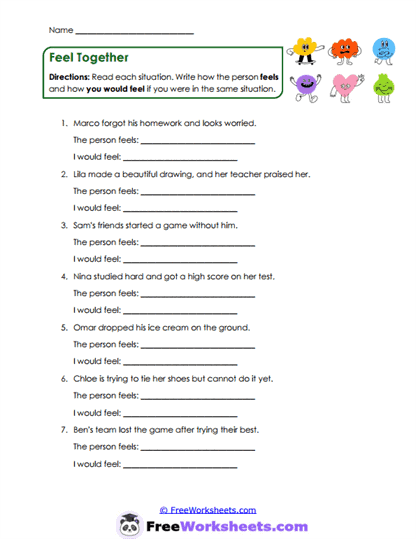
Shared Feelings
What Kids Do: Students name how another person may feel in seven situations and then describe how they might personally react. The examples include forgotten work, praise, exclusion, success, accidents, frustration, and losing after strong effort.
Target Skill: Learners compare perspectives without treating one emotional response as the only correct one. The activity develops self-awareness and reinforces that empathy means respecting another person’s experience even when our own feelings might differ.
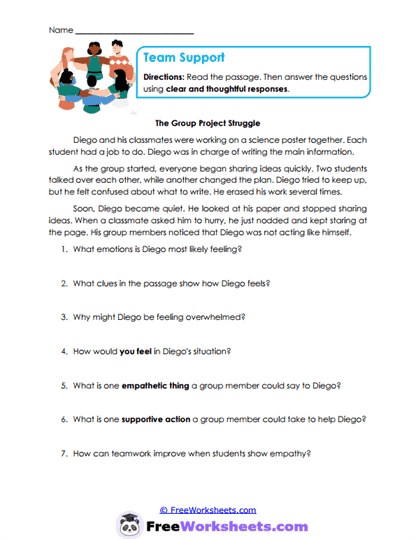
Team Empathy
What Kids Do: Students examine Diego’s growing overwhelm during a fast-moving group project. They find emotional clues in his silence and repeated erasing, then suggest words and group actions that would help him understand the task and participate.
Target Skill: This worksheet develops empathetic teamwork and attention to less obvious stress signals. Students learn that successful collaboration includes slowing down, checking understanding, clarifying roles, and making space for quieter voices.