
Expressing Emotions Appropriately Worksheets
These expressing emotions appropriately worksheets help students in grades 3-12 name feelings, communicate needs, and replace impulsive reactions with safer choices. Every activity is Free, Ready-to-print, available in PDF format, and designed for Immediate classroom use. Students build CASEL-aligned skills in self-awareness, self-management, relationship building, and responsible decision-making.
About This Collection of Worksheets
This collection helps students understand that every emotion is acceptable, but not every reaction is safe or helpful. Learners practice separating feelings such as anger, disappointment, worry, frustration, and excitement from behaviors such as yelling, blaming, pushing, shutting down, or throwing objects. The worksheets give them practical language for explaining what happened and what they need.
The activities include sentence frames, behavior sorting, short stories, conflict scenarios, respectful rewrites, and communication-style practice. Students use “I feel…when…because…” statements, compare appropriate and inappropriate emotional responses, and turn harsh comments into calmer language. They also examine how tone, body language, interruptions, assumptions, and impulsive actions can make a disagreement harder to solve.
These printable SEL worksheets work well during morning meetings, counseling groups, classroom lessons, conflict-resolution practice, homeschool instruction, and private reflection. The collection supports the Collaborative for Academic, Social and Emotional Learning areas of self-awareness, self-management, social awareness, relationship skills, and responsible decision-making. Since the activities range from simple sorting to more involved group-conflict analysis, adults can select pages that match each student’s age, communication needs, and emotional development.
Paul’s Teacher Tip
Make a clear distinction between accepting an emotion and accepting a harmful behavior. Students need to hear that anger, sadness, jealousy, and frustration are normal, even when yelling, pushing, insulting, or damaging property is not. Practice respectful language during calm moments so students are more likely to remember it when emotions rise. Sentence frames are helpful starting points, but encourage older learners to adapt them so the words feel natural rather than rehearsed. When a conflict occurs, help students calm their bodies before expecting them to explain the situation thoughtfully.
Worksheet Collection Skill Spotlights
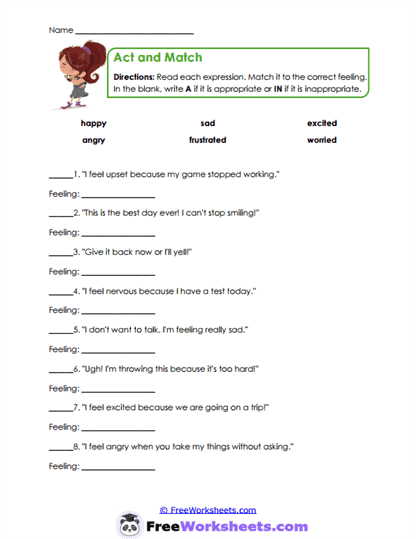
Action Match
What Kids Do: Students read short emotional expressions, identify the feeling being communicated, and decide whether the response is appropriate or inappropriate. The examples include smiling with excitement, calmly discussing sadness, shouting in anger, snapping at someone, and throwing an object in frustration.
Target Skill: This activity develops emotion recognition and behavior awareness. Students learn that the same feeling can be expressed in either a safe or harmful way and that judging the behavior does not mean labeling the emotion itself as wrong.
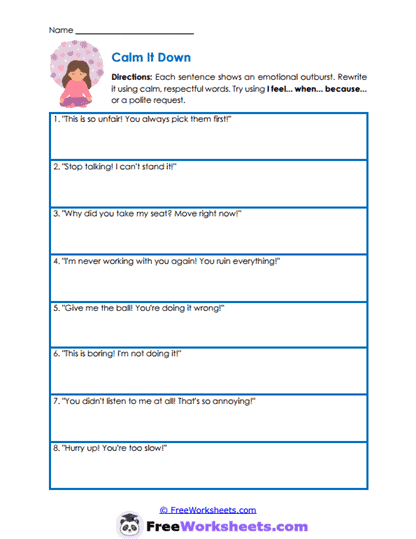
Calmer Language
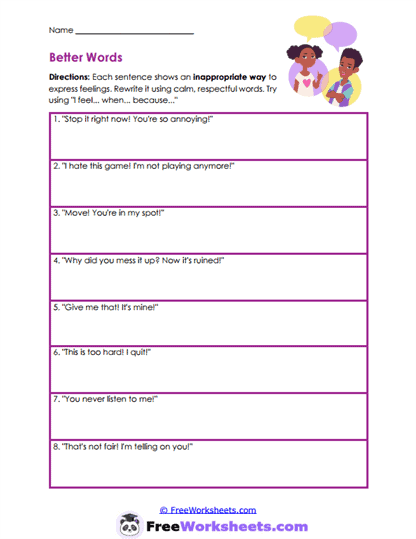
What Kids Do: Students rewrite eight sharp, blaming, or demanding comments as respectful feeling statements or polite requests. They work with situations involving interruptions, line cutting, shared seats, group activities, and other common frustrations.
Target Skill: Learners practice assertive communication and emotional regulation. The worksheet helps them identify the feeling beneath an outburst and describe the specific behavior without insulting, ordering, or making sweeping accusations.
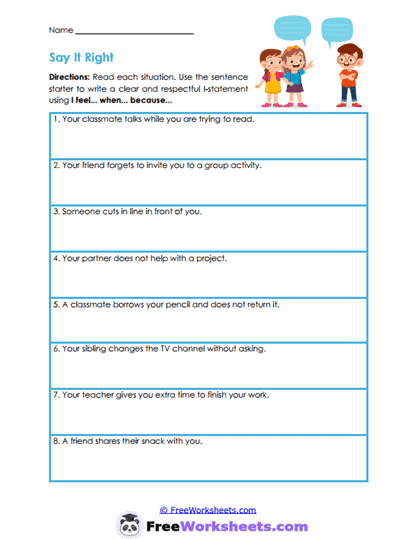
Clear Statements
What Kids Do: Students complete “I feel…when…because…” statements for situations involving unfairness, interruption, inclusion, support, disappointment, and appreciation. They name the emotion, describe the event, and explain why it mattered.
Target Skill: This page strengthens emotional expression and perspective-taking. Students learn to communicate from their own experience rather than blaming another person, while also practicing positive feeling language for gratitude, relief, and happiness.
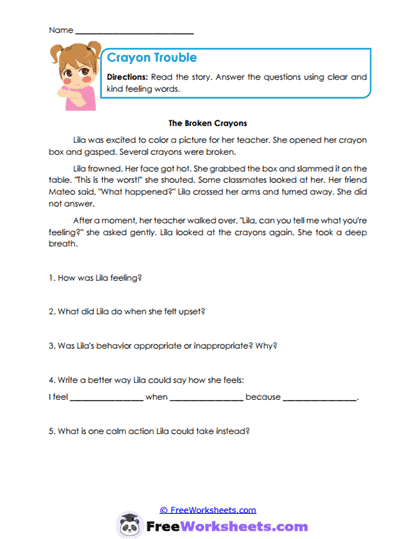
Crayon Reactions
What Kids Do: Students read a story about Lila becoming upset after finding broken crayons. They identify her emotion, examine her body language and actions, decide whether the response is helpful, and choose calmer words and a coping strategy.
Target Skill: Learners separate frustration or disappointment from the behavior used to express it. The activity combines reading comprehension, emotional awareness, self-management, and problem-solving around a relatable childhood setback.
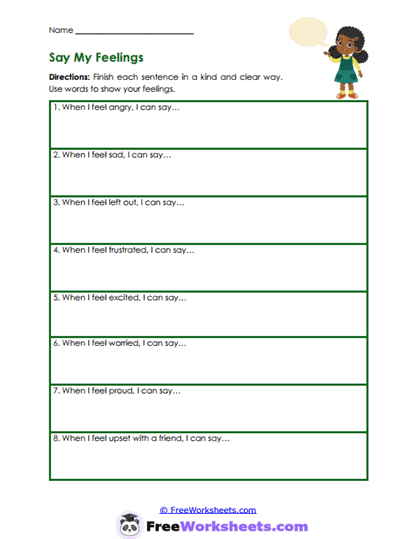
Feeling Words
What Kids Do: Students finish eight sentence starters about anger, sadness, worry, pride, excitement, friendship concerns, and feeling left out. Each response must communicate the emotion in language that is honest, kind, and clear.
Target Skill: This worksheet builds emotional vocabulary and assertive communication. Students practice putting internal experiences into words so they are less likely to rely on silence, hurtful comments, or impulsive actions.
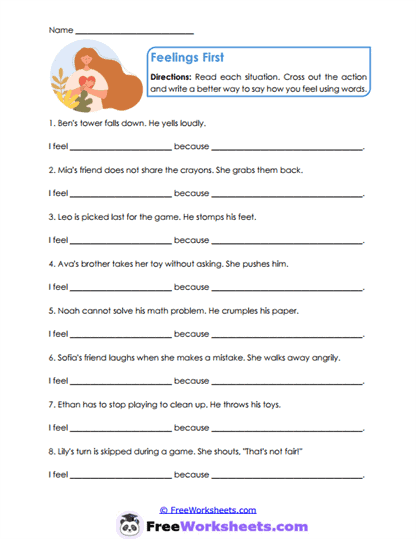
Feelings Before
What Kids Do: Students examine situations in which a child yells, grabs, stomps, pushes, or throws something. They cross out the unhelpful reaction and replace it with an “I feel…because…” statement that names the emotion and its cause.
Target Skill: This activity teaches students to pause between feeling and action. It reinforces the idea that emotions are allowed while helping learners take responsibility for choosing words and behaviors that do not create additional harm.
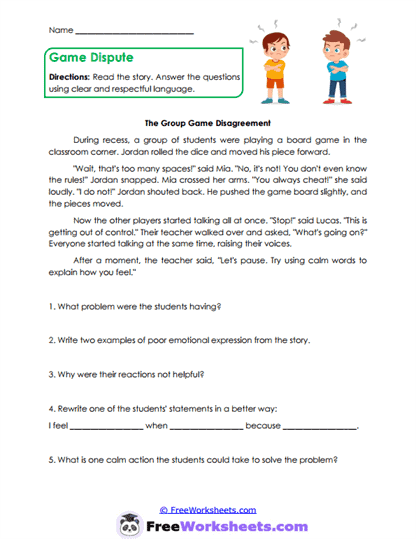
Game Conflict
What Kids Do: Students read about a classroom board game that becomes tense when children interrupt, raise their voices, accuse one another, and knock over pieces. They identify the communication problems and suggest calmer words and a fair group response.
Target Skill: Learners analyze how emotional reactions can turn a small rules disagreement into a larger conflict. The worksheet strengthens turn-taking, conflict resolution, respectful expression, and shared problem-solving.
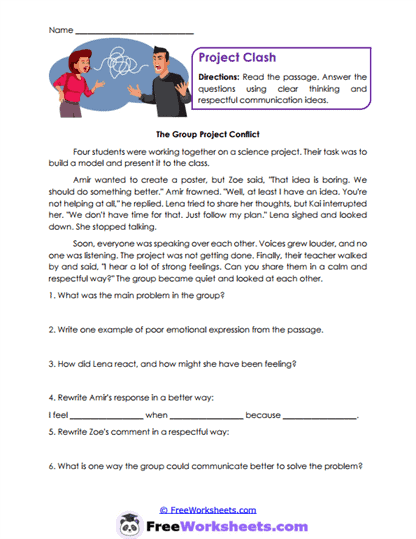
Project Tension
What Kids Do: Students examine a science-project conflict involving dismissed ideas, interruptions, raised voices, crossed arms, and students talking over one another. They identify the main problem, rewrite several statements, and suggest a group rule that could prevent similar tension.
Target Skill: This page develops teamwork, perspective-taking, and emotional self-management. Students learn that disagreement is not the real problem; poor listening, disrespectful feedback, and reactive communication are what stop the group from moving forward.
Respectful Rewrites
What Kids Do: Students transform statements such as “You never listen” or “You’re so annoying” into structured feeling messages. They identify the emotion, describe the specific behavior, and explain why the situation matters without attacking the other person.
Target Skill: Students practice replacing blame, insults, and absolute language with clear communication. The activity develops conflict-resolution skills and helps learners focus on the problem rather than criticizing someone’s character.
Safe Expression
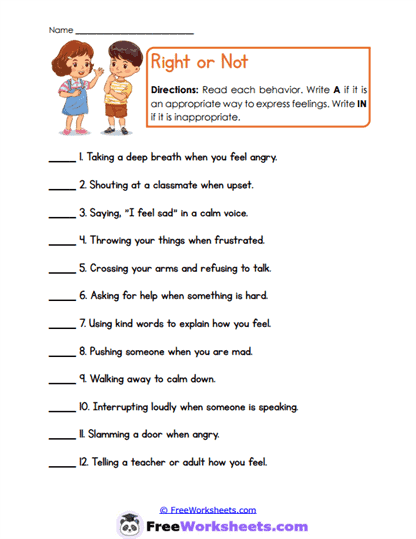
What Kids Do: Students classify twelve emotional behaviors as appropriate or inappropriate. They compare choices such as breathing, asking for help, speaking calmly, walking away, pushing, shouting, slamming doors, and refusing to communicate.
Target Skill: This introductory activity builds safety judgment and emotional regulation. Students identify responses that communicate feelings or create space to calm down and distinguish them from actions that harm people, property, or problem-solving.
Speaking Styles
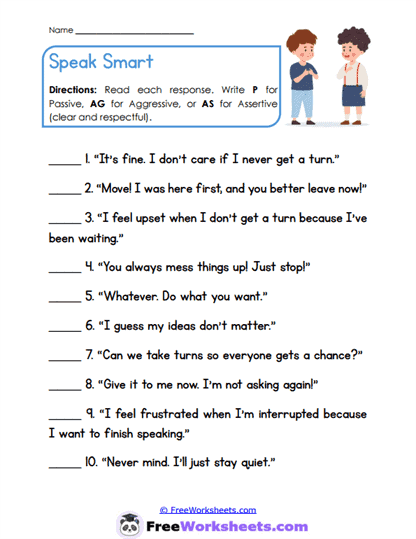
What Kids Do: Students label ten responses as passive, aggressive, or assertive. They examine whether each statement hides a need, attacks another person, or communicates a boundary and request in a calm, respectful way.
Target Skill: Learners discover that assertiveness is the healthy middle ground between silence and aggression. The worksheet strengthens boundary-setting, communication awareness, and the ability to speak up while respecting another person’s rights.
Turn Trouble
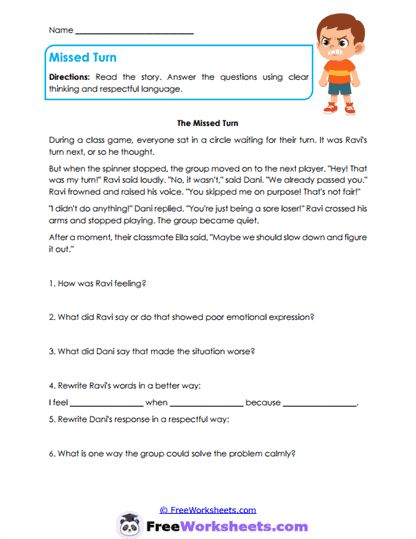
What Kids Do: Students read about Ravi reacting strongly when he believes his turn was skipped during a game. They identify feelings and assumptions, examine how defensiveness increases the problem, and rewrite both students’ responses in a calmer way.
Target Skill: This activity develops fairness, perspective-taking, and conflict repair. Students practice asking for clarification before assuming harmful intent and learn how a calm question can resolve a misunderstanding more effectively than an accusation.