
Bullying Prevention Worksheets
These building bullying awareness worksheets help students in grades 3-12 recognize harmful behavior, protect personal boundaries, and choose safe responses. Every activity is Free, Ready-to-print, available in PDF format, and designed for Immediate classroom use. Students strengthen CASEL-aligned skills in social awareness, self-management, relationship building, and responsible decision-making.
About This Collection of Worksheets
This collection helps students understand what bullying is, how it differs from conflict or an accident, and why repeated harm and unfair power matter. Learners examine bullying roles, respectful communication, privacy, online behavior, reporting, emergency help, and safe upstander choices. The activities make it clear that children should never be expected to handle threats, repeated harassment, or dangerous behavior alone.
The worksheets include school scenarios, fictional online conversations, gaming messages, social-media decisions, apology planning, classroom values, and conflict-repair practice. Students decide when to speak up, save evidence, block contact, report a concern, seek emergency help, or solve a smaller disagreement calmly. They also practice replacing cruel language, protecting another person’s privacy, and choosing responses that reduce harm rather than increase it.
These printable SEL resources work well during bullying-prevention units, digital citizenship lessons, advisory periods, counseling groups, classroom meetings, and family discussions. The collection supports the CASEL areas of self-awareness, self-management, social awareness, relationship skills, and responsible decision-making. Since the worksheets range from guided matching to deeper online-safety analysis, adults can choose activities that fit each student’s age, digital experience, and emotional readiness.
Paul’s Teacher Tip
Teach students that safe action does not always mean confronting the person causing harm. An upstander might stay beside the target, refuse to join in, save evidence, block a sender, or quietly tell a trusted adult. Keep repeating the difference between tattling and reporting: tattling aims to get someone in trouble, while reporting aims to stop harm or protect safety. When discussing real situations, avoid asking children to identify classmates publicly. Most importantly, take reports seriously and make sure students know exactly which adults they can approach when they feel unsafe.
Worksheet Collection Skill Spotlights
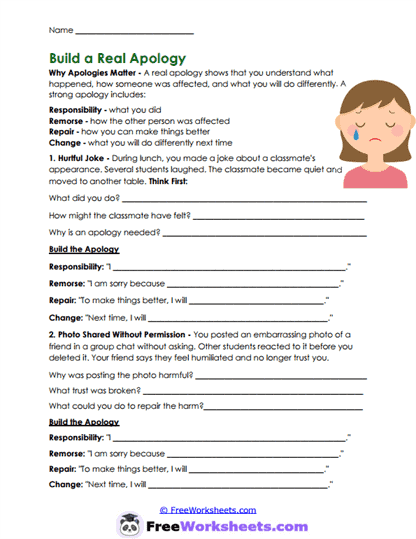
Apology Repair
What Kids Do: Students examine situations involving a hurtful joke and an embarrassing photo shared without permission. They build complete apologies that name the behavior, acknowledge its emotional effect, accept responsibility, offer repair, and describe what will change next time.
Target Skill: This activity develops empathy, accountability, and relationship repair. Students learn that a meaningful apology is more than saying sorry and that rebuilding trust may require time, follow-through, and a specific action to address the harm.
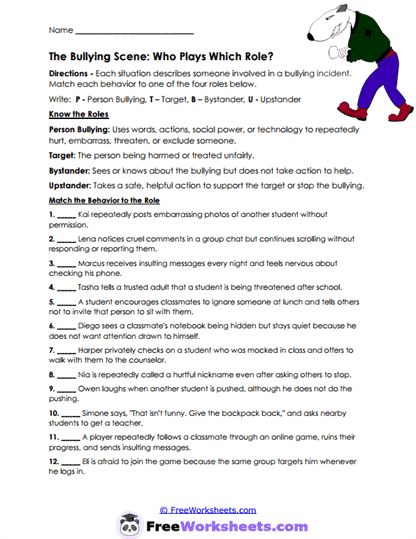
Bullying Roles
What Kids Do: Students match twelve behaviors with the roles of person bullying, target, bystander, or upstander. The examples include repeated messages, exclusion, embarrassing photos, silence, adult help-seeking, and standing beside someone who has been mistreated.
Target Skill: Learners analyze how group behavior can either strengthen or interrupt bullying. The worksheet helps them recognize that safe upstander actions include supporting the target, refusing to participate, preserving evidence, and involving a trusted adult.
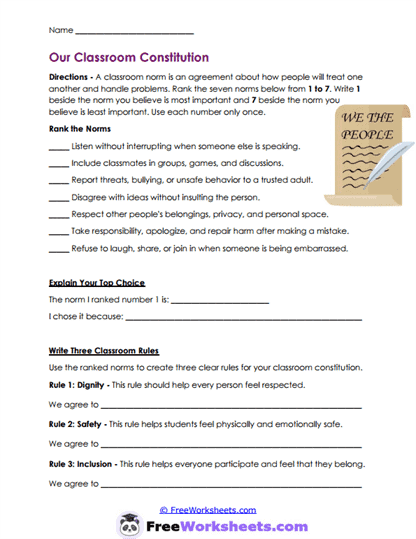
Classroom Values
What Kids Do: Students rank seven classroom expectations involving listening, inclusion, privacy, accountability, reporting threats, and respectful disagreement. They explain which value matters most and turn their priorities into shared rules for dignity and safety.
Target Skill: This page builds community awareness, shared responsibility, and thoughtful decision-making. Students learn how broad values can become practical agreements that protect belonging, emotional safety, and respectful participation.
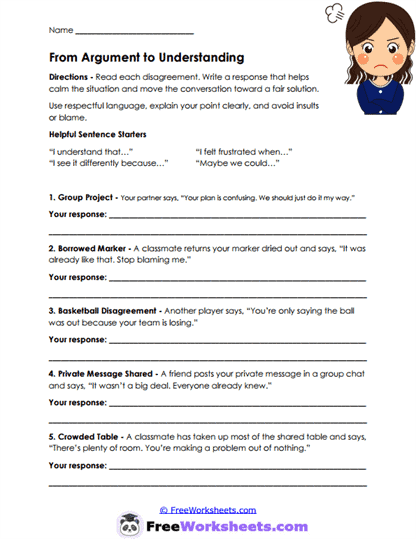
Conflict Repair
What Kids Do: Students respond to disagreements involving group work, borrowed supplies, sports, private messages, and shared spaces. They use sentence starters to explain their view, protect a boundary, listen to another person, and suggest a fair next step.
Target Skill: Learners practice assertive communication without blame, insults, or withdrawal. The activity strengthens perspective-taking, emotional control, compromise, and the ability to separate the person from the problem.
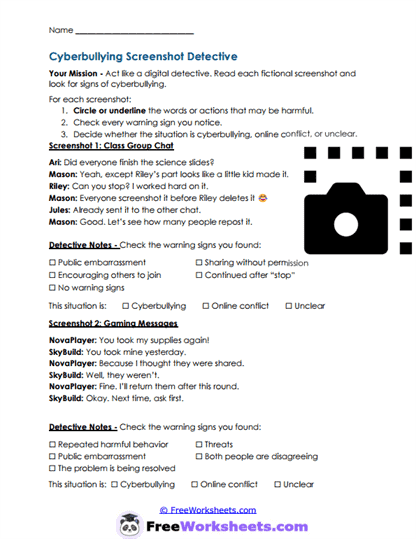
Digital Clues
What Kids Do: Students investigate two fictional online conversations and look for signs of cyberbullying, conflict, or an unclear situation. They examine repetition, audience reactions, public embarrassment, sharing without permission, and requests for the behavior to stop.
Target Skill: This activity develops digital literacy and evidence-based judgment. Students learn to evaluate the full pattern and impact of online behavior rather than deciding from one rude comment or whether someone claimed it was a joke.
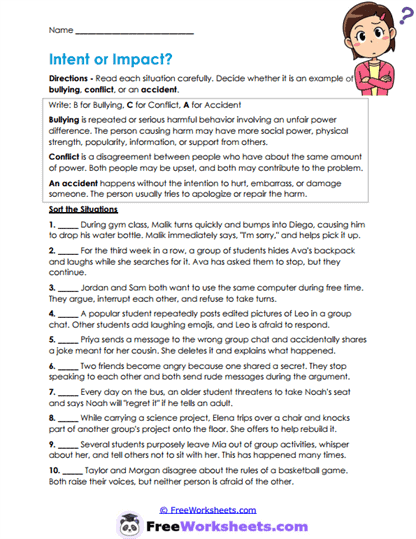
Harm Differences
What Kids Do: Students classify ten school situations as bullying, conflict, or an accident. They study teasing, threats, arguments, damaged belongings, online messages, and accidental contact while considering intent, repetition, harm, and power.
Target Skill: Learners build shared language for identifying peer problems accurately. The worksheet helps them understand that bullying, ordinary conflict, and accidents require different responses, while all concerns still deserve appropriate attention and support.
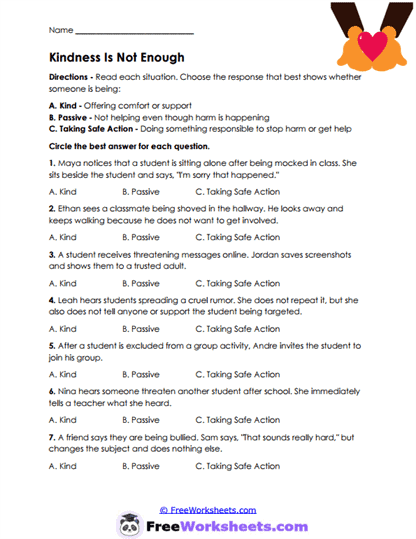
Helpful Action
What Kids Do: Students decide whether seven responses to exclusion, rumors, threats, and online harassment are kind, passive, or genuinely protective. They compare comforting words with actions that interrupt harm or bring in responsible adult support.
Target Skill: This page shows students that empathy becomes more effective when it leads to safe action. Learners practice identifying responses that reduce harm, protect the target, save evidence, or involve someone able to help.
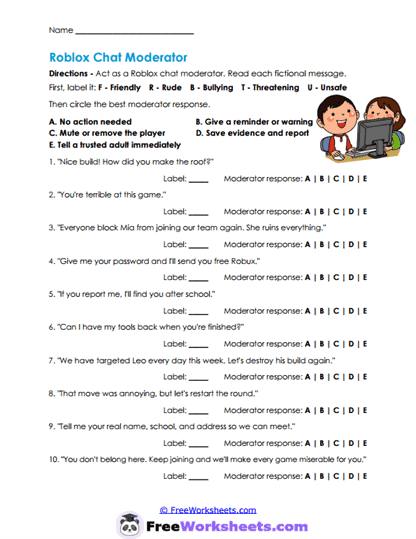
Moderator Decisions
What Kids Do: Students act as Roblox chat moderators and classify fictional messages as friendly, rude, bullying, threatening, or unsafe. They then choose a proportionate response, such as no action, a warning, muting, removing, saving evidence, reporting, or telling an adult.
Target Skill: Students develop balanced digital judgment by distinguishing ordinary frustration from repeated targeting, threats, scams, and requests for private information. The task helps them match the response to the seriousness and safety risk of the message.
Posting Pause
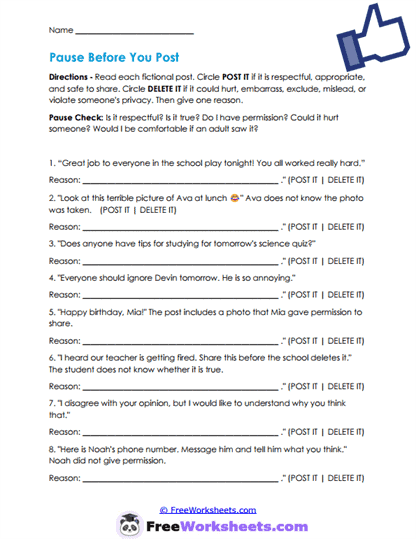
What Kids Do: Students review eight fictional posts involving kind messages, embarrassing photos, rumors, exclusion, private information, respectful disagreement, and phone numbers. They decide whether to post or delete each item and explain the impact.
Target Skill: Learners strengthen privacy awareness, empathy, and responsible posting habits. The worksheet encourages a repeatable pause routine: check permission, consider the audience, predict possible harm, and share only content that is respectful and safe.
Respectful Replacements
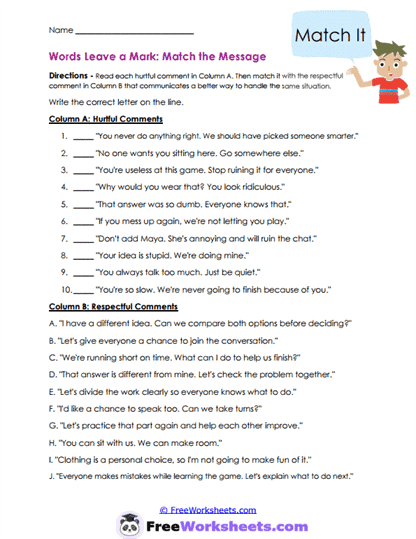
What Kids Do: Students match ten insulting or dismissive remarks with alternatives that communicate the concern respectfully. They work with situations involving criticism, teamwork, exclusion, impatience, mistakes, and differences in personal choices.
Target Skill: This activity develops constructive disagreement and relationship skills. Students learn that they can be honest, direct, and firm while focusing on the behavior or problem instead of attacking another person’s dignity.
Response Choice
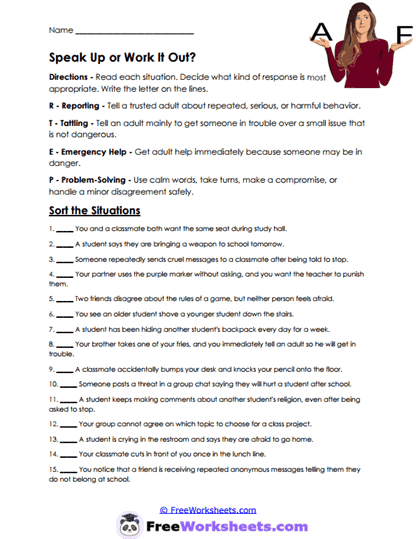
What Kids Do: Students sort fifteen peer and school situations into reporting, tattling, emergency help, or problem-solving. They consider repeated harassment, injuries, threats, small annoyances, disagreements, and unfair behavior before choosing a response.
Target Skill: Learners practice judging seriousness, repetition, and immediate danger. The worksheet clarifies when a problem can be handled with calm communication and when adult or emergency support is necessary.
Response Path
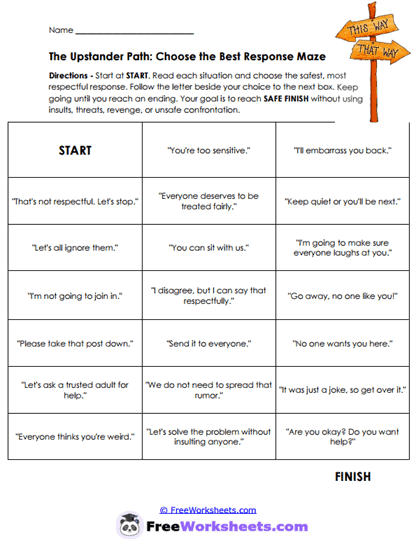
What Kids Do: Students move through a maze by choosing statements that set respectful boundaries, include others, protect privacy, or seek help. Harmful options involve threats, blame, exclusion, dismissal, and responses likely to escalate the situation.
Target Skill: This activity builds quick but thoughtful decision-making. Students compare possible consequences and learn that the safest response is often calm, specific, respectful, and supported by an adult when the risk is too high.
Safe Responses
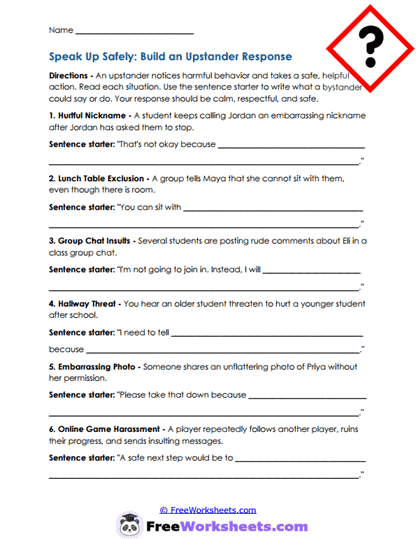
What Kids Do: Students complete sentence starters for situations involving cruel nicknames, exclusion, group-chat insults, threats, embarrassing photos, and gaming harassment. Their responses may set a boundary, support a peer, refuse participation, save evidence, or report danger.
Target Skill: Learners turn upstander intentions into practical language and action. The worksheet emphasizes assertive communication, emotional control, privacy protection, and personal safety rather than dramatic or risky confrontation.
Sharing Boundaries
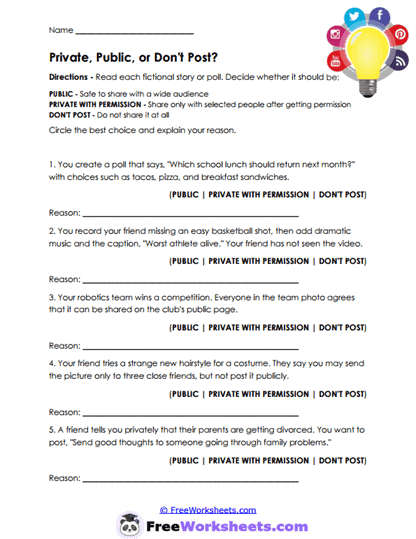
What Kids Do: Students decide whether digital content should be public, shared privately with permission, or not posted. The situations involve polls, funny videos, team pictures, costumes, and sensitive family information.
Target Skill: Students analyze audience, consent, ownership, privacy, and possible harm before sharing. The activity reinforces that private sharing is not automatically safe and that another person’s information is not theirs to post without permission.
Snapchat Safety
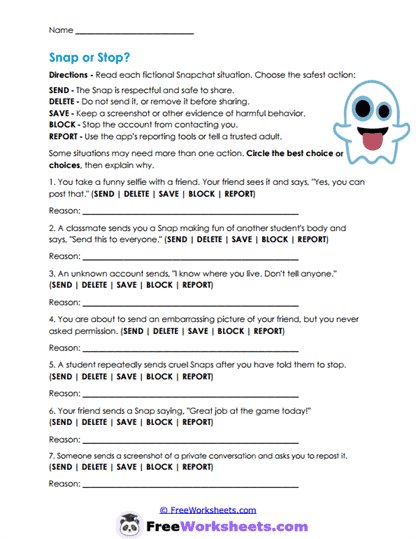
What Kids Do: Students choose whether to send, delete, save, block, or report fictional Snapchat content involving selfies, body-shaming, threats, private screenshots, repeated messages, and embarrassing photos. They explain why each action best protects safety and respect.
Target Skill: This page develops platform-relevant digital citizenship and personal safety. Students learn that threatening, humiliating, repeated, or deeply private messages may need to be saved as evidence, blocked, reported, and shared with a trusted adult.