
About This Worksheet
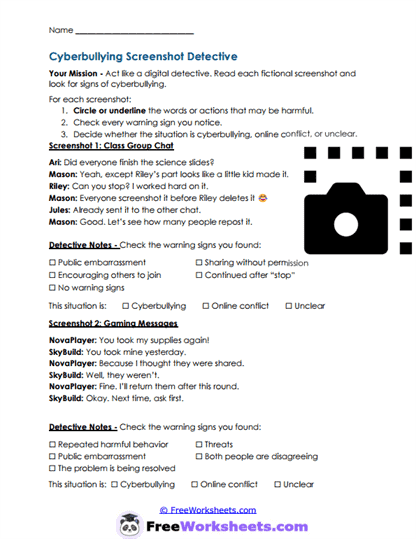
This worksheet turns students into digital detectives as they study two fictional online conversations for warning signs of cyberbullying. Children look closely at the words, reactions, sharing behavior, and repeated actions in each screenshot before deciding whether the situation is cyberbullying, an online conflict, or still unclear. They also check clues such as public embarrassment, pressure to join in, sharing without permission, repeated harmful behavior, and requests for someone to stop. This careful approach teaches students not to judge an online situation from one rude comment alone, but to look at the full pattern and the effect it has on the people involved.
Skills Developed
Students strengthen digital literacy, reading comprehension, social awareness, and evidence-based decision-making. They practice separating teasing, disagreement, and repeated harassment by identifying who is involved, whether the behavior continues, and whether someone’s privacy or safety is being harmed. The worksheet also encourages students to notice how emojis, group reactions, screenshots, and deleted messages can still affect an online conversation. These skills help children think more carefully before joining a chat, forwarding content, or deciding whether an adult needs to know what happened.
Grade & Stage Appropriateness
This worksheet is best suited for upper elementary and middle school students, especially grades 5 through 8. Children in this age range are often beginning to use group chats, multiplayer games, shared devices, and social platforms with greater independence. Younger students may need help understanding how repeated online behavior differs from one disagreement, while older students can discuss how screenshots and audience size can increase the harm. The activity is especially useful for students who are learning that digital actions can have real emotional and social consequences.
Connections to Collaborative for Academic, Social and Emotional Learning (CASEL)
This activity connects strongly with the CASEL areas of social awareness, responsible decision-making, relationship skills, and self-management. Students consider how online words affect others, pause before reacting, and decide whether a situation needs support, boundaries, or adult help. When I use an activity like this, students often focus first on whether a comment was meant as a joke, so I guide them back to the impact, repetition, and power of the group. That conversation helps children understand that responsible digital behavior includes noticing harm, refusing to add to it, and asking for help before a situation grows worse.
Using This Worksheet
Teachers can use this page during a digital citizenship lesson, cyberbullying unit, counseling group, or classroom conversation about online safety. It works well to read each conversation aloud and ask students to point to the exact clue that influenced their decision. Parents and homeschool educators can use the examples to discuss group chats, gaming messages, screenshots, and what children should do when online behavior makes someone uncomfortable. Remind students that they should save evidence and tell a trusted adult when messages become repeated, threatening, humiliating, or unsafe.