
Adjusting Communication For Different Situations Worksheets
These worksheets help students learn how to change communication based on audience and setting. These free, ready-to-print PDF format activities are designed for immediate classroom use or at-home practice. Students develop skills like tone awareness, audience adaptation, and clear expression aligned to speaking and listening standards.
About This Collection of Worksheets
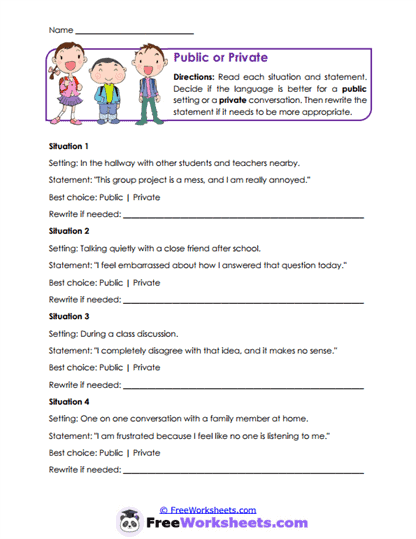
This collection focuses on helping students understand that communication is not one-size-fits-all. Each worksheet gives learners opportunities to adjust how they speak or write depending on who they are talking to and where the conversation takes place. From formal versus informal language to choosing the right tone, students begin to see how context shapes communication.
Students explore real-life situations that require thoughtful decision-making. They practice rewriting responses, choosing appropriate wording, and identifying when communication needs to be clearer or more respectful. These activities encourage students to think before they speak and consider how their words affect others.
Teachers and parents will find these worksheets especially helpful for building both social-emotional and academic skills. The activities are flexible and can be used for independent work, small group discussions, or role-playing exercises. Together, they support confident, respectful communication across a variety of settings.

Paul’s Teacher Tip
One of the best ways to teach communication flexibility is to make it visible and real for students. Try modeling the same message in different ways-how you would say it to a principal versus a friend-and talk through your thinking. I’ve seen great results when students practice quick “switch it” activities, where they adjust tone on the spot. Also, encourage them to ask, “Who am I talking to?” before they respond. This simple question helps them slow down and make smarter communication choices. Over time, they start to do this naturally in conversations.
Worksheet Collection Skill Spotlights
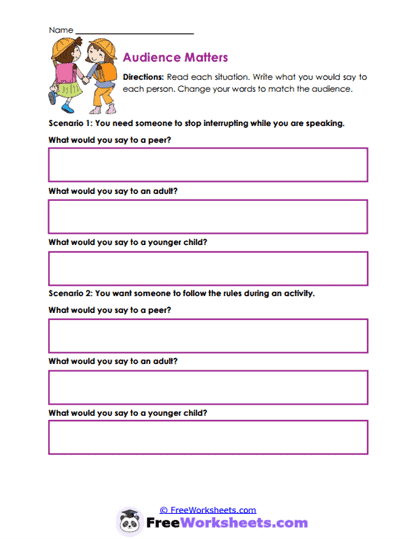
Audience Matters
- What Kids Do:
Students read different scenarios and craft responses tailored to specific audiences such as peers, adults, or younger children. They adjust wording, tone, and level of detail, thinking carefully about how the same idea sounds different depending on who is listening and what the situation requires. - Target Skill:
This activity strengthens audience awareness and communication flexibility. Students learn to match language to listener expectations, supporting effective participation in discussions and building skills aligned to adapting speech for different contexts and purposes.
Clear Or Confusing
- What Kids Do:
Students read short statements and decide whether each one is clear or confusing. When a statement lacks detail, they rewrite it to include specific information that improves understanding, practicing how to communicate ideas in a more precise and helpful way. - Target Skill:
This worksheet builds clarity and organization in communication. Students learn to recognize vague language and revise it for accuracy and completeness, supporting speaking standards focused on clear expression and effective delivery of information.
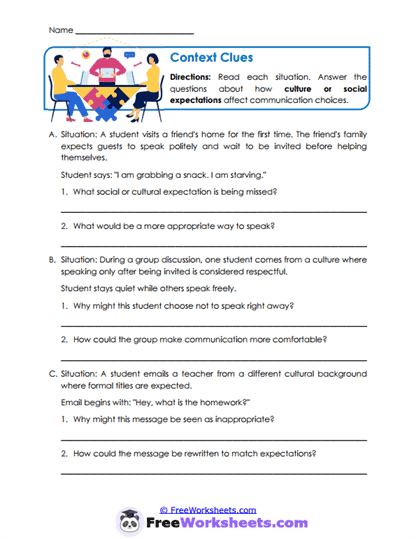
Context Clues
- What Kids Do:
Students examine scenarios where communication does not match the situation and explain what went wrong. They analyze how cultural expectations, setting, or audience affect language choices and sometimes rewrite statements to better fit the context. - Target Skill:
This activity develops contextual awareness and perspective-taking. Students learn how communication expectations change across environments, supporting discussion skills that require understanding audience, purpose, and cultural norms.
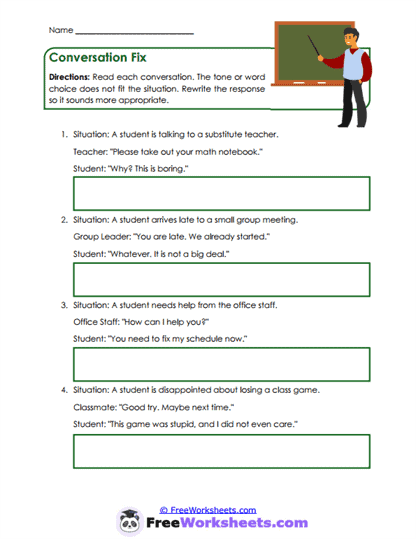
Conversation Fix
- What Kids Do:
Students read short conversations with inappropriate or ineffective responses and rewrite them to sound more respectful and appropriate. They consider tone, word choice, and the situation while improving how each message is delivered. - Target Skill:
This worksheet strengthens respectful communication and revision skills. Students practice improving tone while keeping meaning intact, supporting standards focused on effective collaboration and appropriate participation in conversations.
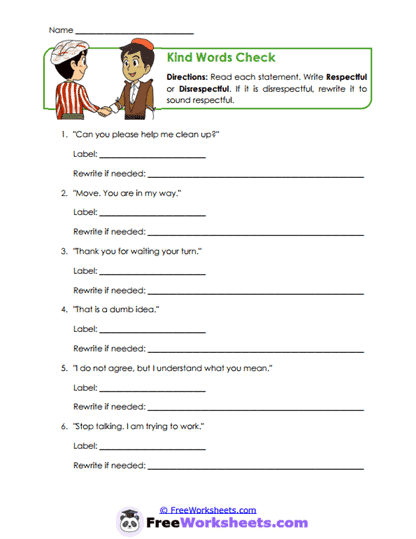
Kind Words Check
- What Kids Do:
Students evaluate statements to decide if they are respectful or disrespectful. They then rewrite negative or harsh phrases into more polite and thoughtful responses, helping them understand how small changes in wording can improve interactions. - Target Skill:
This activity builds awareness of tone and respectful language use. Students learn to choose words carefully and communicate with empathy, supporting social-emotional skills and standards related to positive participation in discussions.
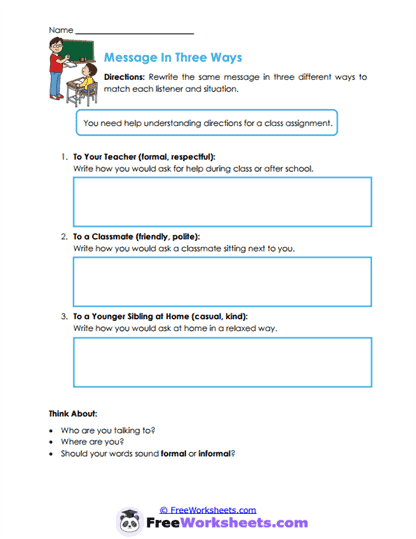
Message In Three Ways
- What Kids Do:
Students take one simple message and rewrite it three different ways for different audiences, such as a teacher, a classmate, and a younger child. They adjust tone, vocabulary, and formality to match each situation. - Target Skill:
This worksheet develops adaptability in communication. Students practice modifying language for different listeners, reinforcing skills tied to speaking clearly and adjusting speech based on audience and purpose.
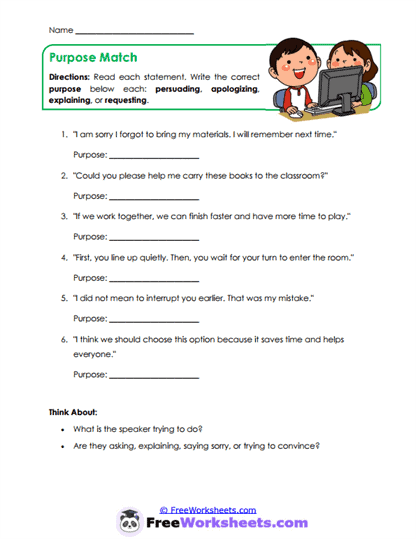
Purpose Match
- What Kids Do:
Students read statements and determine the speaker’s purpose, such as persuading, apologizing, explaining, or requesting. They analyze why each statement was said and match it to the correct intention. - Target Skill:
This activity strengthens understanding of communication purpose and intent. Students learn to interpret meaning beyond words, supporting comprehension and analysis skills related to identifying purpose in communication.
Real Talk Practice
- What Kids Do:
Students respond to real-life scenarios by writing appropriate replies that consider tone, clarity, and audience. They apply multiple communication skills at once, thinking carefully about how to respond in a respectful and effective way. - Target Skill:
This worksheet builds applied communication skills by combining tone, clarity, and audience awareness. Students practice real-world responses, supporting effective participation in discussions and collaborative interactions.
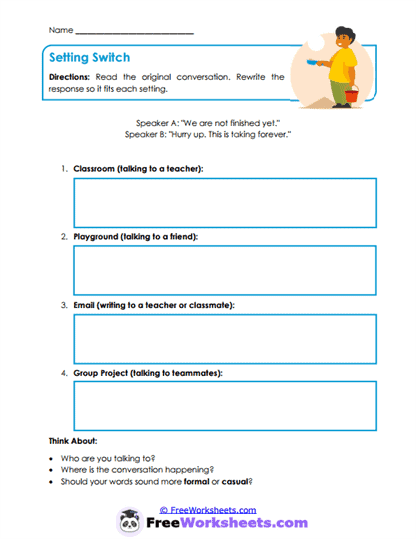
Setting Switch
- What Kids Do:
Students take a single response and rewrite it for different settings such as a classroom, a conversation with a friend, or a formal email. They adjust wording and tone to match each environment. - Target Skill:
This activity supports flexibility in communication by helping students adapt language based on setting. It aligns with skills focused on adjusting speech for different contexts and maintaining appropriate tone.
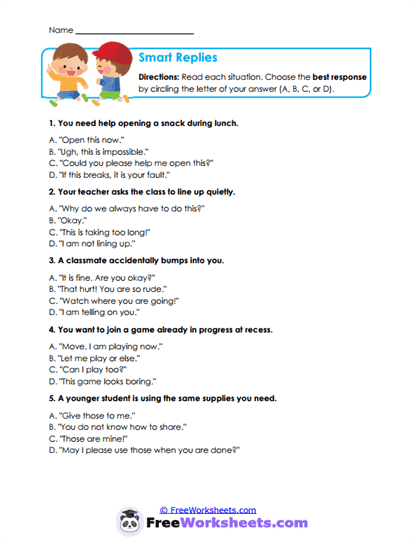
Smart Replies
- What Kids Do:
Students read short scenarios and choose the best response from multiple options. They evaluate each choice based on tone, respect, and effectiveness, learning to identify what makes a response appropriate. - Target Skill:
This worksheet strengthens decision-making in communication. Students learn to evaluate tone and appropriateness, supporting standards related to effective participation and respectful interaction in conversations.
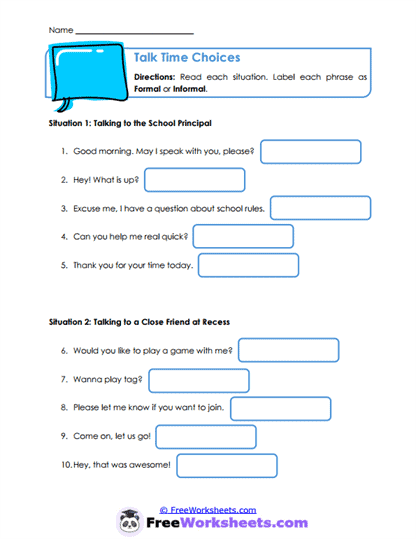
Talk Time Choices
- What Kids Do:
Students read phrases and decide whether each one is formal or informal. They compare language used in different situations and consider how word choice changes depending on audience and purpose. - Target Skill:
This activity builds understanding of formality and tone in communication. Students learn to distinguish between casual and formal language, supporting skills related to adapting speech for different audiences.
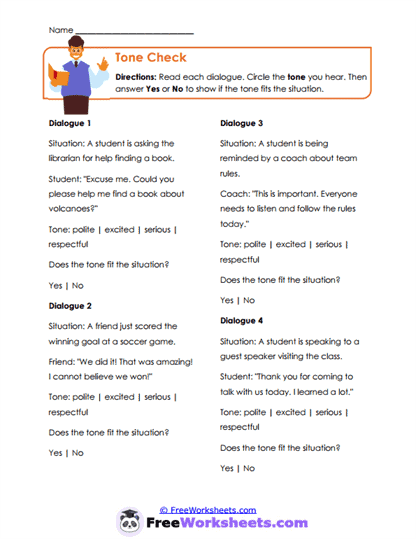
Tone Check
- What Kids Do:
Students read short dialogues and identify the tone being used, then decide if that tone fits the situation. They analyze how emotions and word choice affect communication in different contexts. - Target Skill:
This worksheet strengthens tone recognition and evaluation. Students learn to match tone to context, supporting comprehension and communication skills related to analyzing word choice and emotional meaning.