
Taking Turns While Speaking Worksheets
These worksheets help students learn how to participate in conversations with patience, respect, and awareness. These free, ready-to-print PDF format activities are designed for immediate classroom use or at-home practice. Students build skills like waiting their turn, listening actively, and responding appropriately aligned to key speaking and listening standards.
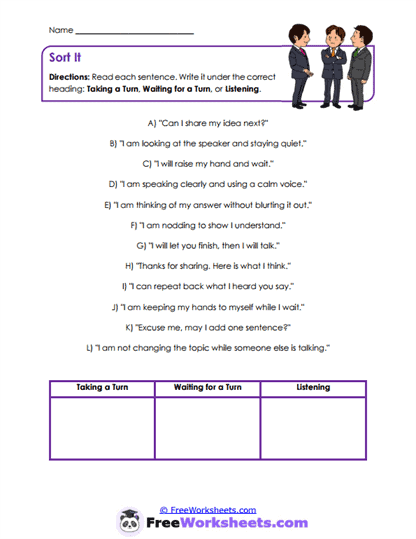
About This Collection of Worksheets
This collection focuses on helping students understand that good conversations are shared experiences. Each worksheet builds awareness of when to speak, when to listen, and how to join discussions without interrupting. Students learn that timing, tone, and respect all play a role in effective communication.
Through real-life scenarios and reflective activities, students practice recognizing turn-taking cues and making thoughtful choices. They explore how to wait patiently, invite others to speak, and respond in ways that keep conversations positive. These activities help students build both confidence and self-control.
Teachers and parents will find these worksheets helpful for developing both communication and social-emotional skills. The flexible format supports independent work, partner activities, and group discussions. Together, these activities help students become more respectful, aware, and engaged communicators.
Paul’s Teacher Tip
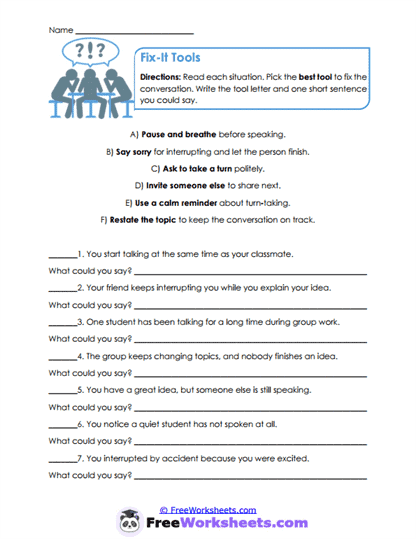
Turn-taking is one of those skills that really shapes the feel of your classroom. I like to model both sides-what interrupting sounds like and what respectful waiting looks like. Give students simple phrases they can use, like “Can I add something when you’re done?” so they feel ready instead of rushing to speak. Also, build in small pauses during discussions so students have a natural moment to jump in. Over time, they learn that good conversations aren’t fast-they’re shared.
Worksheet Collection Skill Spotlights
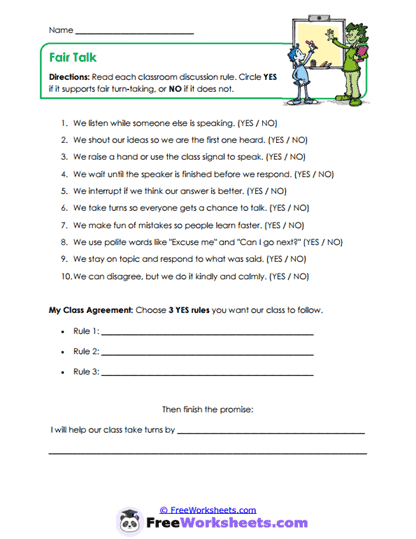
Fair Talk
- What Kids Do:
Students read statements about conversation behaviors and decide which ones show fair turn-taking. They also create their own rules for sharing speaking time in discussions. - Target Skill:
This activity builds awareness of fairness and collaboration. Students learn that balanced participation helps conversations feel respectful and inclusive.
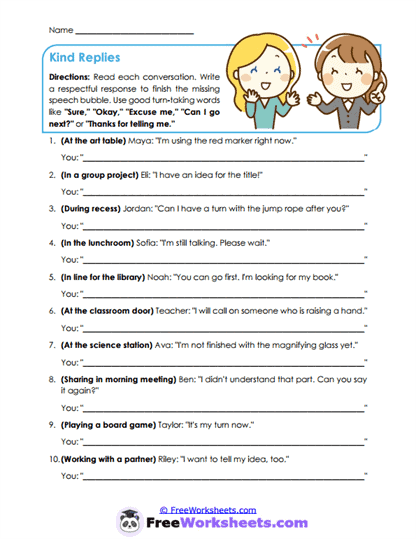
Kind Replies
- What Kids Do:
Students read short scenarios and write polite responses to continue the conversation. They focus on using respectful words and tone. - Target Skill:
This worksheet strengthens polite communication and tone awareness. Students learn to respond kindly while taking their turn in conversations.
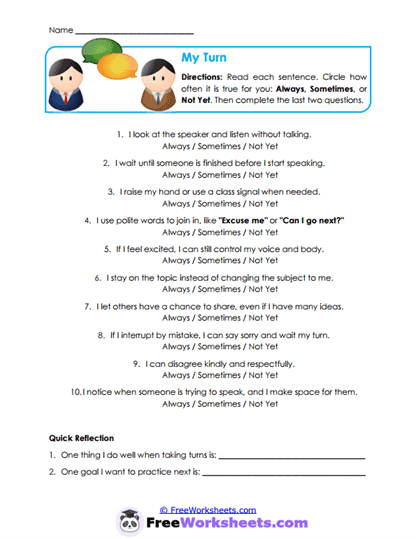
My Turn
- What Kids Do:
Students reflect on their own communication habits by rating how often they listen, wait, and respond respectfully. They set a goal for improvement. - Target Skill:
This activity builds self-awareness and goal-setting skills. Students learn to evaluate and improve their turn-taking habits.
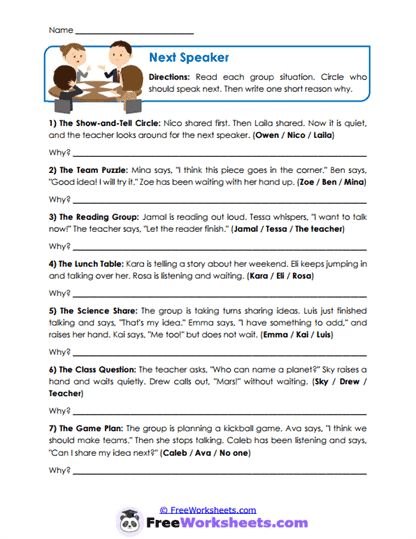
Next Speaker
- What Kids Do:
Students read group scenarios and decide who should speak next based on fairness and participation. They explain their reasoning. - Target Skill:
This worksheet develops decision-making and collaboration skills. Students learn to consider others and promote balanced conversations.
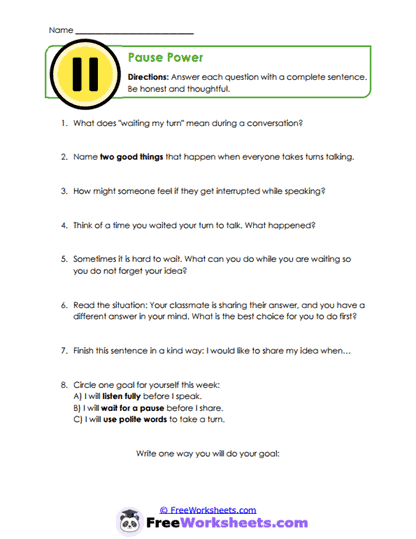
Pause Power
- What Kids Do:
Students answer questions about why waiting is important in conversations. They reflect on how pausing helps others feel heard. - Target Skill:
This activity strengthens self-control and listening skills. Students learn how waiting improves communication and respect.
Share Signals
- What Kids Do:
Students read scenarios and identify signals that show someone wants to speak, such as raising a hand or leaning forward. - Target Skill:
This worksheet builds awareness of verbal and nonverbal cues. Students learn to notice when others are ready to join the conversation.
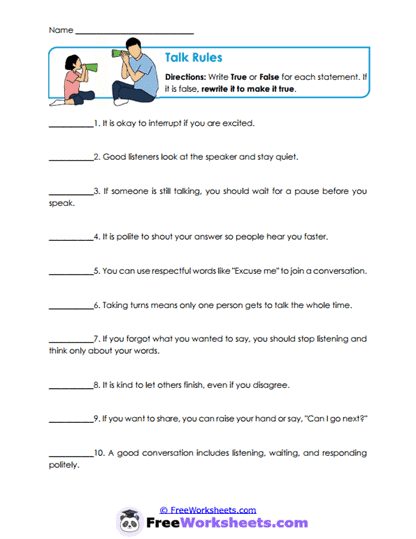
Talk Rules
- What Kids Do:
Students read statements about conversation behavior and decide if they are correct. They rewrite incorrect ones to show respectful turn-taking. - Target Skill:
This activity reinforces conversation rules and respectful participation. Students learn what behaviors support effective communication.
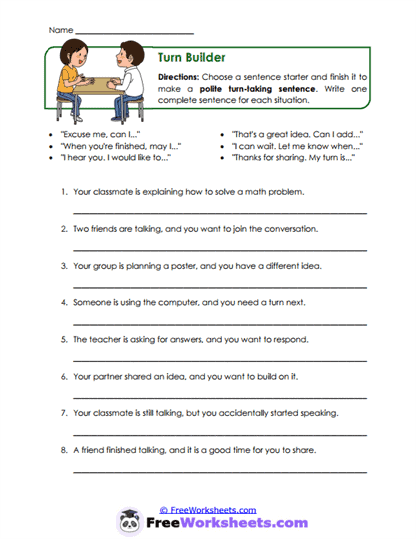
Turn Builder
- What Kids Do:
Students complete sentence starters to create polite ways to join a conversation. They practice entering discussions without interrupting. - Target Skill:
This worksheet builds structured speaking and confidence. Students learn how to join conversations respectfully and clearly.
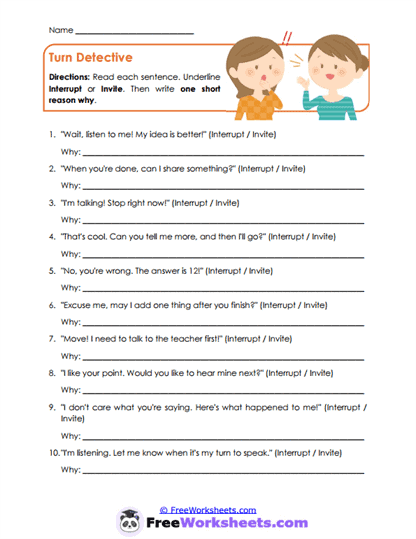
Turn Detective
- What Kids Do:
Students read sentences and decide whether they interrupt or invite others to speak. They explain their reasoning. - Target Skill:
This activity strengthens understanding of tone and intent. Students learn how language affects turn-taking in conversations.
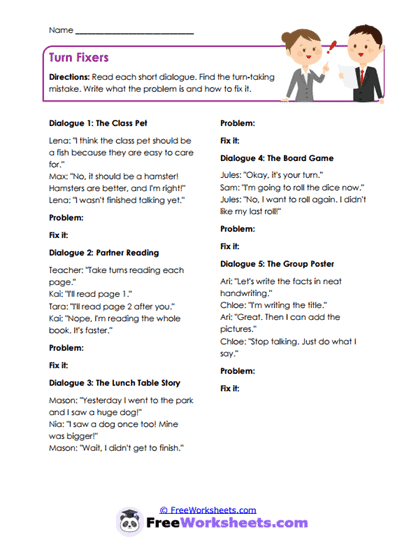
Turn Fixers
- What Kids Do:
Students read conversations with turn-taking problems and explain what went wrong. They then write how to fix each issue. - Target Skill:
This worksheet develops problem-solving in communication. Students learn how to improve conversations by correcting behavior.
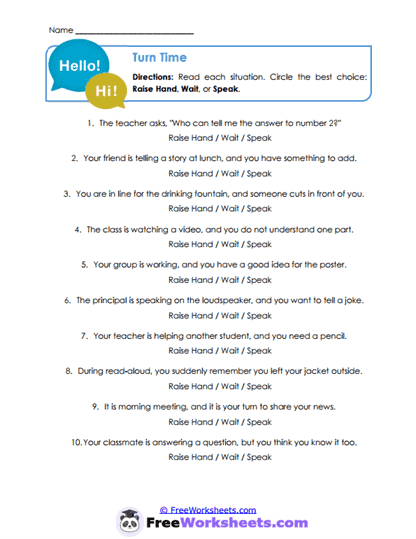
Turn Time
- What Kids Do:
Students read situations and decide whether to raise their hand, wait, or speak. They apply appropriate choices based on context. - Target Skill:
This activity builds decision-making and self-control. Students learn how timing affects respectful participation.
Turn Tracker
- What Kids Do:
Students track how often each person speaks in a conversation and reflect on fairness. They suggest ways to improve participation. - Target Skill:
This worksheet supports observation and analysis of communication patterns. Students learn how balanced participation improves group discussions.