
About This Worksheet
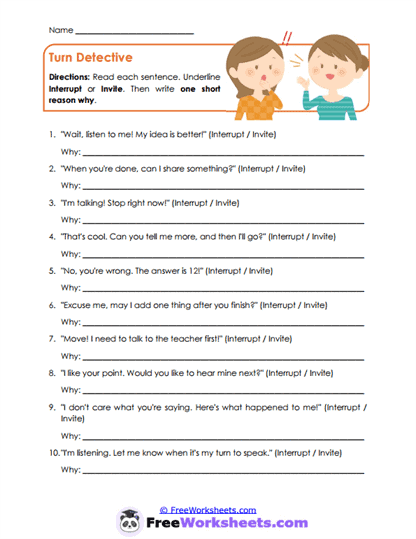
This worksheet is a social-emotional learning activity that helps students recognize the difference between interrupting and inviting others to speak. It focuses on understanding how word choice affects whether a conversation feels respectful. The subject area is SEL and communication, typically for grades 3-6. Students learn that small phrasing changes can shift a statement from rude to polite. For example, “Stop talking!” becomes “When you’re done, may I share something?”
Curriculum and Grade Alignment
This activity supports students in developing respectful conversation habits and listening skills. It builds on their ability to understand dialogue and introduces turn-taking awareness. Students should already be familiar with basic conversation rules before completing this worksheet. The next step is applying these skills in real-time discussions. It aligns with CCSS.ELA-LITERACY.SL.3.1 and TEKS 110.6(b)(1), which focus on collaborative communication.
Student Tasks
On this worksheet, students will read short sentences and decide whether each one interrupts or invites someone to speak. They will underline the correct choice for each example. After that, students write a short explanation for their decision. This encourages them to think about tone and intent. The activity helps build awareness of respectful speaking habits.
Common Challenges and Misconceptions
Some students may focus only on the words and miss the tone behind them. Others might think direct statements are always rude, even when they are appropriate. It’s also common to struggle with explaining why a sentence is interrupting or inviting. A few students may rush and not carefully consider each example. Modeling and discussing tone can help clarify these differences.
Implementation Guidance
Teachers can use this worksheet during SEL lessons or class discussions about communication. It works well as a partner activity where students explain their reasoning. Parents can support this at home by talking through everyday examples. Practicing polite phrasing can help students build confidence. This activity strengthens both speaking and listening skills.
Details and Features
The worksheet includes clear examples of both interrupting and inviting language. It provides space for underlining and written explanations. The layout is simple and easy to follow. It supports both analysis and reflection. The printable format makes it convenient for classroom or home use.