
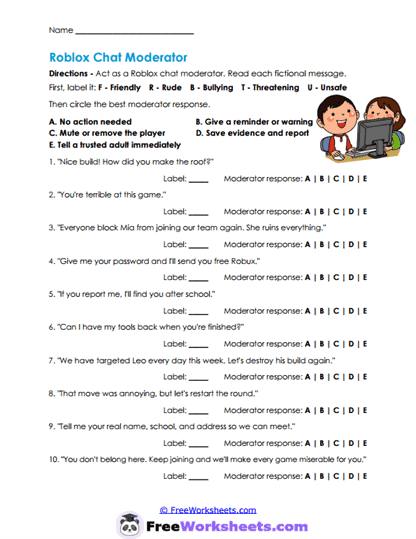
About This Worksheet
This worksheet places students in the role of a Roblox chat moderator and asks them to judge ten fictional messages. Children first label each message as friendly, rude, bullying, threatening, or unsafe, then select the best moderator response. The response choices include taking no action, giving a warning, muting or removing a player, saving evidence and reporting, or telling a trusted adult immediately. The examples cover insults, exclusion, repeated targeting, password requests, personal information, threats, and normal game disagreements.
Skills Developed
Students build digital literacy, safety awareness, classification skills, and thoughtful judgment. They learn that not every unkind message is the same and that the response should match the seriousness, repetition, and level of danger involved. The worksheet also helps children distinguish ordinary frustration from bullying, scams, threats, and requests for private information. These skills can support safer choices in gaming chats, online communities, and any digital space where students communicate with people they may not know personally.
Grade & Stage Appropriateness
This worksheet is most appropriate for upper elementary and middle school students, generally grades 5 through 8. Students in these grades often participate in multiplayer games and may encounter rude language, exclusion, scams, or requests for personal information. Younger students can benefit from teacher-led discussion about the labels and response choices, while older students can explain why repeated targeting is more serious than one impatient comment. The gaming theme makes the activity especially relatable for students who may not connect traditional bullying lessons with what happens online.
Connections to Collaborative for Academic, Social and Emotional Learning (CASEL)
This worksheet aligns closely with the CASEL areas of responsible decision-making, social awareness, self-management, and relationship skills. Students examine the effect of each message, resist impulsive reactions, and choose a response that fits the level of risk. In my experience, students sometimes want to treat every rude comment as a major emergency or, on the other hand, dismiss repeated harassment as normal gaming behavior. I use this kind of activity to help them find the middle ground by asking whether the behavior is repeated, targeted, threatening, unsafe, or requesting private information.
Using This Worksheet
Teachers can use this page during online-safety lessons, computer classes, gaming clubs, or bullying-prevention instruction. It works especially well in pairs, with students comparing both their labels and their chosen moderator actions. Parents and homeschool educators can connect the examples to the games their child plays and review the reporting tools available on those platforms. Make sure children understand that threats, password requests, and requests for real names, schools, or addresses should always be taken seriously and shared with a trusted adult.