
About This Worksheet
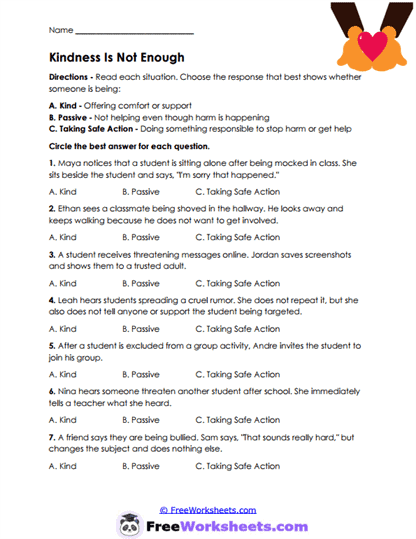
This worksheet teaches students that being kind is valuable, but kindness alone may not stop harmful behavior. Children read seven situations and decide whether each response is kind, passive, or a safe action that directly addresses the problem. The examples include exclusion, threats, rumors, online harassment, and repeated bullying, helping students see the difference between feeling sorry for someone and actually helping. The activity makes an important point: support matters most when it is paired with a responsible step.
Skills Developed
Students build social awareness, empathy, decision-making, and upstander skills. They learn to recognize when a response offers comfort, when it avoids the problem, and when it protects someone by getting help or interrupting harm safely. The worksheet also strengthens judgment because children must think about whether an action is likely to change the situation. These skills help students become more dependable classmates and make better choices when they witness mistreatment.
Grade & Stage Appropriateness
This worksheet is appropriate for upper elementary and middle school students, generally grades 4 through 8. Children at this stage often understand that bullying is wrong but may not yet know the difference between sympathy and effective support. Younger students may need help discussing why a friendly comment is not enough in a serious situation, while older students can explore when adult help, evidence, or direct support is needed. The activity is especially useful for students learning how to become safe and thoughtful upstanders.
Connections to Collaborative for Academic, Social and Emotional Learning (CASEL)
This worksheet supports the CASEL areas of social awareness, relationship skills, responsible decision-making, and self-management. Students consider what the targeted person needs, evaluate the safety of different responses, and choose an action that can reduce harm. In my experience, children are often surprised to learn that quietly noticing a problem is not the same as helping with it. I use this activity to show that caring becomes powerful when it leads to a safe action, such as inviting someone in, saving evidence, or telling a trusted adult.
Using This Worksheet
Teachers can use this page during a bullying-prevention lesson, an upstander unit, or a classroom discussion about what real support looks like. The examples work well for partner talk because students can explain why a response is kind, passive, or truly helpful. Parents and homeschool educators can use the page to discuss what a child should do if they see exclusion, threats, rumors, or online harm. Keep the focus on safe action and remind children that they are never expected to handle dangerous behavior alone.