
About This Worksheet
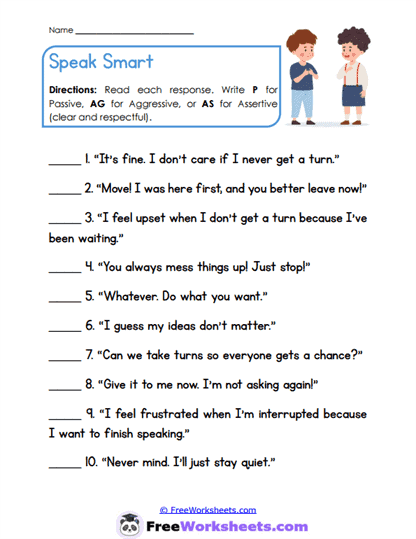
This worksheet teaches students to tell the difference between passive, aggressive, and assertive communication. Children read ten short responses and label each one based on whether it avoids the issue, attacks another person, or communicates clearly and respectfully. The examples include turn-taking, interruption, frustration, giving up, and asking others to cooperate. The activity helps students understand that assertive communication is the healthy middle ground between staying silent and becoming hurtful.
Skills Developed
Students strengthen communication awareness, emotional regulation, boundary-setting, and responsible decision-making. They learn to recognize passive statements that hide needs, aggressive statements that demand or insult, and assertive statements that explain feelings and make fair requests. The worksheet also gives children several useful models they can borrow in real conversations. These skills can help students participate more confidently while still respecting the needs and rights of others.
Grade & Stage Appropriateness
This worksheet is most appropriate for upper elementary and middle school students, generally grades 4 through 8. Children at this stage are becoming more independent in peer situations and need clearer language for expressing needs without withdrawing or attacking. Younger students may benefit from discussing each label before working alone, while older students can rewrite the passive and aggressive examples as assertive ones. The worksheet is especially helpful for students who either stay quiet when upset or become overly forceful when trying to be heard.
Connections to Collaborative for Academic, Social and Emotional Learning (CASEL)
This worksheet supports the CASEL areas of self-awareness, self-management, relationship skills, and responsible decision-making. Students examine how their words communicate emotions and needs, then consider which style is most likely to protect both the relationship and the problem being discussed. When I teach these three styles, students sometimes think assertive means being louder or more powerful. I explain that assertive communication is actually calm, direct, and respectful, with enough confidence to speak up and enough care to listen.
Using This Worksheet
Teachers can use this activity during lessons about communication styles, conflict resolution, friendship skills, or classroom participation. It works well to act out several statements so students can hear how tone may change the meaning. Parents and homeschool educators can connect the examples to family decisions, sibling disagreements, and moments when a child needs to ask for help or set a boundary. After labeling the responses, invite students to choose one passive and one aggressive statement and rewrite both in an assertive way.