
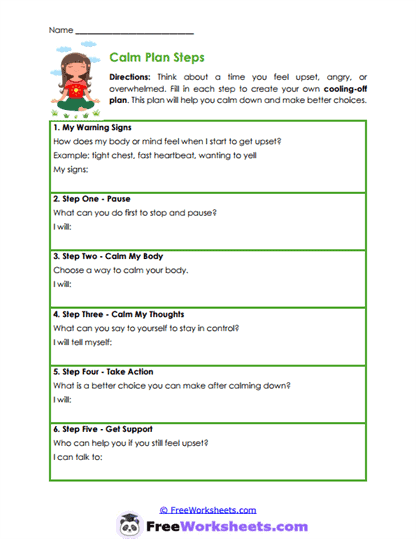
About This Worksheet
This worksheet helps students create a personal step-by-step plan for handling moments when they feel upset, angry, or overwhelmed. Children begin by identifying the body or mind signals that warn them a strong reaction may be building, then choose actions for pausing, calming the body, steadying their thoughts, making a better choice, and getting support. The structure turns emotional regulation into a clear process rather than expecting children to “just calm down” without guidance. By completing each part in their own words, students create a plan that feels practical and personal.
Skills Developed
Students strengthen self-awareness, emotional regulation, body-signal recognition, coping skills, and help-seeking. They learn to notice early warning signs before emotions become too intense and to connect those signals with a specific calming action. The worksheet also encourages positive self-talk and thoughtful decision-making after the body begins to settle. These skills can help children manage frustration, worry, anger, disappointment, and sensory overload in a safer and more independent way.
Grade & Stage Appropriateness
This worksheet is best suited for upper elementary through middle school students, generally grades 3 through 8. Younger students may need examples of body signals and calming tools, while older students can create a more detailed plan that reflects their personal triggers and needs. The worksheet is especially useful for children who recognize that they lose control but are unsure what to do before reaching that point. Its open-ended format also allows teachers, counselors, and families to adjust the language for different developmental and emotional needs.
Connections to Collaborative for Academic, Social and Emotional Learning (CASEL)
This activity connects most strongly with the CASEL areas of self-awareness, self-management, and responsible decision-making. Students identify their emotional warning signs, choose coping tools, and plan a safer response before a difficult situation occurs. When I have used calming plans with children, I have found that they work best when the student helps choose every step rather than receiving a list created by an adult. Children are much more likely to use a strategy when it feels realistic, familiar, and respectful of how their own body responds.
Using This Worksheet
Teachers can use this page during an SEL lesson, counseling session, behavior-support meeting, or calm classroom discussion before problems arise. It is helpful to complete the sections slowly and let students test several strategies before deciding what belongs in their plan. Parents and homeschool educators can create a copy for home and keep it in an easy-to-find place for moments involving homework, siblings, routines, or disappointment. Review the plan during calm times so the steps are familiar enough to use when emotions are stronger.