
About This Worksheet
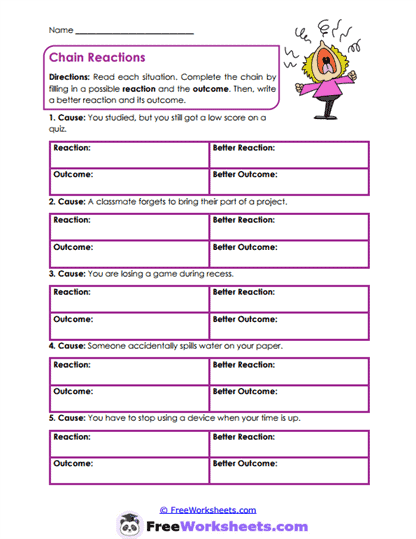
This worksheet helps students see how one event can lead to a reaction and then to an outcome. Children work through five situations involving a disappointing quiz score, an unfinished group task, losing a game, an accidental spill, and stopping device use. For each one, they write a possible impulsive reaction and its result, then create a better reaction and a healthier outcome. This side-by-side structure makes it easier for children to understand that their response can change what happens next.
Skills Developed
Students strengthen cause-and-effect thinking, emotional regulation, decision-making, and problem-solving. They practice predicting how yelling, blaming, quitting, or refusing may affect a situation and compare those results with calmer choices. The worksheet also encourages flexible thinking by showing that the original event may stay the same even when the outcome improves. These skills help children understand that they cannot control every disappointment, but they often have some control over the next step.
Grade & Stage Appropriateness
This worksheet is best suited for upper elementary and early middle school students, generally grades 3 through 7. Younger students may need help imagining realistic outcomes, while older students can explore longer-term effects on trust, relationships, and responsibilities. The chart format provides clear structure without limiting students to one correct response. It is especially useful for children who react quickly and have difficulty seeing how their behavior contributes to what happens afterward.
Connections to Collaborative for Academic, Social and Emotional Learning (CASEL)
This activity strongly supports the CASEL areas of responsible decision-making, self-management, self-awareness, and relationship skills. Students consider the consequences of an impulsive response and then choose a reaction that is safer, calmer, and more productive. When I use reaction chains with children, they often notice that the trigger is only the first part of the story. I remind them that even when they cannot change the low score, lost game, or accidental spill, they can still choose a response that protects the situation from becoming worse.
Using This Worksheet
Teachers can model the first chain by thinking aloud about an impulsive reaction, its likely outcome, and a calmer alternative. The page works well during SEL lessons about consequences, coping skills, and personal responsibility. Parents and homeschool educators can connect the chart to real situations and help children compare what happened with what might have happened after a different choice. Keep the discussion focused on learning rather than blame, and encourage students to choose responses they could realistically use.