
About This Worksheet
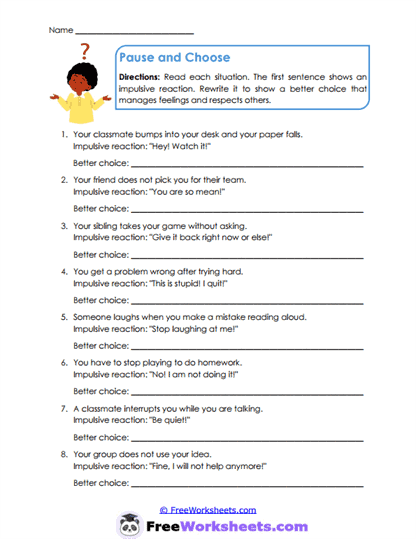
This worksheet helps students slow down after an upsetting moment and replace an impulsive reaction with a calmer choice. Children read eight realistic situations involving interruptions, mistakes, teasing, unfairness, shared belongings, homework, and group work. Each example shows a quick response that may make the problem worse, and students rewrite it in a way that manages the feeling while still respecting others. The activity teaches that the first thought or reaction does not have to become the final choice.
Skills Developed
Students strengthen impulse control, emotional regulation, flexible thinking, and respectful communication. They practice recognizing when a reaction is driven by anger, disappointment, embarrassment, or frustration and then choosing language that better fits the situation. The worksheet also builds problem-solving skills because students must create a response that protects their needs without insulting or blaming someone else. These habits can help children handle classroom conflicts, friendship problems, mistakes, and changes in plans more successfully.
Grade & Stage Appropriateness
This worksheet is best suited for elementary students in grades 2 through 5. Children in this range often understand that an impulsive response is unhelpful but still need practice finding better words in the moment. Younger students may benefit from completing the first few examples aloud with an adult, while older students can explain how their rewritten response might change the outcome. The activity is especially useful for children developing frustration tolerance, patience, and greater control over quick verbal reactions.
Connections to Collaborative for Academic, Social and Emotional Learning (CASEL)
This worksheet connects strongly with the CASEL areas of self-management, responsible decision-making, self-awareness, and relationship skills. Students notice the emotion behind an impulse, pause before acting, and select a response that is more likely to solve the problem. When I use a page like this with children, I explain that the goal is not to ignore what happened or pretend they are not upset. Instead, they are learning to choose words that clearly express the problem without creating a second problem through yelling, insults, or refusal.
Using This Worksheet
Teachers can use this page during an SEL lesson about pausing, managing impulses, or making thoughtful choices. It works well to model one example by discussing the likely feeling, why the impulsive reaction is unhelpful, and what a better response could sound like. Parents and homeschool educators can connect the situations to real moments involving siblings, homework, games, or shared belongings. After students finish, invite them to read several responses aloud and decide whether each one is calm, clear, respectful, and realistic.