
About This Worksheet
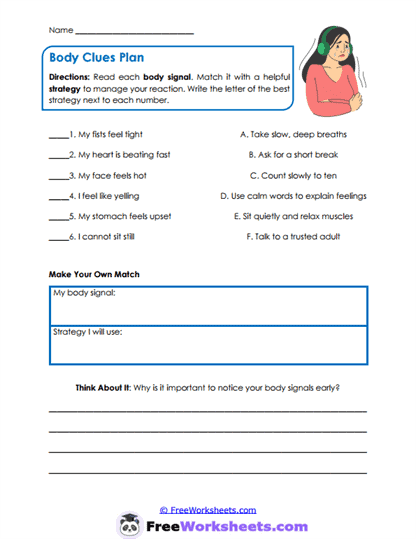
This worksheet helps students notice the physical warning signs that often appear before an emotional reaction becomes difficult to control. Children match six body clues, such as tight fists, a racing heart, a hot face, an upset stomach, restlessness, or feeling like they may yell, with helpful calming strategies. They then name one body signal of their own and choose a strategy they could use when it appears. The activity teaches children that the body often gives an early warning, and noticing that warning creates a valuable chance to pause and make a safer choice.
Skills Developed
Students strengthen body awareness, emotional recognition, coping skills, and early problem-solving. They practice connecting physical sensations with practical responses such as slow breathing, counting, relaxing muscles, using calm words, asking for a break, or talking to a trusted adult. The worksheet also helps children understand that emotional regulation often begins before they can clearly name the full feeling. These skills can help students respond earlier to anger, worry, frustration, excitement, or overwhelm instead of waiting until the emotion feels too large.
Grade & Stage Appropriateness
This worksheet is best suited for elementary and early middle school students, generally grades 2 through 6. Younger children may need an adult to explain how emotions can be felt in the stomach, face, muscles, or heartbeat, while older students can describe more personal warning signs and choose strategies independently. The matching format makes the lesson approachable, and the open-ended section adds enough depth for students with stronger reflection skills. It is especially helpful for children who say they become upset “all of a sudden” and need support noticing the earlier steps.
Connections to Collaborative for Academic, Social and Emotional Learning (CASEL)
This worksheet connects most strongly with the CASEL areas of self-awareness, self-management, and responsible decision-making. Students learn to notice what their body is communicating, choose a coping strategy, and act before an impulsive response creates another problem. When I use body-signal lessons with children, I explain that these clues are not signs that they are bad or out of control. They are helpful messages from the body saying, “Something is building, and now is a good time to use a tool.”
Using This Worksheet
Teachers can use this page while introducing calming strategies, creating personal regulation plans, or discussing what happens in the body during strong emotions. It works well to demonstrate each signal safely, such as gently tightening and relaxing the hands, and then practice the matching strategy. Parents and homeschool educators can ask children which body clues they notice during homework, sibling conflict, waiting, or disappointment. After completing the page, choose one signal and one response to practice regularly during calm moments so the connection becomes easier to remember.