
About This Worksheet
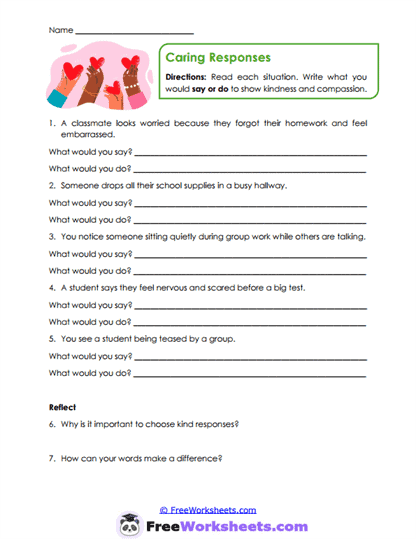
This worksheet helps students think about what they could say and do when someone else is worried, embarrassed, left out, nervous, or being teased. Children read five realistic situations and respond in two ways: first with caring words, and then with a helpful action. The examples include forgotten homework, dropped supplies, a quiet group member, test anxiety, and peer teasing. This teaches students that compassion is strongest when kind language is followed by thoughtful action.
Skills Developed
Students strengthen empathy, perspective-taking, communication, and responsible helping skills. They practice noticing what another person may be feeling and choosing words that offer reassurance without making the situation more embarrassing. The action questions also encourage students to move beyond sympathy by helping clean up, inviting someone into a group, staying nearby, or finding adult support. These skills can help children become more dependable classmates and respond more confidently when someone needs care.
Grade & Stage Appropriateness
This worksheet is best suited for upper elementary and early middle school students, especially grades 3 through 6. Students at this stage are becoming more aware of other people’s emotions but may still need practice deciding what support would actually be helpful. Younger learners may benefit from sentence starters or a short list of possible actions, while older students can explain how the safest response may change depending on the situation. The activity is especially helpful for children who care about others but freeze, stay silent, or feel unsure about what to do.
Connections to Collaborative for Academic, Social and Emotional Learning (CASEL)
This worksheet aligns closely with the CASEL areas of social awareness, relationship skills, and responsible decision-making. Students identify another person’s likely feelings, communicate support, and choose an action that fits the need and level of concern. When I use situations like these, I remind children that helping does not always mean fixing the whole problem themselves. Sometimes the most compassionate response is to listen, stay with the person, offer one practical step, or bring in a trusted adult.
Using This Worksheet
Teachers can use this page during lessons about empathy, upstander behavior, peer support, or building a caring classroom community. It works well to discuss the difference between what a student might say and what they might actually do, since both parts matter. Parents and homeschool educators can connect the examples to siblings, sports teams, clubs, and neighborhood friendships. After completing the worksheet, invite the child to choose one situation and role-play a natural response they could realistically use.