
About This Worksheet
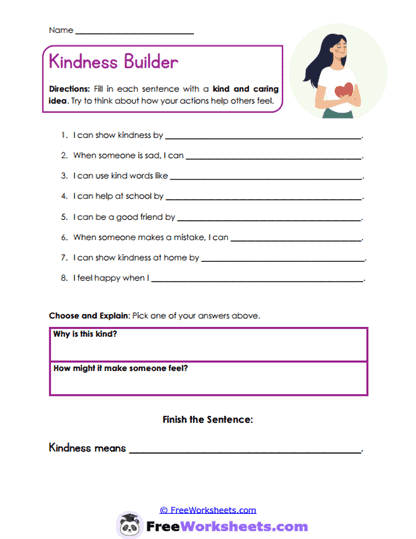
This worksheet encourages students to complete eight open-ended statements about how they can show kindness at school, at home, and in friendships. Children think about helping someone who is sad, responding when another person makes a mistake, including a friend, and using caring words. They then choose one response to explain why it is kind and how it may make someone feel. The final sentence asks students to create their own simple definition of kindness based on everything they have considered.
Skills Developed
Students strengthen empathy, self-reflection, communication, and prosocial planning. They practice turning a broad value such as kindness into specific words and actions they could actually use. The explanation section helps them connect behavior with emotional impact, while the final definition encourages them to combine their ideas into one larger understanding. These skills support stronger friendships, helpful classroom participation, and more thoughtful choices at home.
Grade & Stage Appropriateness
This worksheet is a strong fit for elementary students in grades 2 through 5. Younger students may need examples or a word bank before completing the open-ended sentences, while older students can create more detailed and personal responses. Because there is no single correct answer, the page can meet a wide range of writing abilities and social maturity levels. It is especially useful for children who understand kindness in general but need help identifying what it looks and sounds like in daily life.
Connections to Collaborative for Academic, Social and Emotional Learning (CASEL)
This worksheet connects with the CASEL areas of self-awareness, social awareness, relationship skills, and responsible decision-making. Students reflect on the kind person they want to be, consider how others may feel, and plan caring responses for several common situations. When I have used open-ended kindness activities, I have found that children often create their best ideas when we avoid giving them every answer first. Their own examples reveal what kindness means in their world and make the lesson feel more personal and useful.
Using This Worksheet
Teachers can use this page for independent reflection, partner sharing, a kindness unit, or a classroom community discussion. It is helpful to brainstorm only one or two examples before students work so they still have room to develop original ideas. Parents and homeschool educators can complete the prompts together and compare how kindness may look different at home, school, and in the community. End by asking the child to choose one written idea and turn it into a real action that week.