
About This Worksheet
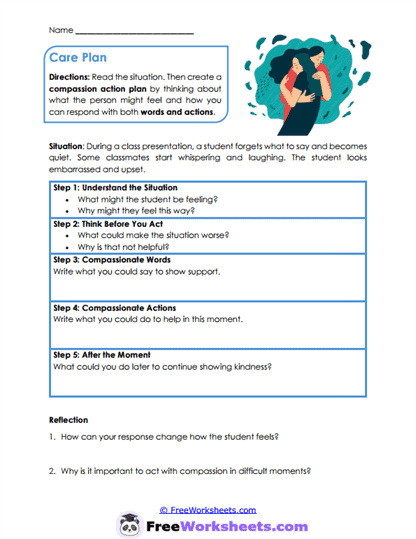
This worksheet guides students through a five-step plan for responding compassionately when a classmate becomes embarrassed during a presentation. Children identify what the student may be feeling, think about actions that could make the situation worse, write supportive words, choose helpful actions, and plan how to continue showing kindness afterward. The structure teaches that compassion includes understanding, careful thinking, respectful language, and practical support. It also shows that kindness may need to continue after the difficult moment has passed.
Skills Developed
Students strengthen empathy, emotional recognition, planning, communication, and responsible helping skills. They practice considering both immediate needs and longer-term support instead of reacting without thinking. The worksheet also helps students distinguish between actions that draw more attention to embarrassment and actions that quietly protect dignity. These skills can help children respond more thoughtfully when someone makes a mistake, freezes, becomes upset, or feels exposed in front of others.
Grade & Stage Appropriateness
This worksheet is most appropriate for upper elementary and middle school students, especially grades 4 through 8. Students in this range are socially aware enough to recognize embarrassment and peer reactions, but they may still need guidance about helping without making the person feel more uncomfortable. Younger students may need support completing the planning sections, while older students can create more subtle and realistic responses. The activity is particularly helpful for classrooms where presentations, public mistakes, teasing, or fear of peer judgment are common concerns.
Connections to Collaborative for Academic, Social and Emotional Learning (CASEL)
This worksheet supports the CASEL areas of social awareness, relationship skills, responsible decision-making, self-management, and self-awareness. Students recognize another person’s emotions, manage the urge to laugh or draw attention, and choose words and actions that protect trust and belonging. When I have used compassion plans like this, students often realize that asking loudly, “Are you okay?” may actually increase embarrassment. We talk about quieter choices, such as offering reassurance afterward, helping redirect attention, or checking in privately.
Using This Worksheet
Teachers can use this page before student presentations, performances, or activities where mistakes may happen in front of peers. Completing the plan as a class can establish a shared understanding of how students should respond when someone struggles. Parents and homeschool educators can adapt the situation to sports, family events, music lessons, or other moments involving embarrassment. After the worksheet, ask students to choose one supportive phrase and one quiet action they could realistically use in a similar situation.