
About This Worksheet
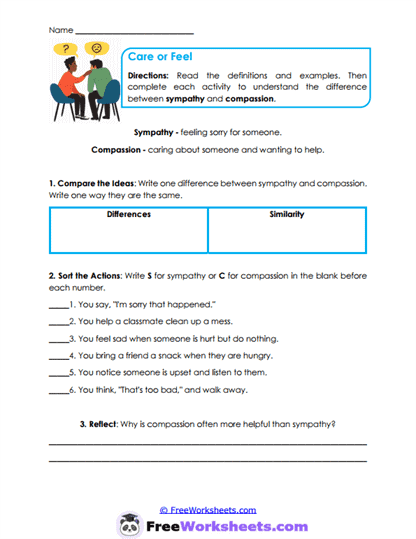
This worksheet helps students understand the difference between sympathy and compassion. Children learn that sympathy means feeling sorry for someone, while compassion includes caring about the problem and wanting to help. They compare the two ideas, sort six statements or actions into the correct category, and explain why compassion is often more helpful. The activity makes an important distinction between noticing another person’s pain and taking a thoughtful step to support them.
Skills Developed
Students strengthen concept comparison, empathy, classification, and reflective reasoning. They practice recognizing when a response offers only concern and when it includes listening, sharing, helping, or staying close to someone who is upset. The final reflection encourages children to explain why action can make another person feel more supported than words alone. These skills help students become more intentional about how they respond when someone is struggling.
Grade & Stage Appropriateness
This worksheet is best suited for upper elementary and middle school students, especially grades 4 through 8. The difference between sympathy and compassion can feel abstract, so students need enough social understanding to compare intent, action, and emotional impact. Younger students may benefit from role-play or teacher examples, while older students can discuss times when help should be offered carefully and with respect for another person’s wishes. The page is especially useful for children who express concern but need guidance turning that concern into appropriate support.
Connections to Collaborative for Academic, Social and Emotional Learning (CASEL)
This worksheet connects strongly with the CASEL areas of social awareness, relationship skills, and responsible decision-making. Students recognize another person’s emotions, consider what support may be helpful, and choose whether to move from feeling concern to taking action. When I teach this distinction, I explain that compassion does not mean taking over or assuming we know exactly what someone needs. A caring response may begin with a simple question such as, “Would you like help?” or “Do you want me to stay with you?”
Using This Worksheet
Teachers can use this page during lessons about empathy, helping behavior, friendship, or community responsibility. It works well to act out several examples and let students decide whether the response shows sympathy, compassion, or possibly both. Parents and homeschool educators can connect the concept to illness, disappointment, mistakes, loneliness, or helping a family member. Encourage children to remember that compassionate action should be respectful, safe, and based on what the other person actually needs.