
About This Worksheet
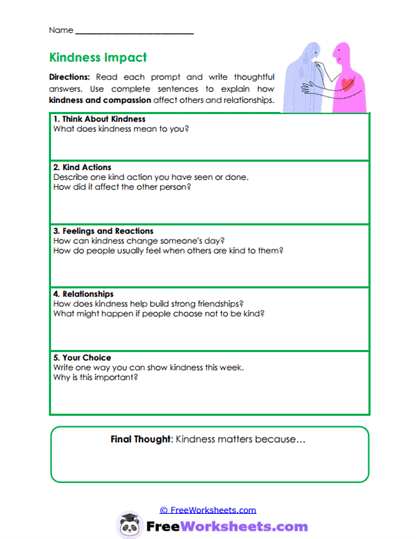
This worksheet invites students to think more deeply about how kindness and compassion affect people, friendships, and communities. Children respond to prompts about what kindness means, describe a kind action they have seen or completed, and explain how that action affected another person. They also reflect on how kindness can change someone’s day, strengthen relationships, and become part of a personal weekly goal. The final statement gives students space to explain why kindness matters in their own words.
Skills Developed
Students build reflective thinking, empathy, written communication, and social responsibility. They practice connecting caring behavior with emotional and relational outcomes rather than viewing kindness as a simple rule. The worksheet also encourages students to remember past examples and create a realistic plan for future action. These skills help children see that even small choices can influence trust, belonging, mood, and the overall tone of a group.
Grade & Stage Appropriateness
This worksheet is most appropriate for upper elementary through early middle school students, generally grades 4 through 7. The open-ended prompts require students to explain ideas, experiences, and consequences in complete thoughts rather than choose from prepared answers. Younger students may need discussion support before writing, while older students can offer more detailed examples involving friendship, teamwork, family, or school culture. It is especially useful for learners who are ready to move beyond identifying kind behavior and begin examining its wider impact.
Connections to Collaborative for Academic, Social and Emotional Learning (CASEL)
This activity supports the CASEL areas of self-awareness, social awareness, relationship skills, and responsible decision-making. Students reflect on their own values, consider how others are affected, and choose a concrete way to contribute positively. In my experience, children often begin with very broad answers such as “Kindness makes people happy,” so I gently ask them to be more specific. Once they describe how a person may feel safer, less alone, more confident, or more willing to trust, the lesson becomes much more meaningful.
Using This Worksheet
Teachers can use this page as a closing reflection after a kindness unit, a weekly journal activity, or a thoughtful classroom-community check-in. It works well after students have already discussed several examples of compassion and are ready to explain the deeper reasons those actions matter. Parents and homeschool educators can complete the prompts through conversation first and then encourage the child to write from personal experience. Return to the weekly kindness goal later so the reflection leads to a real action rather than ending on the page.