
About This Worksheet
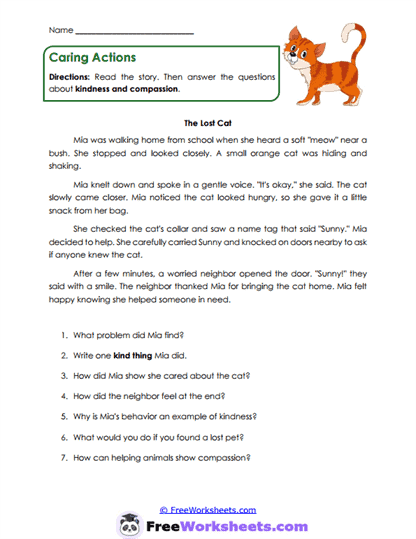
This worksheet uses a short story about Mia helping a lost cat to show what compassion looks like in action. Students read how Mia notices the frightened animal, approaches gently, offers food, checks the collar, and asks nearby neighbors for help. They then answer questions about the problem, Mia’s kind choices, the cat’s feelings, and the neighbor’s reaction when the pet is safely returned. The story helps children see that compassion means noticing distress, caring about it, and taking a safe step to help.
Skills Developed
Students strengthen reading comprehension, empathy, sequencing, and cause-and-effect thinking as they follow Mia’s actions from finding the cat to locating its owner. They practice identifying how gentle words, patience, and responsible help can make a frightened person or animal feel safer. The personal reflection questions also ask children to connect the lesson with their own experience of a lost pet or an animal in need. These skills encourage thoughtful care while reminding students that helping should still be safe and responsible.
Grade & Stage Appropriateness
This worksheet is best suited for elementary students in grades 2 through 5. Younger students may benefit from hearing the story read aloud and discussing each character’s feelings before writing, while older students can provide fuller explanations about compassion and responsibility. The familiar animal theme makes the lesson accessible, but the questions still require meaningful reflection and evidence from the passage. It is especially useful for children learning how kindness can move beyond friendly words and become helpful action.
Connections to Collaborative for Academic, Social and Emotional Learning (CASEL)
This worksheet connects strongly with the CASEL areas of social awareness, responsible decision-making, and relationship skills. Mia notices that the cat is scared and hungry, considers what it needs, and chooses calm actions that lead to safe adult support. When I use stories like this with children, I point out that Mia does not rush, grab the animal, or try to solve everything alone. That helps students understand that compassion includes both a caring heart and good judgment about the safest way to help.
Using This Worksheet
Teachers can use this page during an SEL lesson about compassion, animal care, or helping someone in need. It works well to pause after Mia first sees the cat and ask students what safe choices she could make before reading the rest of the story. Parents and homeschool educators can connect the passage to pets, wildlife, lost belongings, or helping a worried neighbor. Afterward, remind children that an unfamiliar or injured animal should be handled with help from a trusted adult.