
About This Worksheet
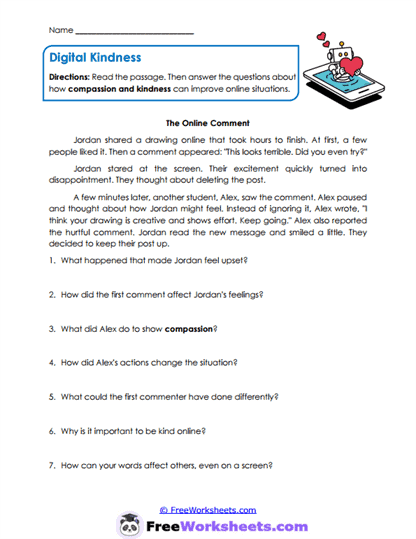
This worksheet uses a short story about an unkind online comment to show how digital words can affect real feelings. Jordan proudly shares a drawing, receives a hurtful reply, and begins feeling disappointed before another student steps in with a kind message and reports the comment. Students answer questions about what happened, how each response changed Jordan’s emotions, and what the first commenter could have done differently. The activity helps children understand that kindness and compassion matter just as much online as they do in face-to-face conversations.
Skills Developed
Students strengthen reading comprehension, digital citizenship, empathy, and responsible online decision-making. They practice identifying emotional changes in a character and connecting those feelings with specific comments and actions. The worksheet also shows how an upstander can interrupt online harm by offering encouragement, refusing to join in, and using reporting tools appropriately. These skills help students think more carefully about what they type, share, like, or allow to continue in digital spaces.
Grade & Stage Appropriateness
This worksheet is best suited for upper elementary and early middle school students, especially grades 4 through 7. Children in this range are often becoming more active in games, group chats, learning platforms, and social spaces where comments can spread quickly. Younger students may need support understanding reporting tools and digital audiences, while older students can discuss screenshots, lasting impact, and the responsibility of bystanders. The story is especially appropriate for students who are learning that online communication can feel less personal while still causing very personal harm.
Connections to Collaborative for Academic, Social and Emotional Learning (CASEL)
This worksheet connects strongly with the CASEL areas of social awareness, relationship skills, responsible decision-making, and self-management. Students consider how Jordan feels, examine Alex’s compassionate response, and think about how to act safely when they witness online cruelty. When I use a story like this, students often notice that Alex did not need a long speech to make a difference. A brief kind message, followed by a responsible report, helped Jordan feel supported and showed that harmful behavior did not represent the whole group.
Using This Worksheet
Teachers can use this page during a digital citizenship lesson, cyberbullying unit, or discussion about being an online upstander. It works well to pause after the first comment and ask students what Jordan may be thinking before revealing Alex’s response. Parents and homeschool educators can connect the story to gaming chats, classroom platforms, text messages, and comments on shared work. After completing the questions, invite students to write one short online message that could encourage someone whose work has been criticized.