
Long Vowel Sounds Worksheets
Long vowel sounds in kindergarten language arts help children recognize how vowels change across silent-e words, vowel teams, and other common spelling patterns. These free, ready-to-print PDF worksheets are prepared for immediate classroom use, literacy centers, homeschool lessons, intervention, homework, or independent practice. Children strengthen long-vowel recognition, spelling-pattern awareness, and decoding while working toward important kindergarten curriculum goals.
About This Collection of Worksheets
Long vowel instruction helps kindergarten children notice that vowels can make different sounds depending on the letters around them. Students begin to see how a final silent e can change a word, how vowel teams such as ai, ee, and oa work together, and how the same long vowel sound can appear in more than one spelling pattern. These connections support decoding, spelling, word recognition, and more confident reading.
This collection gives students several ways to practice long vowel patterns beyond isolated word lists. Children add silent e, identify vowel teams, complete long-vowel words, match sounds with pictures, find long-vowel words in sentences, color-code words by sound, solve riddles, search passages for vowel teams, sort spelling patterns, complete sentences, build picture scenes, and compare words by sound. Pasted text
Teachers can use these worksheets during kindergarten phonics lessons, literacy centers, guided reading support, intervention, homework, or review. Parents and homeschool educators can select pages based on whether a child needs more help hearing long vowel sounds, recognizing spelling patterns, sorting words, or applying phonics skills in sentences and short passages. The mix of listening, reading, writing, sorting, and matching activities gives children repeated exposure without making every page feel the same.
Paul’s Teacher Tip
When teaching long vowels, have children say the word aloud before looking for the spelling pattern. This keeps the sound connected to the letters instead of turning the activity into visual guessing. For silent-e words, compare pairs such as cap/cape or hop/hope so children can hear exactly what changes. When working with vowel teams, encourage students to underline both letters together rather than marking only one vowel. If a child recognizes the sound but not the spelling, sort a few examples side by side and let the repeated pattern become visible.
Worksheet Collection Skill Spotlights
Long Words
What Kids Do:
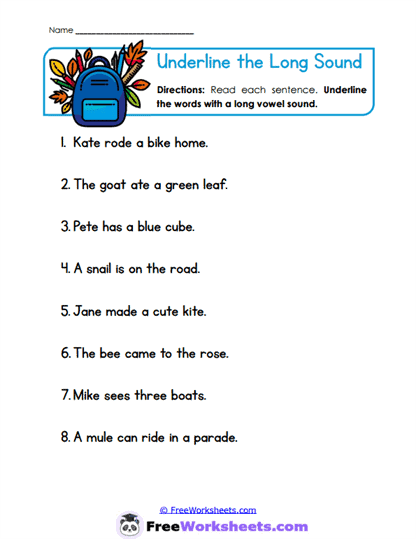
Children read eight simple sentences and underline the words that contain long vowel sounds. They work through examples with words such as bike, goat, green, cube, road, kite, bee, and boats, then reread each sentence aloud with attention to the long-vowel words.
Target Skill:
This activity helps students transfer long-vowel recognition from isolated words into connected text. Children strengthen decoding, sentence-level phonics awareness, and the ability to notice silent-e and vowel-team patterns while reading complete ideas rather than single examples.
Pattern Sorting
What Kids Do:
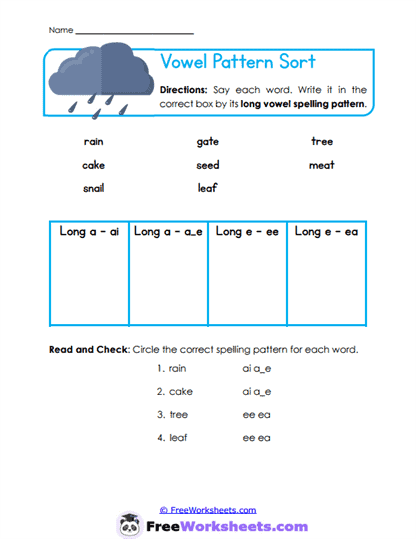
Children sort words such as rain, cake, snail, gate, seed, leaf, tree, and meat into groups for ai, a_e, ee, and ea. They then examine additional words and circle the spelling pattern they see inside each one.
Target Skill:
The worksheet develops understanding that one long vowel sound can have more than one spelling pattern. Students practice comparing ai with a_e and ee with ea while strengthening word analysis, decoding, and visual recognition of common vowel spellings.
Picture Building
What Kids Do:
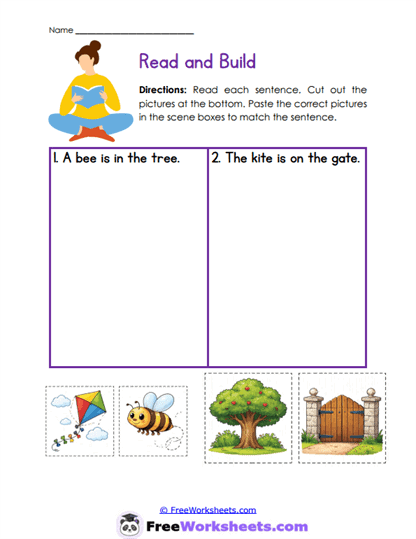
Children read simple sentences such as “A bee is in the tree” and “The kite is on the gate,” cut out matching pictures, and place them into the correct scene boxes. They identify the important long-vowel words before choosing and pasting the images.
Target Skill:
This activity connects long-vowel decoding with reading comprehension and visual meaning. Students practice reading words such as bee, tree, kite, and gate inside full sentences while showing that they understand how those words relate to the complete idea.
Sentence Vowels
What Kids Do:
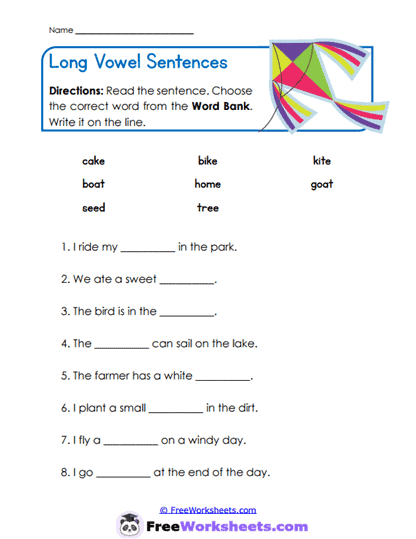
Children use an eight-word bank containing long-vowel words such as cake, bike, kite, boat, home, goat, seed, and tree to complete simple sentences. They choose the word that fits each context, write it on the line, and reread the sentence aloud.
Target Skill:
The worksheet strengthens the connection between phonics and meaning. Students practice recognizing silent-e and vowel-team words while using sentence context to confirm the correct choice, reinforcing decoding, vocabulary, spelling, and early comprehension.
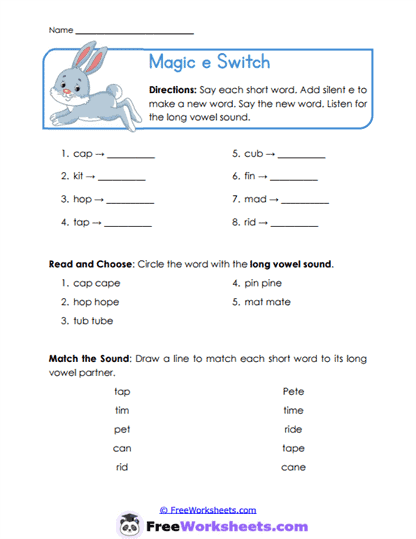
Silent E
What Kids Do:
Children add a final silent e to short-vowel words such as cap, hop, rid, and tap to create new long-vowel words. They also circle long-vowel choices and match short-vowel words with their silent-e partners.
Target Skill:
This activity develops understanding of the CVCe pattern and how final e changes the preceding vowel sound. Students strengthen decoding and spelling by comparing short and long vowel word pairs and recognizing that the final e remains silent while affecting the earlier vowel.
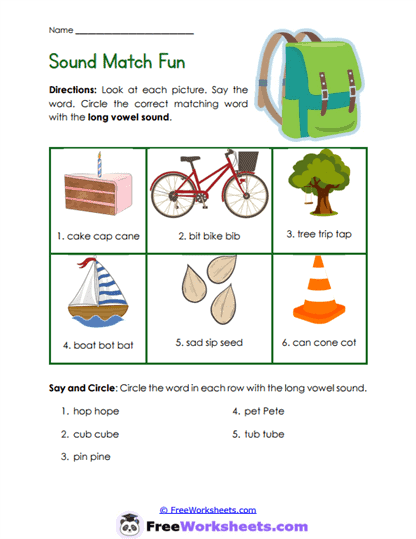
Sound Pictures
What Kids Do:
Children look at familiar pictures such as a cake, bike, tree, boat, seeds, and cone and choose the word that correctly names each one. They also compare short- and long-vowel word pairs such as hop/hope and cub/cube.
Target Skill:
The worksheet strengthens auditory and visual recognition of long vowel sounds by pairing pictures with written choices. Students practice distinguishing similar-looking words and checking both meaning and vowel pattern instead of relying only on the picture clue.
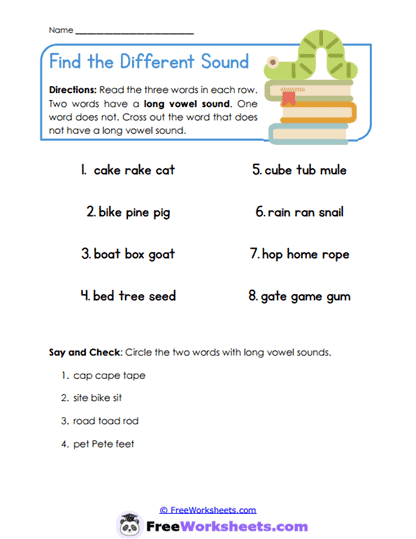
Sound Sorting
What Kids Do:
Children read groups of three words and cross out the one that does not contain a long vowel sound. In a second section, they compare new groups and circle the two words that do have long vowels.
Target Skill:
This activity develops sound discrimination between long- and short-vowel words. Students strengthen phonemic awareness, decoding, and pattern recognition by comparing several words side by side and identifying which examples share the target vowel sound.
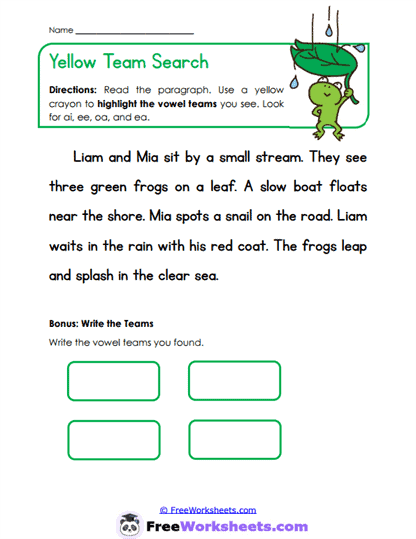
Team Search
What Kids Do:
Children read a short passage and highlight vowel teams such as ai, ee, and oa inside the words they find. After searching the passage, they record the vowel teams in boxes and can reread the highlighted words aloud.
Target Skill:
The worksheet helps students apply vowel-team recognition during connected reading. Children strengthen visual scanning, decoding, and phonics transfer by locating two-letter vowel patterns inside complete sentences instead of only practicing them in isolated word lists.
Vowel Colors
What Kids Do:
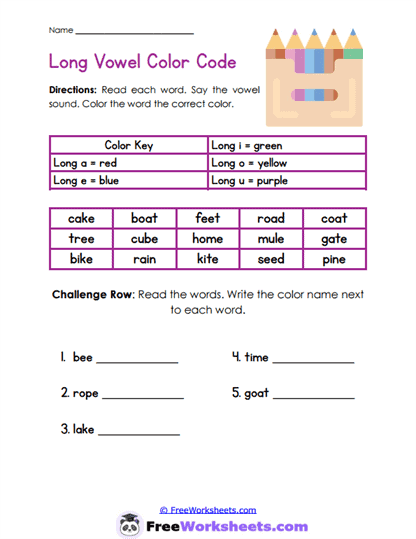
Children read a chart of long-vowel words and use a color key to classify each one by long a, e, i, o, or u. A challenge section asks them to identify the matching vowel category for additional words such as bee, rope, lake, time, and goat.
Target Skill:
This activity develops sound-based classification across all five long vowels. Students practice listening for the vowel that says its name, connecting that sound with different spelling patterns, and organizing words by pronunciation rather than appearance alone.
Vowel Patterns
What Kids Do:
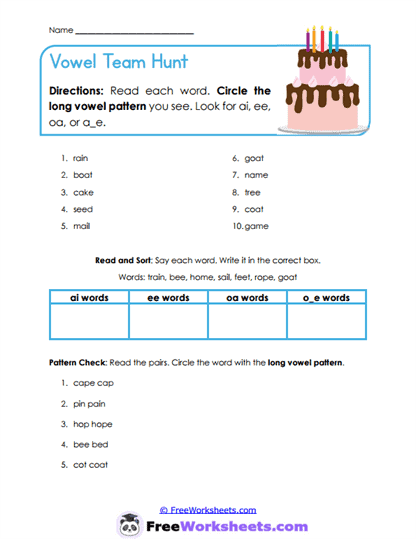
Children identify long-vowel patterns such as ai, ee, oa, and silent e in familiar words, sort examples into labeled groups, and compare short- and long-vowel word pairs. The activities ask them to notice both sound and spelling.
Target Skill:
The worksheet strengthens recognition of several common ways long vowels are represented in print. Students learn to distinguish vowel teams from silent-e patterns while developing word-sorting, decoding, and spelling awareness across multiple long-vowel sounds.
Vowel Riddles
What Kids Do:
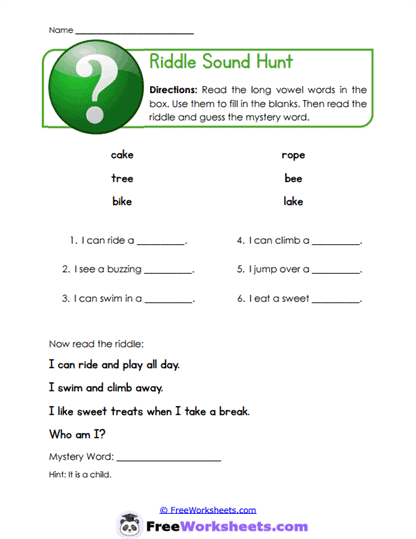
Children use a word bank with long-vowel words such as cake, tree, bike, rope, bee, and lake to complete simple clues. After filling the sentences, they read a final riddle and use the information provided to solve for the mystery word.
Target Skill:
This activity combines phonics with vocabulary, sentence comprehension, and early inference. Students practice reading long-vowel words in meaningful contexts and selecting answers based on both the spelling pattern and what makes sense in each clue.
Vowel Teams
What Kids Do:
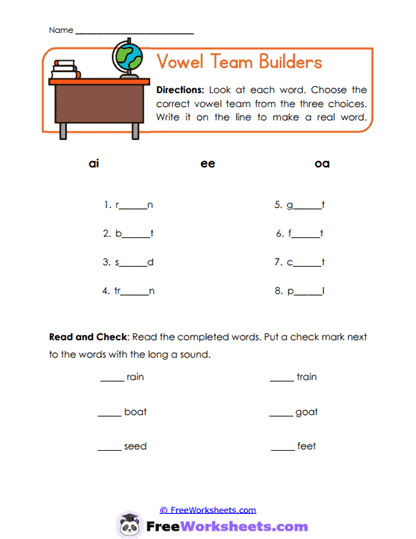
Children choose ai, ee, or oa to complete incomplete long-vowel words such as rain, boat, seed, goat, train, feet, and coat. In a second section, they read completed words and mark the ones that contain long vowel sounds.
Target Skill:
The worksheet develops understanding that two vowels can work together to represent one long vowel sound. Students strengthen spelling, decoding, and visual recognition by selecting the correct team and then independently identifying long-vowel patterns in completed words.