
About This Worksheet
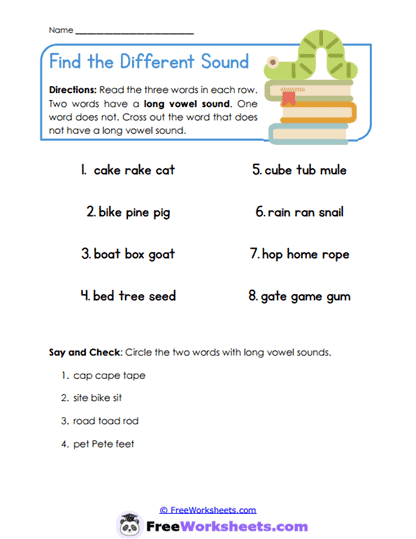
This kindergarten worksheet helps children find the word that does not have a long vowel sound. Each group contains three words, with two long vowel words and one different word mixed in. Students read all three, listen carefully, and cross out the word that does not belong. This gives them practice comparing sounds instead of looking at one word at a time.
Learning Goals
The main goal is to help children distinguish long vowel words from short vowel words. Students practice comparing groups such as cake, rake, cat or bike, pine, pig. They also review several long vowel spelling patterns including silent e and vowel teams. These skills support phonemic awareness, decoding, spelling, and accurate word recognition.
Student Tasks
Children read each group of three words and identify the one that does not have a long vowel sound. They cross out the odd word and leave the two long vowel words. In the second section, students compare word groups again and circle the two long vowel words. The repeated format gives them plenty of practice listening and comparing.
Common Challenges
Some children may focus only on how the words look and miss the difference in vowel sound. Others may assume words with the same first letter have the same vowel pattern. Vowel teams can also be confused with short vowel words if students read too quickly. A parent or teacher can have the child say all three words aloud slowly before choosing.
Teaching Suggestions
Teachers can model one group by stretching the vowel sound in each word and listening for which one is different. Parents and homeschool educators can ask, “Which two words have the vowel saying its name?” before the child marks an answer. It may help to underline the vowel pattern in the long vowel words. Afterward, children can read the correct pairs aloud for extra practice.
Worksheet Features
The worksheet includes eight three-word comparison groups and a second long-vowel check section. The activity mixes several long vowel patterns with short vowel distractors. This makes it useful for checking whether children can hear the difference across different word types. The page works well for phonics review, assessment, literacy centers, or kindergarten intervention.