
Identifying And Describing 2D Shapes Worksheets
These worksheets help students recognize, describe, sort, and connect shapes to real-world objects. These free, ready-to-print PDF format resources are ideal for classroom or home use. Students strengthen geometry vocabulary, shape recognition, observation, and fine motor skills aligned to standards.
About This Collection of Worksheets
This collection is designed to help Kindergarten students identify and describe common 2D shapes through hands-on and visual learning activities. Children practice recognizing shapes such as circles, squares, triangles, rectangles, ovals, diamonds, stars, pentagons, and hexagons while learning about sides, corners, and shape attributes. These foundational geometry skills support future learning in spatial reasoning, measurement, and problem-solving.
The worksheets use a wide variety of engaging formats including tracing, drawing, sorting, matching, coloring, counting, quizzes, and real-world shape hunts. Familiar themes like farms, classrooms, sports, and everyday objects help children connect geometry concepts to the world around them. Repeated practice across different activity types helps students build confidence identifying shapes quickly and accurately.
These activities work well in math centers, guided lessons, independent practice, homework, or homeschool instruction. Teachers and parents can also extend learning by searching for shapes in the classroom, at home, or outdoors. The goal is to help children recognize that geometry is part of everyday life while building strong early math skills.
Paul’s Teacher Tip
When teaching shapes, encourage children to talk about what makes each shape special instead of only memorizing names. Ask simple questions like “How many sides does it have?” or “Does it have corners?” Tracing shapes with fingers or building them with objects can also help children understand shape features more clearly. If a child mixes up similar shapes like squares and rectangles, focus on comparing their sides together. Keeping geometry playful and connected to real-world objects makes learning much more meaningful.
Worksheet Collection Skill Spotlights
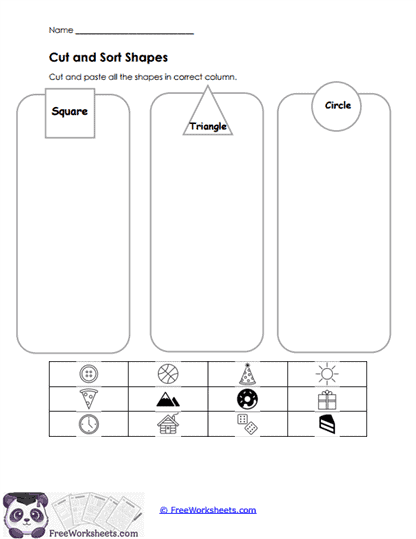
Cut and Sort Shapes
- What Kids Do:
Children cut out pictures of real-world objects and sort them into matching shape categories such as circles, triangles, and squares. - Target Skill:
Students strengthen shape classification and geometry vocabulary skills through hands-on sorting practice aligned to Common Core Standard K.G.A.2.
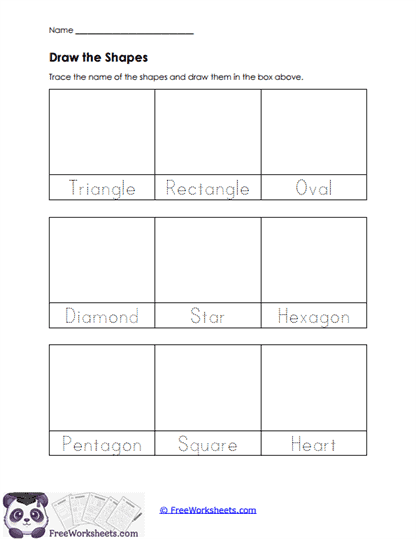
Draw the Shapes
- What Kids Do:
Children trace shape names and then draw matching shapes such as triangles, stars, hexagons, and hearts inside large boxes. - Target Skill:
Students build shape recognition and fine motor skills while practicing independent shape creation and geometry vocabulary.
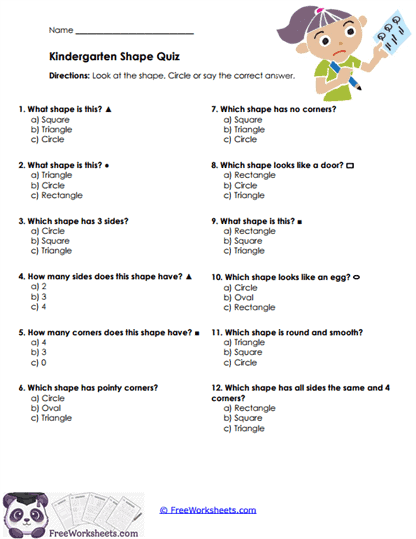
Kindergarten Shape Quiz
- What Kids Do:
Children answer multiple-choice questions about shape names, sides, corners, and shape attributes using common 2D shapes. - Target Skill:
Students review shape identification and attribute understanding while building observation and reasoning skills aligned to Common Core Standard K.G.B.4.
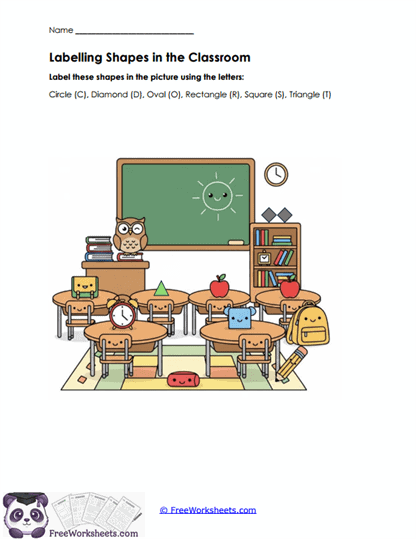
Labelling Shapes in the Classroom
- What Kids Do:
Children study a classroom picture and label shapes hidden inside everyday classroom objects such as clocks, desks, and bookshelves. - Target Skill:
Students connect geometry concepts to real-world environments while strengthening visual discrimination and shape vocabulary.
Labelling Shapes on the Farm
- What Kids Do:
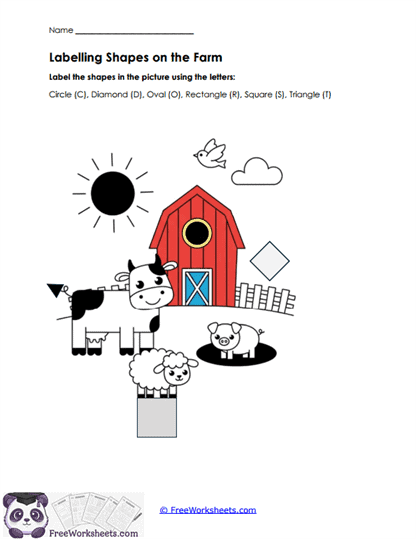
Children identify and label circles, triangles, rectangles, ovals, and other shapes hidden within a farm scene. - Target Skill:
Students practice recognizing shapes in everyday pictures while strengthening geometry observation skills.
Naming Shapes, Sides, and Corners
- What Kids Do:
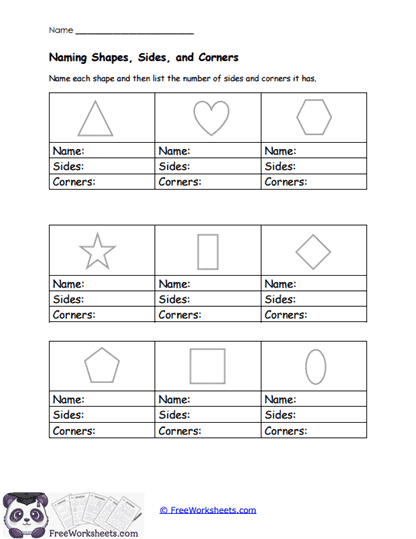
Children identify shapes and record how many sides and corners each shape has using an organized chart format. - Target Skill:
Students build understanding of shape attributes while strengthening counting and geometry vocabulary skills.
Real World Connections
- What Kids Do:
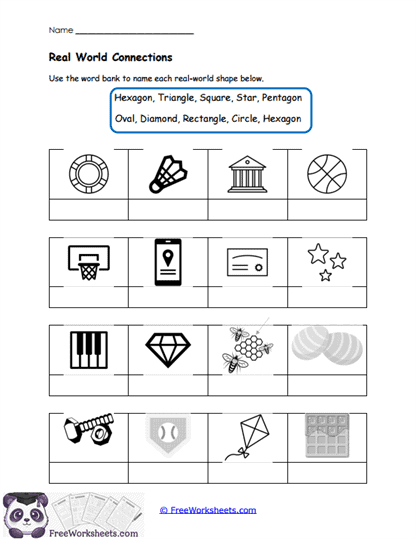
Children use a word bank to match real-world objects like basketballs, signs, and windows to their corresponding shapes. - Target Skill:
Students strengthen geometry vocabulary by connecting shapes to familiar everyday objects and environments.
Shape Matching
- What Kids Do:
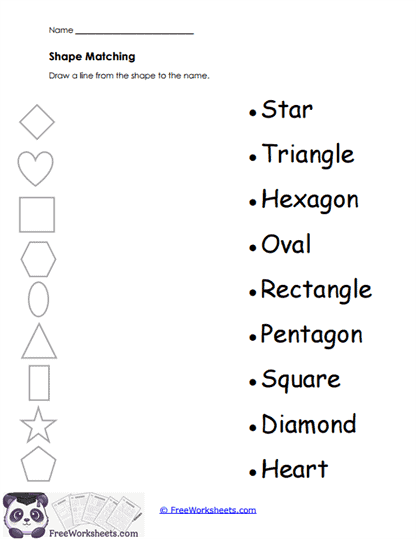
Children draw lines connecting shape pictures to the correct written shape names on the page. - Target Skill:
Students build early reading readiness and geometry vocabulary through visual matching activities.
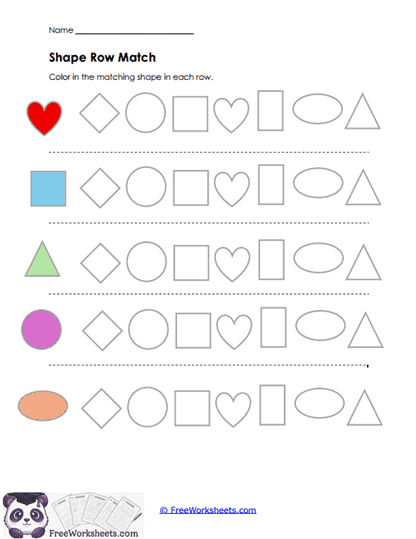
Shape Row Match
- What Kids Do:
Children examine rows of shapes and color the matching shape that matches the example at the beginning of each row. - Target Skill:
Students strengthen visual discrimination and shape recognition through repeated matching practice.
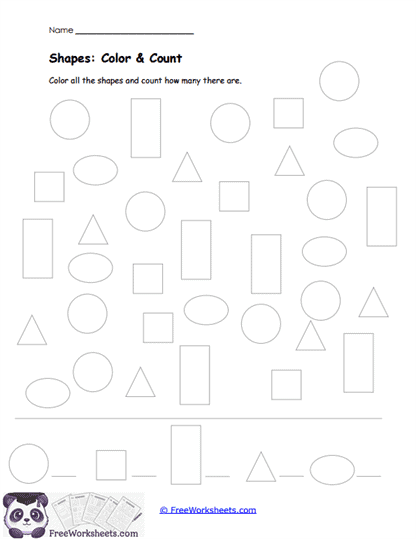
Shapes: Color & Count
- What Kids Do:
Children identify, color, and count circles, triangles, rectangles, squares, and ovals throughout the worksheet. - Target Skill:
Students combine geometry and counting practice while strengthening observation and organization skills.
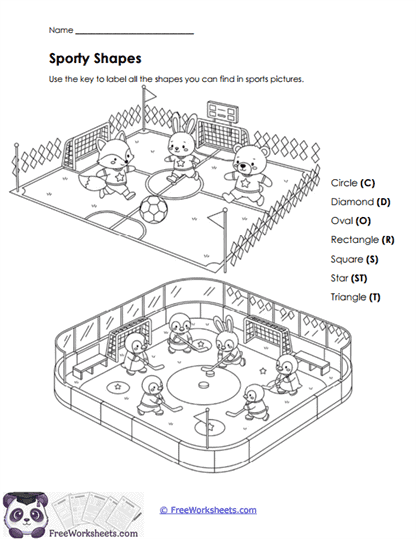
Sporty Shapes
- What Kids Do:
Children identify shapes hidden in sports-themed scenes using a shape key to label circles, stars, rectangles, and other figures. - Target Skill:
Students strengthen geometry vocabulary and real-world shape recognition through sports-themed observation activities.
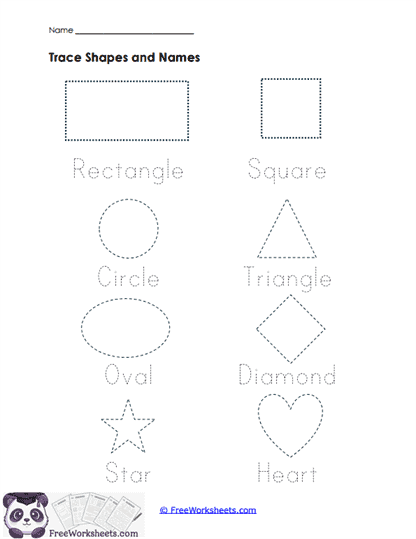
Trace Shapes and Names
- What Kids Do:
Children trace dotted outlines of shapes and trace matching shape names such as triangle, square, oval, and rectangle. - Target Skill:
Students develop shape recognition, handwriting, and fine motor control through guided tracing practice.