
Kindergarten Reading Comprehension Worksheets
These worksheets help early readers move beyond decoding and begin understanding what they read. These free, printable PDF activities strengthen comprehension through picture matching, sentence analysis, sequencing, prediction, and simple reasoning tasks designed specifically for emergent readers.
About This Collection of Worksheets
In Kindergarten, comprehension means understanding short sentences, identifying key details, and connecting text to meaning. Students learn to answer questions like “Who is this about?” “What happened?” and “Does this make sense?” before progressing to longer passages in later grades. These worksheets focus on simple, developmentally appropriate texts that allow young learners to practice understanding while building confidence.
This collection aligns with Common Core standards such as RL.K.1, RL.K.2, RL.K.3, and RF.K.4, along with TEKS ELAR K.6.B and related standards. Activities emphasize asking and answering questions, identifying subjects, sequencing events, making predictions, evaluating logical meaning, and recognizing action words. Many worksheets pair sentences with pictures to support visual learners and reinforce comprehension through multiple modalities.
Each printable PDF features short sentences, clear directions, and predictable response formats to reduce overwhelm. Students practice circling answers, numbering pictures, selecting logical endings, and identifying verbs. The consistent structure supports independent work while giving teachers an easy way to assess early comprehension skills.
Paul’s Teacher Tip
Keep these activities interactive by turning quick checks into partner talk-have students explain why they chose an answer before moving on. Model your thinking out loud (“I chose this because…”) to show how readers use clues from the sentence. For students who need support, cover answer choices and reread the sentence together before revealing options. You can also act out sentences or sketch quick visuals to deepen understanding. Over time, encourage students to justify answers using words from the text to build strong comprehension habits early.
Worksheet Collection Skill Spotlights
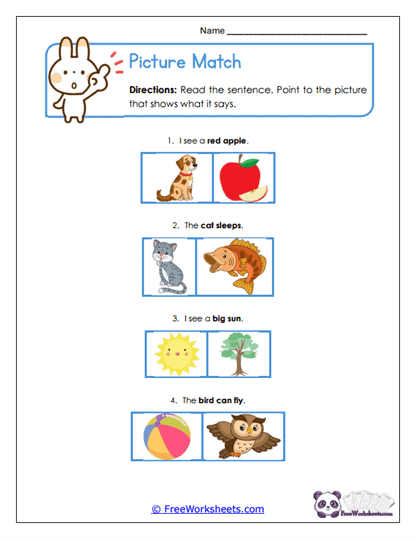
Picture Match
• What Kids Do – Students read a short sentence and choose the picture that best matches its meaning.
• Target Skill – Builds sentence comprehension and text-to-image matching.
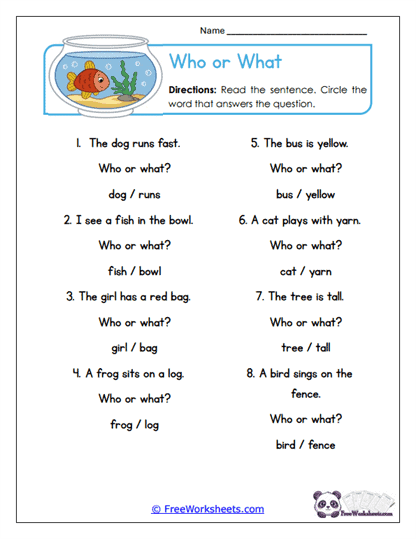
Who or What
• What Kids Do – Students read a sentence and circle the word that answers “Who or what?”
• Target Skill – Develops subject identification and understanding of sentence structure.
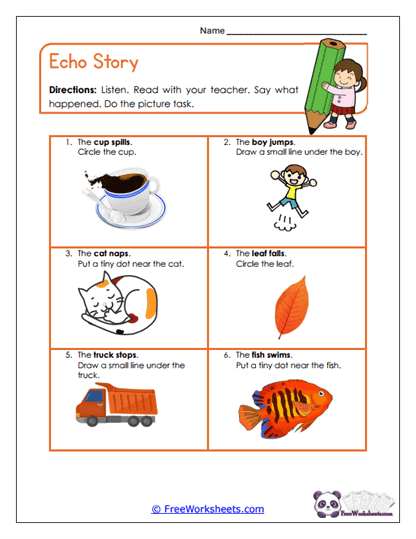
Echo Story
• What Kids Do – Students listen to or read a short sentence and complete a related picture task like circling or drawing.
• Target Skill – Strengthens listening comprehension and response accuracy.
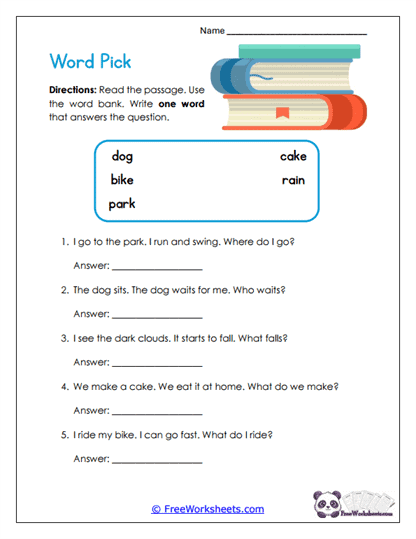
Word Pick
• What Kids Do – Students read a sentence and choose the correct word from a word bank to complete it.
• Target Skill – Builds careful rereading and vocabulary selection using text evidence.
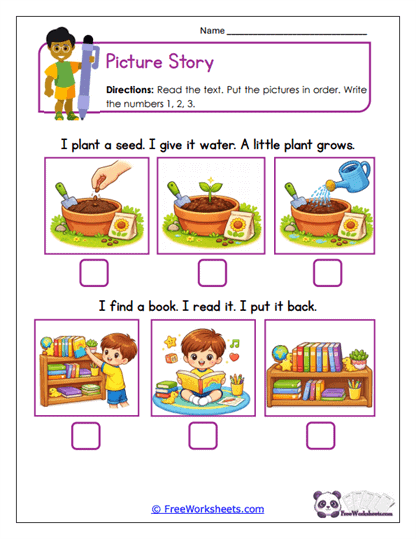
Picture Story
• What Kids Do – Students read a short passage and number pictures to show the correct story order.
• Target Skill – Develops sequencing skills and understanding of story structure.
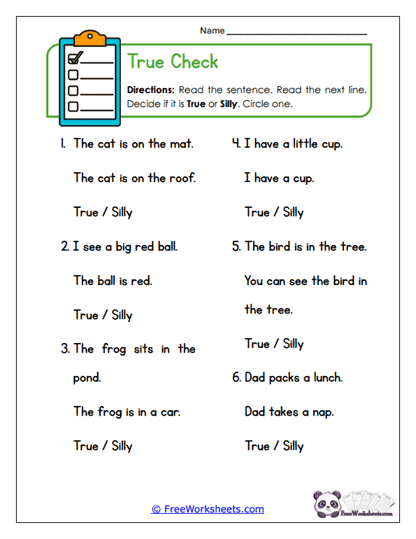
True Check
• What Kids Do – Students read sentence pairs and decide if the second sentence is true or silly.
• Target Skill – Strengthens logical reasoning and comprehension accuracy.
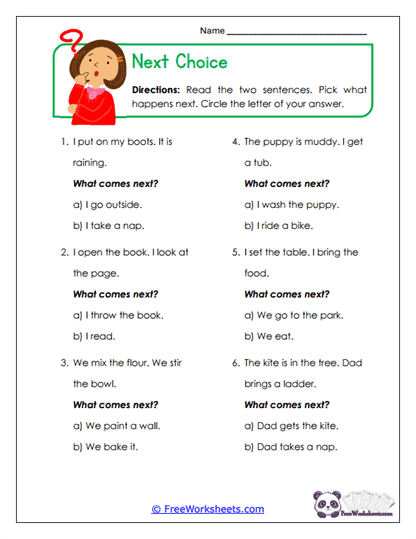
Next Choice
• What Kids Do – Students read a short scenario and choose what would most likely happen next.
• Target Skill – Builds prediction skills and understanding of cause and effect.
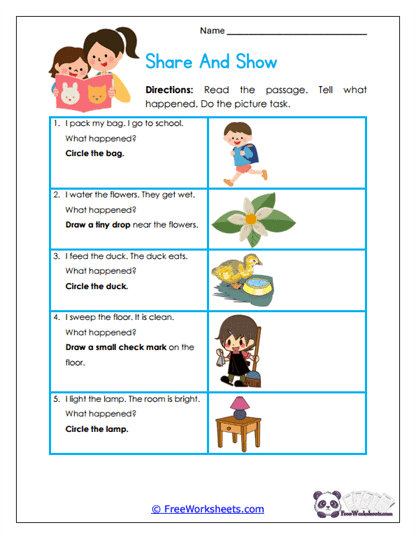
Share And Show
• What Kids Do – Students read a sentence and respond by drawing or circling to show understanding.
• Target Skill – Supports comprehension through visual representation and active response.
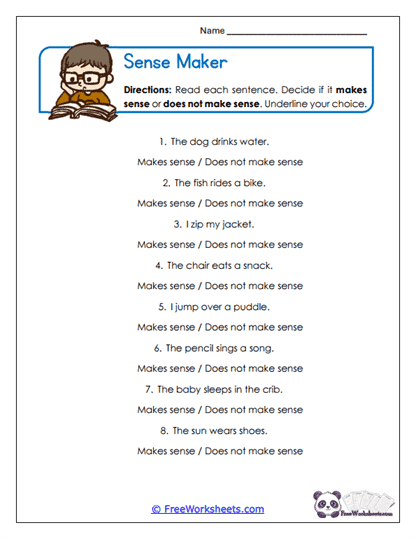
Sense Maker
• What Kids Do – Students read sentences and decide if each one makes sense or not.
• Target Skill – Develops critical thinking and understanding of logical meaning.
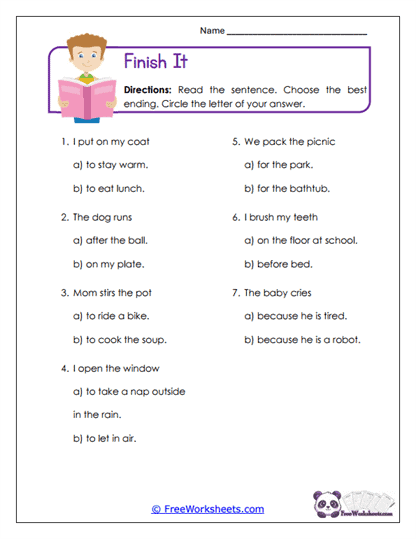
Finish It
• What Kids Do – Students read incomplete sentences and choose the best ending from given options.
• Target Skill – Builds inference skills and use of context clues.
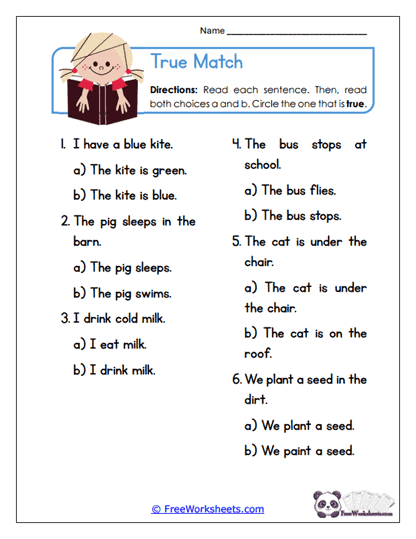
True Match
• What Kids Do – Students read a sentence and choose the statement that matches its meaning.
• Target Skill – Strengthens attention to detail and accurate comprehension.
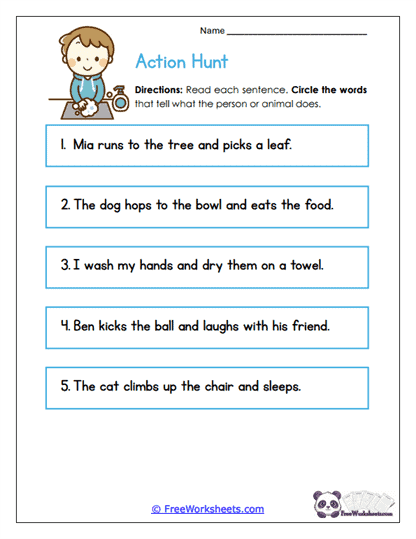
Action Hunt
• What Kids Do – Students read sentences and circle the action words in each one.
• Target Skill – Develops verb recognition and understanding of sentence meaning.