
Beginning And Ending Sounds Worksheets
These worksheets help Kindergarten readers build strong phonemic awareness by listening for the first and last sounds in simple words. These free, ready-to-print PDF activities give students repeated practice identifying whether a target sound is at the start or end of a word-an essential step toward blending, segmenting, and early spelling.
About This Collection of Worksheets
In Kindergarten, reading foundations begin with hearing sounds before matching them to letters. Sound position awareness-knowing where a sound is heard in a word-supports early decoding and spelling because students learn to anchor words with initial and final phonemes (for example, hearing the /m/ at the beginning of map and the /p/ at the end). This collection focuses on isolating and comparing beginning and ending sounds in familiar, high-frequency words, using child-friendly formats like circling choices, sorting, matching, and cut-and-paste activities.
These worksheets align to early phonological awareness goals, especially Common Core RF.K.2.D (isolate and pronounce initial and final sounds) and support TEKS ELAR K.2.A. Activities are designed for whole-group phonics lessons, small-group intervention, literacy centers, and at-home practice. Many pages work best when an adult reads the words aloud so students focus on listening rather than spelling patterns.
Each printable PDF features a clean, uncluttered layout that helps young learners attend to sounds without distractions. Tasks repeat predictable directions (circle, sort, match) so students can build confidence and teachers can quickly assess understanding. The variety of formats also supports different learning styles-auditory practice, visual cues, and hands-on sorting for kinesthetic learners.
Paul’s Teacher Tip
Make sound position practice more effective by always having students say the full word slowly before answering-this prevents guessing based on letters or pictures. Model “stretching” words regularly so students hear the first and last sounds clearly. For added engagement, turn a few items into quick oral games where students show thumbs up for beginning or clap for ending sounds. If students struggle, reduce choices and focus on just one position at a time before combining both. Over time, listen for students who automatically attend to the first sound but miss the ending-that’s your signal to give extra practice with final sound isolation.
Worksheet Collection Skill Spotlights
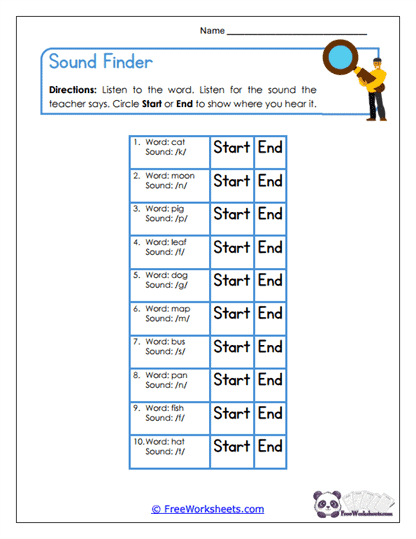
Sound Finder
• What Kids Do – Students listen to a word and circle whether they hear the target sound at the start or end.
• Target Skill – Builds phoneme position awareness and careful listening.
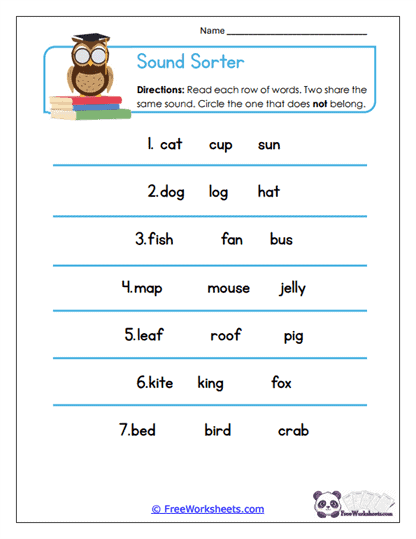
Sound Sorter
• What Kids Do – Students say three words aloud and circle the one that does not share the same beginning or ending sound.
• Target Skill – Develops sound discrimination and comparison skills.
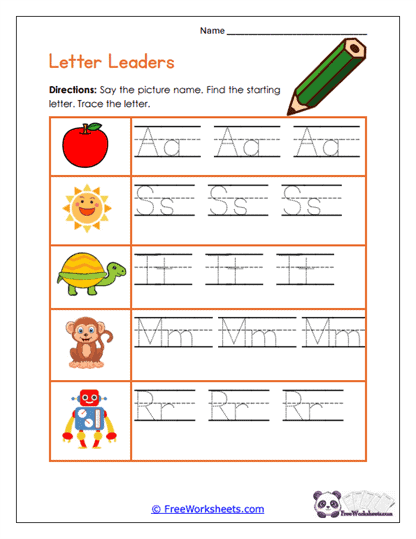
Letter Leaders
• What Kids Do – Students name pictures, identify the beginning sound, and trace the matching uppercase and lowercase letter.
• Target Skill – Strengthens phoneme-letter correspondence and fine motor control.
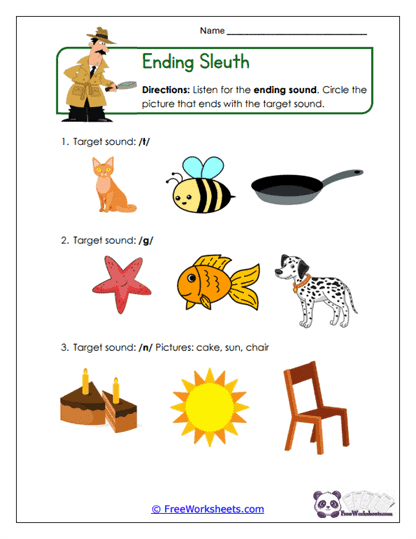
Ending Sleuth
• What Kids Do – Students look at pictures and choose the one that ends with a target sound.
• Target Skill – Builds final sound isolation and listening accuracy.
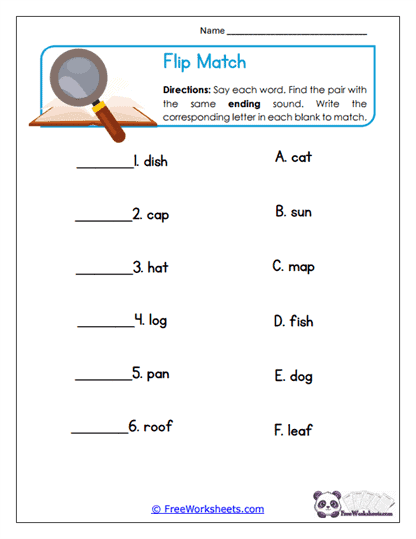
Flip Match
• What Kids Do – Students match words that share the same ending sound and record the correct pair.
• Target Skill – Develops sound matching and phonological comparison.
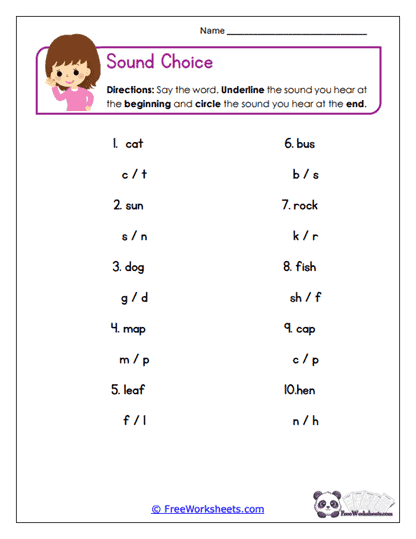
Sound Choice
• What Kids Do – Students underline the beginning sound and circle the ending sound for each word.
• Target Skill – Strengthens identification of initial and final phonemes.
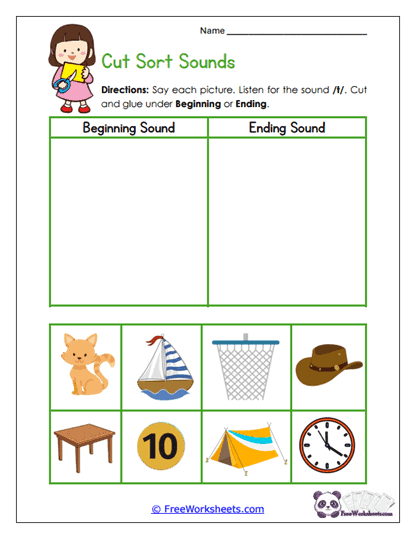
Cut Sort Sounds
• What Kids Do – Students cut out pictures and sort them under beginning or ending sound categories.
• Target Skill – Builds sound position awareness through hands-on categorization.
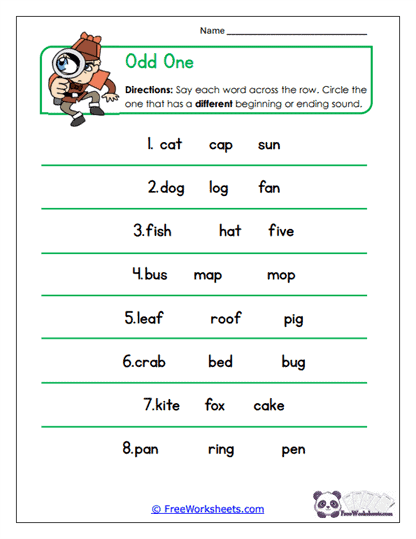
Odd One
• What Kids Do – Students compare three words and circle the one with a different beginning or ending sound.
• Target Skill – Develops auditory discrimination and pattern recognition.
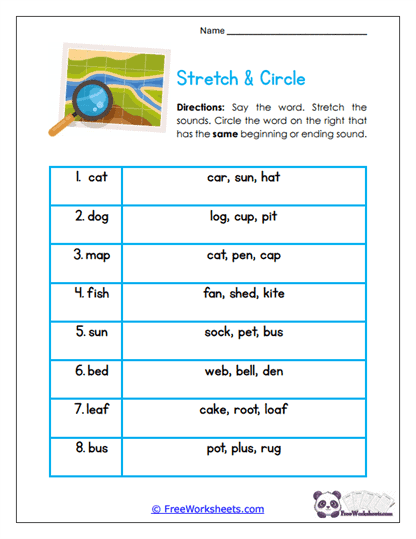
Stretch & Circle
• What Kids Do – Students stretch a word aloud and circle another word with the same beginning or ending sound.
• Target Skill – Reinforces phoneme isolation using stretching as a strategy.
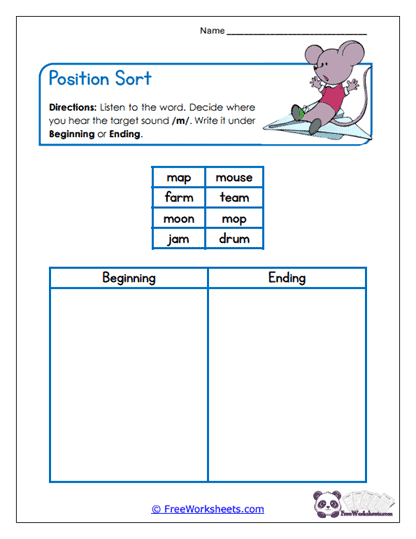
Position Sort
• What Kids Do – Students say each word from a word bank and write it under beginning or ending sound columns.
• Target Skill – Builds phoneme position sorting and early encoding skills.
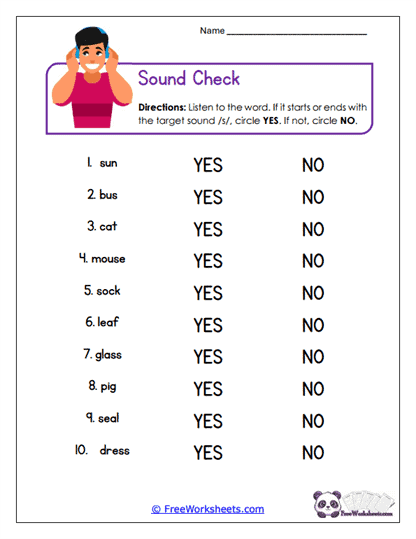
Sound Check
• What Kids Do – Students decide if a word starts or ends with a target sound and circle yes or no.
• Target Skill – Strengthens quick identification of sound position.
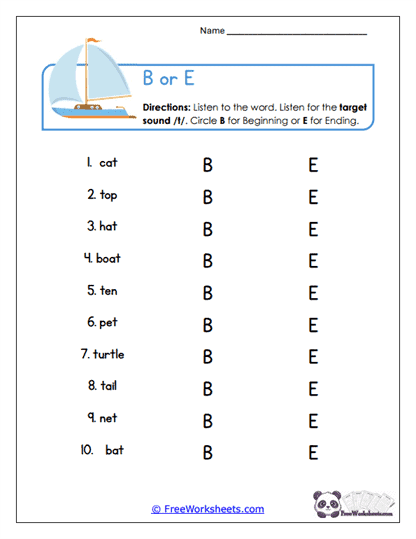
B or E
• What Kids Do – Students listen to each word and circle B for beginning or E for ending based on the sound they hear.
• Target Skill – Builds independent recognition of initial and final sounds.