
Comparing Up To 10 Worksheets
These worksheets help students compare groups, identify more and less, and understand equal quantities. These free, ready-to-print PDF format resources are ideal for classroom or home learning. Students strengthen counting, comparison vocabulary, and number relationship skills aligned to curriculum standards.
About This Collection of Worksheets
This collection is designed to help Kindergarten students compare numbers and groups confidently using quantities up to 10. Children practice identifying which group has more, which has less, and when two groups are the same. These early comparison skills are important for building strong number sense and preparing students for future math concepts like greater than and less than symbols.
The worksheets use a variety of engaging formats including circling answers, matching equal groups, drawing additional objects, working with ten frames, and completing comparison sentences. Familiar pictures such as animals, toys, sports items, and food help young learners stay interested while focusing on counting and comparing carefully.
These activities work well in math centers, small groups, independent practice, homeschool lessons, or quick review sessions. Teachers and parents can also extend learning with counters, drawings, or classroom objects to make comparisons more hands-on. The goal is to help children feel comfortable understanding how numbers relate to one another.
Paul’s Teacher Tip
When teaching comparison skills, encourage children to count every object carefully before deciding which group has more or less. Many young learners want to guess based on how the pictures look instead of checking the amounts closely. Using counters or real objects can make comparing much easier to understand. It also helps to repeat comparison words like more, less, fewer, and same out loud during practice. Keep reminding children that math is about thinking carefully, not just answering quickly.
Worksheet Collection Skill Spotlights
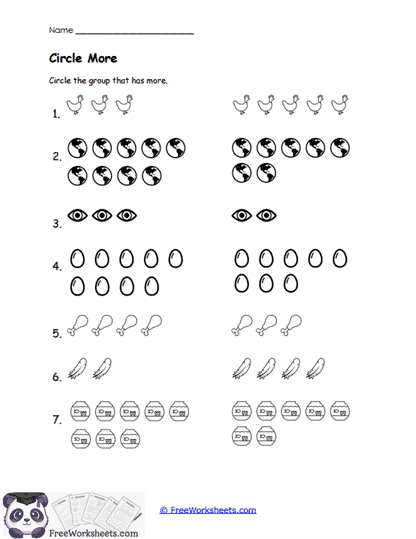
Circle More
- What Kids Do:
Children count two groups of pictures and circle the set that has more objects. Familiar pictures like birds, eggs, feathers, and toys help students practice comparing quantities visually. - Target Skill:
Students build early comparison skills by identifying greater quantities through counting and visual analysis. This supports Common Core Standard K.CC.C.6 focused on comparing groups.
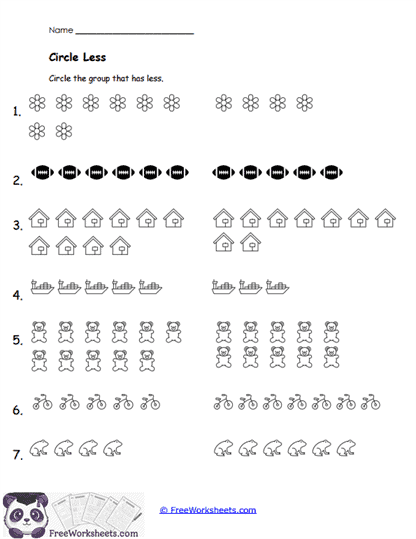
Circle Less
- What Kids Do:
Children compare two picture groups and circle the set with less. Students count carefully before choosing the smaller amount in each comparison problem. - Target Skill:
Students strengthen number sense by identifying smaller quantities and using comparison vocabulary like less and fewer. This aligns with early comparison standards.
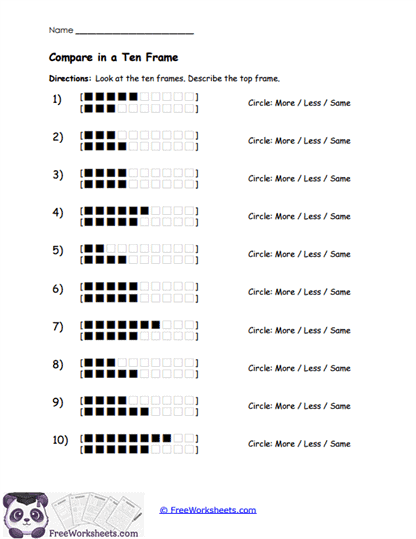
Compare in a Ten Frame
- What Kids Do:
Children study ten frames and decide whether one frame shows more, less, or the same amount as another. The structured frames help students compare numbers visually. - Target Skill:
Students develop visual number recognition and comparison skills using ten frames. This supports Common Core Standard K.CC.C.7 and early number sense development.
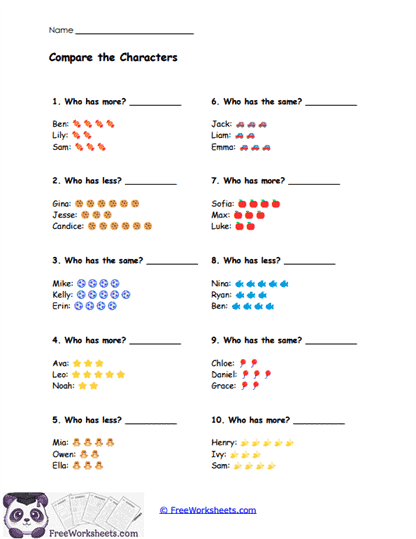
Compare the Characters
- What Kids Do:
Children compare groups connected to different characters and decide who has more, less, or the same amount. They count carefully before writing answers. - Target Skill:
Students practice comparison vocabulary and strengthen counting accuracy while comparing quantities up to 10.
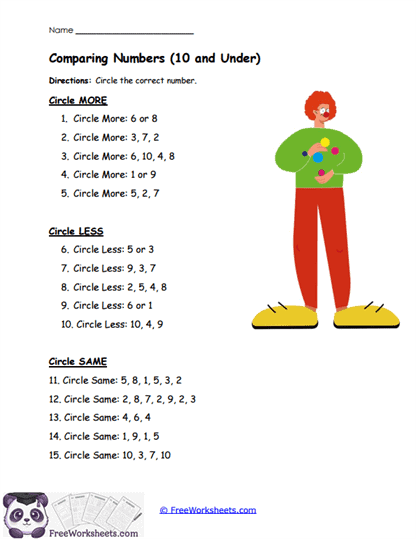
Comparing Numbers (10 and Under)
- What Kids Do:
Children compare written numbers and circle the number that is more, less, or the same based on the directions given. The activity focuses on number relationships. - Target Skill:
Students strengthen number recognition and comparison fluency using numbers up to 10. This aligns with Common Core Standard K.CC.C.7.
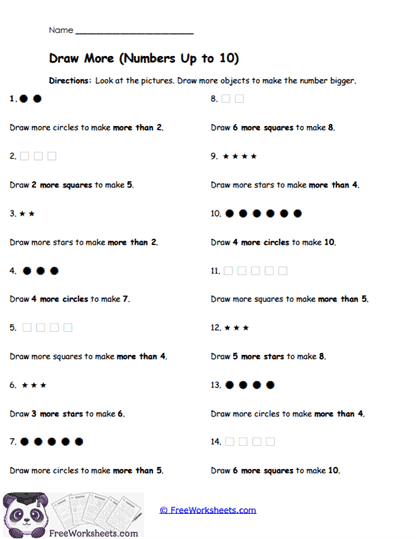
Draw More (Numbers Up to 10)
- What Kids Do:
Children count picture groups and draw more objects to create larger quantities. They practice counting, comparing, and understanding how groups grow. - Target Skill:
Students build comparison and beginning addition readiness skills by adding objects to increase quantities.
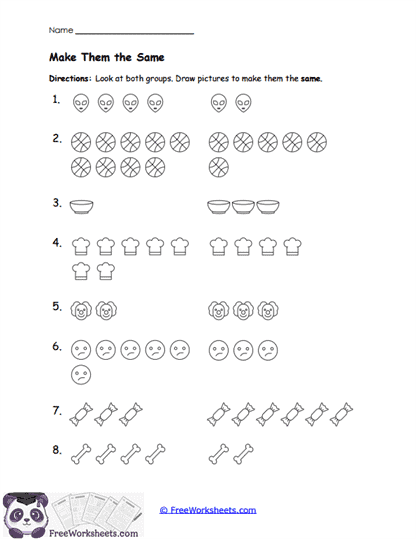
Make Them the Same
- What Kids Do:
Children compare two groups and draw additional objects to make both sets equal. This hands-on activity encourages careful counting and problem-solving. - Target Skill:
Students develop understanding of equal quantities and strengthen early reasoning skills related to number relationships.
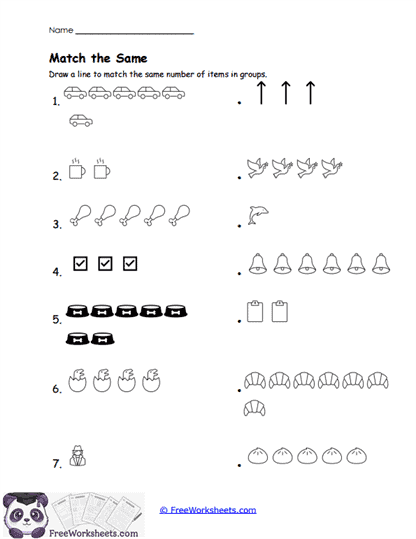
Match the Same
- What Kids Do:
Children count picture groups and draw lines connecting sets with the same amount. They practice one-to-one matching and identifying equal groups. - Target Skill:
Students strengthen counting accuracy and equality concepts by matching groups with equal quantities.
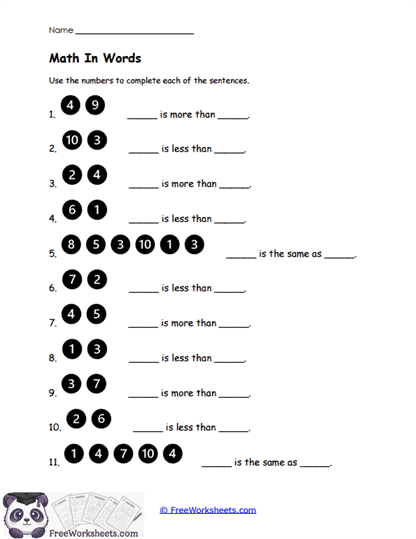
Math In Words
- What Kids Do:
Children complete comparison sentences using phrases like more than, less than, and the same as. They connect math vocabulary with number relationships. - Target Skill:
Students build understanding of comparison language and strengthen number relationship reasoning skills.
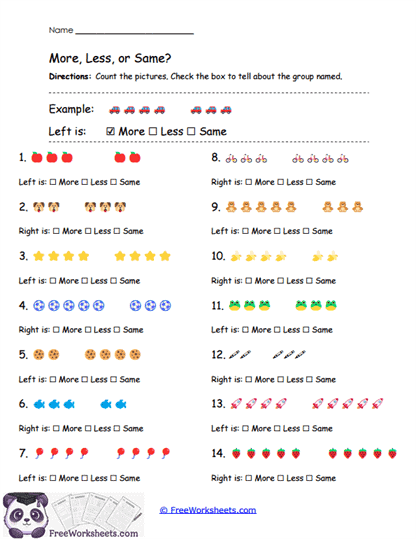
More, Less, or Same?
- What Kids Do:
Children compare picture groups and check whether one group has more, less, or the same amount as another. They practice careful counting before answering. - Target Skill:
Students strengthen comparison vocabulary and counting fluency while analyzing groups up to 10.
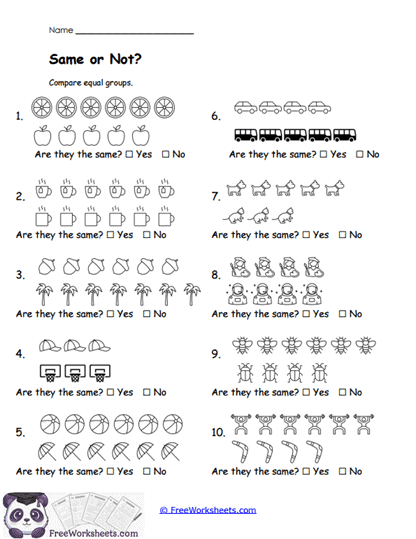
Same or Not?
- What Kids Do:
Children count picture sets and decide if the groups are the same by checking yes or no. The activity focuses on identifying equal quantities. - Target Skill:
Students develop understanding of equality and strengthen one-to-one counting skills through comparison practice.
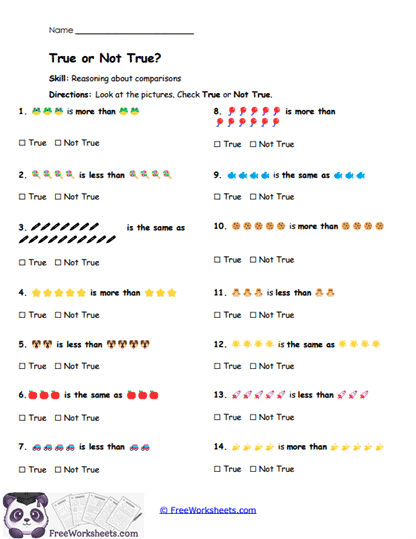
True or Not True?
- What Kids Do:
Children count picture groups and decide whether comparison statements are true or not true. They analyze statements involving more, less, and same. - Target Skill:
Students build early reasoning and logical thinking skills while practicing comparison vocabulary and counting accuracy.