
About This Worksheet
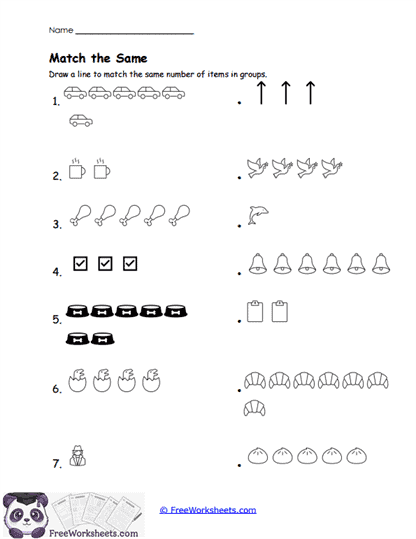
This worksheet is a Kindergarten math activity that helps students match groups with the same number of objects. Children count picture groups on both sides of the page and draw lines connecting sets that contain equal amounts. The activity strengthens counting, visual comparison, and one-to-one matching skills using familiar pictures like cars, birds, bells, candy, and shells. For example, a group with 4 birds matches another group that also has 4 objects. The matching format keeps young learners engaged while helping them practice equal group concepts in a hands-on way.
Curriculum and Grade Alignment
This worksheet is designed for Kindergarten students who are learning how to compare quantities and identify equal groups within 10. The main learning goal is helping children recognize when two sets contain the same number of objects by counting carefully. Students should already know how to count objects accurately and recognize small quantities before beginning the activity. These foundational comparison skills support future learning with equations, equality concepts, and number relationships in later grades. This worksheet supports Common Core Standard K.CC.C.6 and aligns with TEKS K.2.D for comparing sets and identifying equal quantities.
Student Tasks
On this worksheet, students will count picture groups and draw lines to match groups with the same amount. Children compare objects carefully before connecting the equal sets together. Learners practice one-to-one correspondence while strengthening visual matching and counting fluency skills. Students also improve fine motor control by drawing matching lines neatly across the page. The repeated activity structure helps children become more confident identifying equal groups independently.
Common Challenges and Misconceptions
Some students may guess matches based on picture size instead of counting the objects carefully first. Young learners sometimes lose track while counting and accidentally skip pictures in a group. A few children may draw lines too quickly and connect groups that are close in number but not actually equal. Students who are still developing visual tracking skills may also struggle to follow lines across the page accurately. Teachers and parents can help by encouraging children to count both groups aloud before drawing a line.
Implementation Guidance
Teachers can use this worksheet during math centers, independent practice, or small-group lessons focused on comparison skills. Parents may find the matching format helpful because it keeps children actively involved during home math review sessions. Students can use counters or classroom objects to recreate the groups before matching them on paper. This worksheet also works well as a partner activity where children explain why two groups are equal. Adults should encourage learners to double-check each match after completing the page.
Details and Features
This printable worksheet includes seven matching comparison problems with quantities up to 10. Large pictures and wide spacing help Kindergarten students count carefully and connect groups clearly. The black-and-white format prints cleanly for classroom packets, homework assignments, or homeschool lessons. Familiar objects and simple directions support young learners who are still building confidence with early math concepts. Its organized layout makes the worksheet useful for review practice, intervention, or beginning assessments.