
Inference And Analysis Worksheets
Kindergarten Reading Foundations Inference and Analysis worksheets help students think beyond what they see and read. These free, ready-to-print PDF format worksheets are designed for immediate classroom use and easy lesson planning. Students build skills in making inferences, predicting outcomes, and understanding cause and effect aligned to early reading standards.
About This Collection of Worksheets
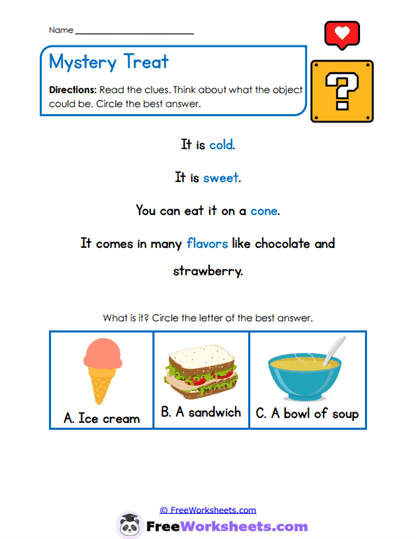
This collection is designed to help young learners begin thinking more deeply about texts and pictures. Students learn that they can use clues to figure things out, even when the answer is not directly stated. This is an important step in building strong comprehension skills.
The worksheets guide students through simple but meaningful thinking tasks. They look at pictures, read short passages, and answer questions that require them to connect ideas. These activities help students move from basic understanding to more thoughtful reasoning.
There is also a strong focus on real-world connections. Students use what they already know to make predictions, explain actions, and understand feelings. This makes learning more meaningful and helps students see how reading connects to everyday life.
Paul’s Teacher Tip
When teaching inference, keep the focus on clues. Always ask students, “What do you see?” and “What does that tell you?” This helps them learn that answers come from evidence, not guessing. It also helps to model your thinking out loud so students can hear how you connect clues to ideas. Encourage students to explain their answers, even in simple ways. Over time, this builds strong thinking habits and better comprehension.
Worksheet Collection Skill Spotlights
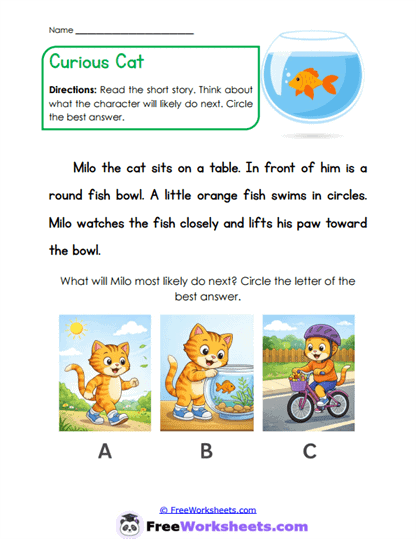
Curious Cat
- What Kids Do:
Students read a short story and decide what a character will most likely do next. They use clues from the story and their own knowledge to make a smart prediction. - Target Skill:
This activity builds prediction and inference skills. It helps students understand character behavior and think about what actions make sense in a story.
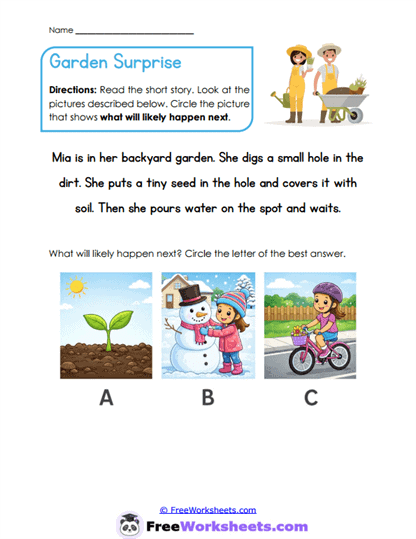
Garden Surprise
- What Kids Do:
Students read a short passage and choose the picture that shows what will happen next. They connect the story to real-world knowledge to make a prediction. - Target Skill:
This worksheet strengthens prediction and cause-and-effect thinking. It helps students use both text clues and background knowledge to understand outcomes.
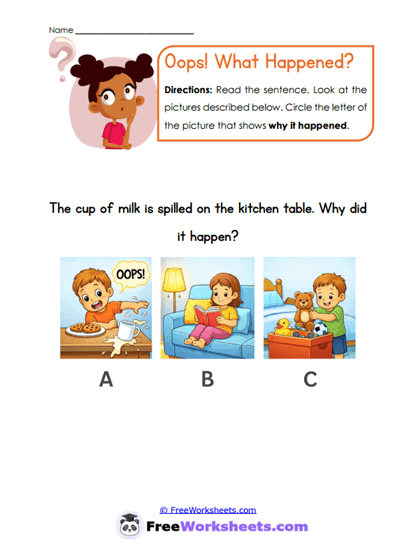
Oops! What Happened?
- What Kids Do:
Students read a situation and choose the picture that shows why it happened. They connect actions with causes using clues from the text and images. - Target Skill:
This activity builds cause-and-effect understanding. It helps students explain why events happen based on evidence.
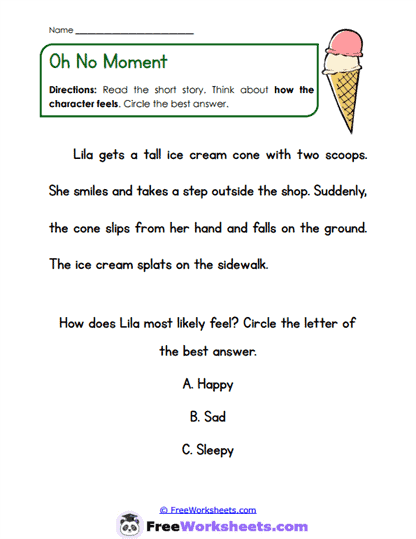
Oh No Moment
- What Kids Do:
Students read a short story and choose how a character is feeling. They think about the event and connect it to an emotion. - Target Skill:
This worksheet develops understanding of character feelings. It helps students connect events to emotions and build empathy.
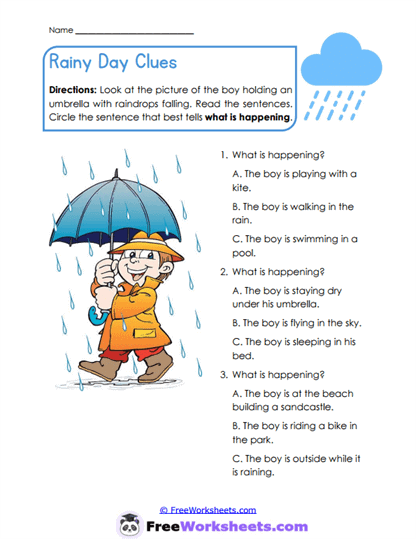
Rainy Day Clues
- What Kids Do:
Students study a picture and choose the sentence that best explains what is happening. They look closely at details to guide their thinking. - Target Skill:
This activity strengthens visual inference skills. It helps students use picture clues to understand situations.
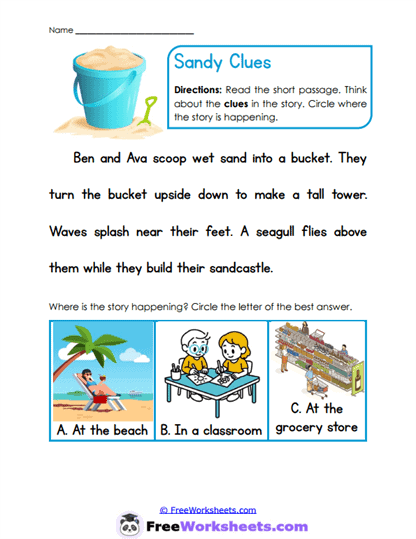
Sandy Clues
- What Kids Do:
Students read a short passage and choose the correct setting based on clues in the text. They connect details to real-world locations. - Target Skill:
This worksheet builds setting identification and inference skills. It helps students use descriptive clues to understand where a story takes place.
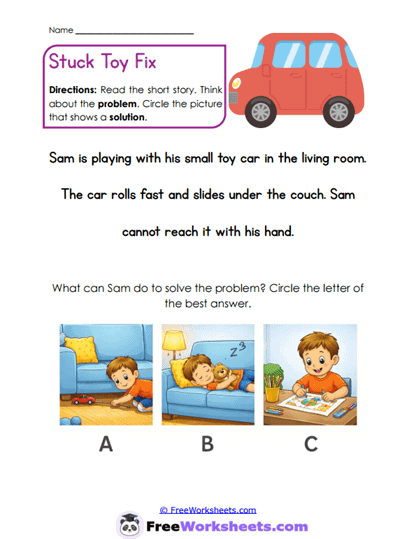
Stuck Toy Fix
- What Kids Do:
Students read a short problem and choose the best solution. They think about what action would fix the situation. - Target Skill:
This activity develops problem-solving and reasoning skills. It helps students understand how problems and solutions work in stories.
What Will Happen Next?
- What Kids Do:
Students read a short passage and choose what will most likely happen next. They use clues from the story to guide their thinking. - Target Skill:
This worksheet strengthens prediction and sequencing skills. It helps students think about how events unfold in a story.
Why Did It Happen?
- What Kids Do:
Students read a short story and choose the reason why something happened. They connect actions with causes using evidence. - Target Skill:
This activity builds cause-and-effect understanding. It helps students explain why events happen in a story.
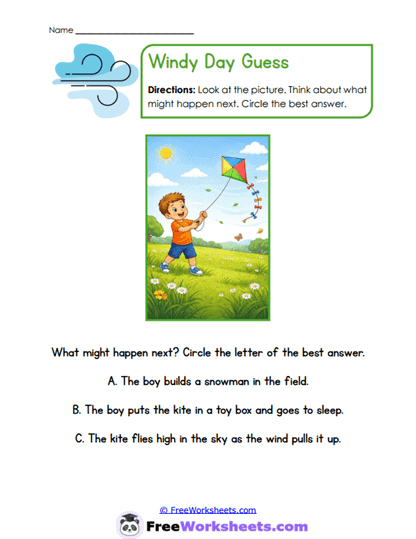
Windy Day Guess
- What Kids Do:
Students look at a picture and decide what will likely happen next. They use visual clues and prior knowledge to make a prediction. - Target Skill:
This worksheet strengthens visual prediction skills. It helps students connect what they see with what they know.
Zoo Story Clues
- What Kids Do:
Students read a short passage and decide if statements are true or false. They go back to the text to check their answers. - Target Skill:
This activity builds comprehension and attention to detail. It helps students confirm answers using evidence from the text.