
Take Apart Numbers Up To 5 Worksheets
These worksheets help young learners build confidence with early number relationships and composing skills. These free, ready-to-print worksheets are provided in PDF format for immediate classroom use during centers, homework, or guided math instruction. Students strengthen counting fluency, number decomposition, early addition understanding, and problem-solving skills aligned with curriculum expectations
About This Collection of Worksheets
This collection of Kindergarten math worksheets focuses on helping students compose and decompose numbers up to 5 using visual models, counting activities, and beginner addition concepts. Children practice identifying parts and wholes, combining groups, filling in missing numbers, and exploring multiple ways numbers can be represented. The activities use familiar visuals such as dominoes, cookies, moons, smiley faces, circles, and fingers to make foundational math skills engaging and accessible for young learners.
The worksheets are designed to support Common Core standards related to composing and decomposing numbers, counting fluency, and early operations. Students repeatedly work with small number combinations in structured formats that encourage careful counting, reasoning, and visual understanding. These beginner-friendly activities also help children prepare for future work with addition facts, subtraction strategies, and number bonds in first grade.
Teachers can use these printable PDFs during math centers, guided instruction, independent practice, intervention groups, or take-home review. Parents and homeschool educators will also appreciate the clear layouts, simple directions, and developmentally appropriate practice opportunities. The varied worksheet formats keep students engaged while reinforcing important number sense concepts through repetition and visual support.
Paul’s Teacher Tip
Young learners understand number relationships best when they can physically model the math before writing answers on paper. Encourage students to use counters, linking cubes, fingers, or drawings while completing these worksheets so they can connect concrete objects to abstract numbers. Repeated exposure to part-part-whole thinking helps children recognize that numbers can be made in many different ways, which is a critical foundation for addition and subtraction fluency later on. During small-group instruction, ask students to explain how they found missing numbers to strengthen mathematical vocabulary and reasoning skills. You can also turn these activities into partner games by having children compare different ways they composed the same number. Consistent practice with numbers up to 5 builds confidence and supports smoother transitions into more advanced operations in first grade.
Worksheet Collection Skill Spotlights
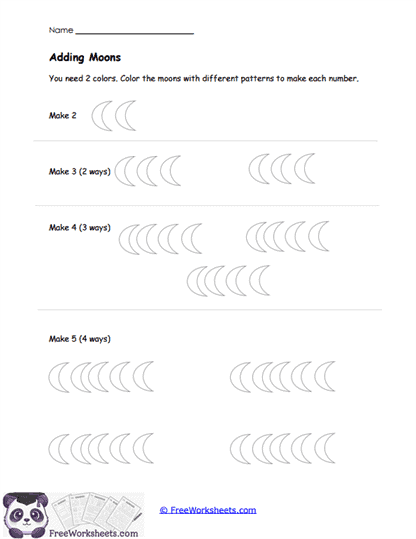
Adding Moons
- What Kids Do:
Students color moon pictures to show different combinations that make numbers up to 5. Children divide moon groups into two parts using different colors or patterns while practicing counting, organizing groups, and recognizing how smaller amounts combine to create the same whole number. - Target Skill:
This activity strengthens composing and decomposing numbers within 5 while supporting Common Core Kindergarten Operations and Algebraic Thinking standards. Students build visual number sense, improve part-part-whole understanding, and develop foundational reasoning skills needed for future addition and subtraction fluency.
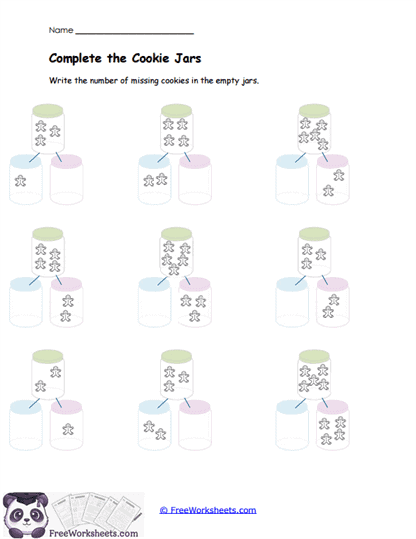
Complete the Cookie Jars
- What Kids Do:
Students count cookies already shown inside jars and determine how many additional cookies are needed to complete each total. Children practice counting on, comparing quantities, and solving missing-part problems using visual cookie jar models that make beginner math approachable and engaging. - Target Skill:
This worksheet develops early algebraic thinking and number decomposition skills aligned to Kindergarten math standards. Students strengthen counting fluency, missing-addend reasoning, and part-part-whole understanding while learning that numbers can be completed using different combinations of smaller amounts.
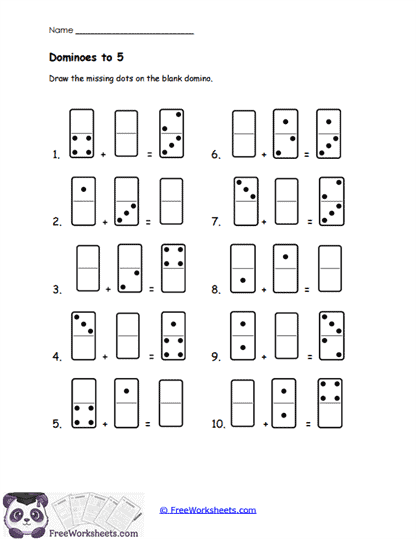
Dominoes to 5
- What Kids Do:
Students study domino patterns with missing sections and draw the correct number of dots needed to complete each domino total. Children carefully count existing dots, determine missing quantities, and practice fine motor control while finishing each visual math model accurately. - Target Skill:
This activity reinforces composing numbers within 5 through visual representation and structured counting practice. Students strengthen Common Core aligned number relationships, improve one-to-one correspondence, and develop flexible thinking about addition combinations and missing-part strategies.
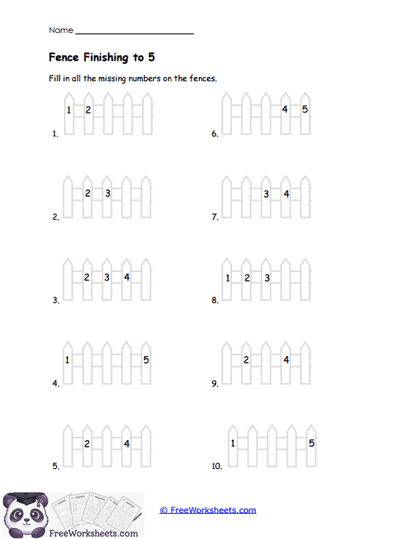
Fence Finishing to 5
- What Kids Do:
Students complete counting sequences by filling in missing numbers on fence posts up to 5. Children analyze patterns, identify missing numerals, and practice writing numbers in the correct order while strengthening sequencing and counting confidence through repeated practice. - Target Skill:
This worksheet supports foundational counting and number order standards in Kindergarten mathematics. Students improve numeral recognition, forward counting fluency, sequencing accuracy, and understanding of numerical progression needed for early operations and number line work.
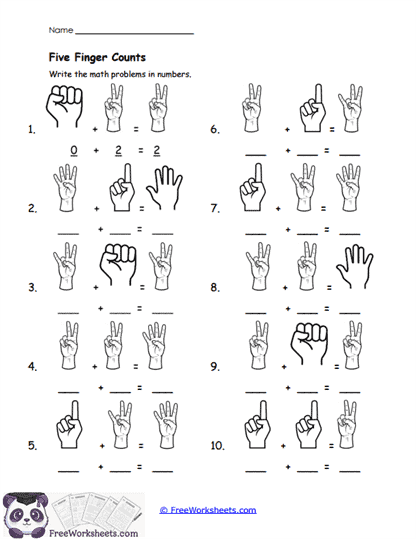
Five Finger Counts
- What Kids Do:
Students count fingers shown on hand pictures and write matching addition equations underneath each set. Children combine two groups of fingers to determine totals while connecting familiar hand models to beginner addition concepts and complete number sentences independently. - Target Skill:
This worksheet strengthens composing numbers and early addition fluency aligned with Kindergarten Operations and Algebraic Thinking standards. Students practice counting groups accurately, representing addition situations visually, and connecting concrete models to written equations and number relationships.
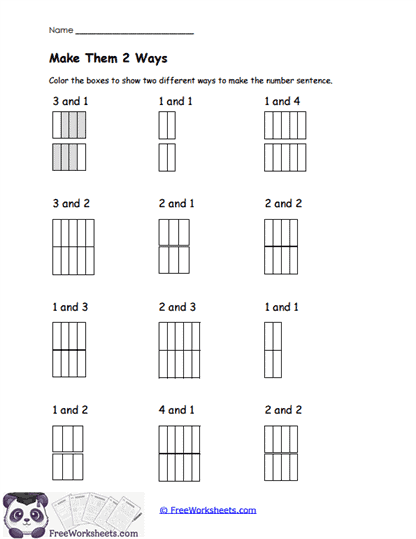
Make Them 2 Ways
- What Kids Do:
Students color box models to show two different ways to create the same number up to 5. Children divide groups into separate parts, compare combinations, and visually represent multiple number relationships while improving counting accuracy and fine motor control. - Target Skill:
This activity builds flexible number thinking and decomposition skills aligned to Common Core expectations for Kindergarten. Students learn that numbers can be composed in more than one way while strengthening visual reasoning, counting fluency, and understanding of part-part-whole relationships.
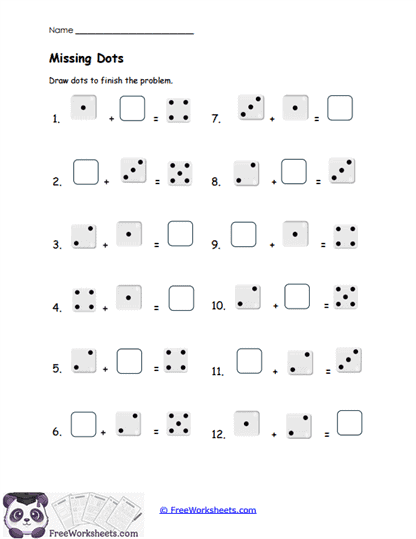
Missing Dots
- What Kids Do:
Students examine domino-style dot patterns and draw missing dots needed to complete each total. Children compare shown quantities to target numbers while carefully counting, adding missing groups, and practicing organized visual problem-solving through repeated examples. - Target Skill:
This worksheet develops number decomposition, missing-addend reasoning, and visual addition skills aligned to Kindergarten Common Core standards. Students strengthen counting fluency, improve mathematical reasoning, and gain confidence solving part-part-whole problems with visual support.
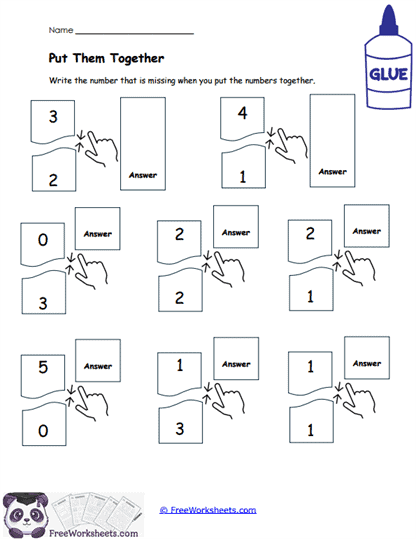
Put Them Together
- What Kids Do:
Students look at two number parts and determine the total when the groups are combined. Children complete simple addition-style problems up to 5 while practicing counting, recognizing number relationships, and understanding that addition means putting groups together. - Target Skill:
This worksheet supports foundational addition concepts and composing numbers within 5. Students strengthen early operations understanding, counting accuracy, and Common Core aligned problem-solving skills while connecting visual groupings to addition equations and totals.
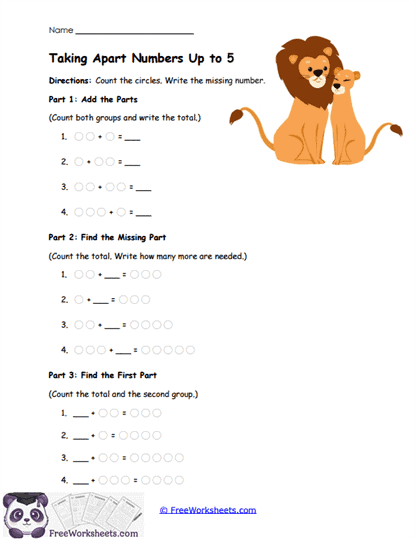
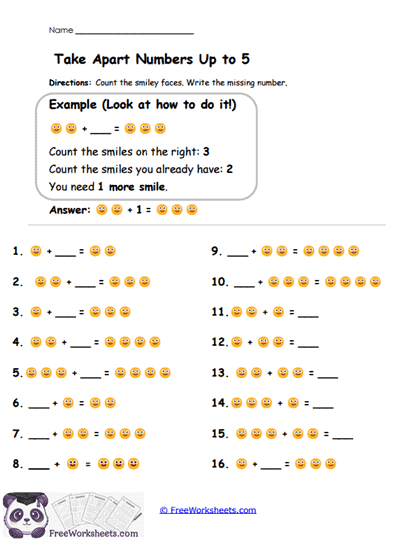
Take Apart Numbers Up to 5
- What Kids Do:
Students count smiley-face groups and determine missing numbers needed to complete each number combination. Children analyze visual models, compare parts and wholes, and complete beginner equations while strengthening confidence with counting and missing-number reasoning. - Target Skill:
This activity strengthens decomposing numbers within 5 and supports Common Core Kindergarten Operations and Algebraic Thinking standards. Students improve counting fluency, understand part-part-whole relationships, and develop flexible thinking skills that support future addition and subtraction success.
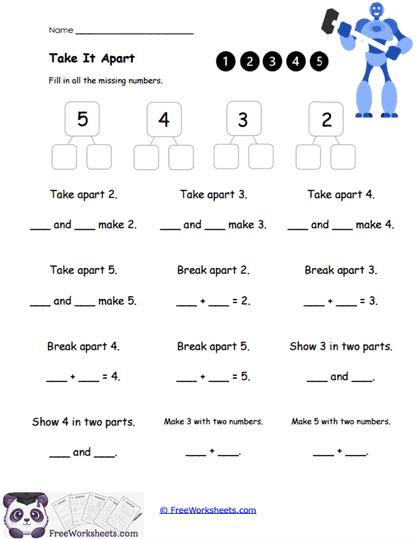
Take It Apart
- What Kids Do:
Students fill in missing numbers to show different ways whole numbers up to 5 can be separated into two groups. Children explore combinations, complete number pairs, and practice understanding that the same number can be broken apart in multiple ways. - Target Skill:
This worksheet develops decomposition strategies and number relationship understanding aligned with Kindergarten math standards. Students strengthen early algebraic reasoning, improve fluency with number combinations, and build foundational knowledge for addition facts and subtraction concepts.
Taking Apart Numbers Up to 5
- What Kids Do:
Students count circle groups and complete part-part-whole problems by identifying missing number parts. Children use visual circle models to compare totals and parts while strengthening careful counting habits and solving beginner missing-number equations independently. - Target Skill:
This worksheet supports Common Core aligned number decomposition and composing skills within 5. Students build fluency with counting objects, strengthen visual number reasoning, and develop foundational understanding of how smaller groups combine to create whole numbers.
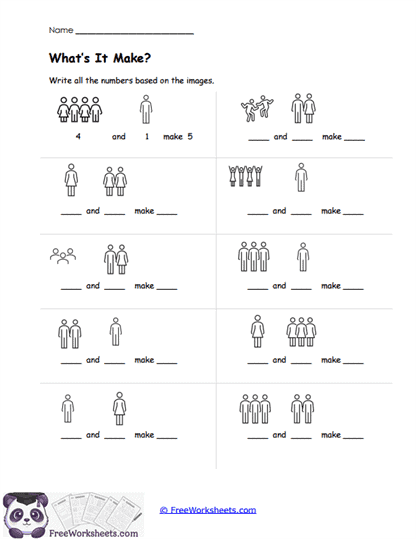
What’s It Make?
- What Kids Do:
Students count two picture groups and determine how many objects or people there are altogether. Children combine groups, practice early addition concepts, and strengthen visual counting skills while solving beginner math problems using relatable images. - Target Skill:
This activity develops composing numbers and beginner addition reasoning aligned to Kindergarten Operations and Algebraic Thinking standards. Students strengthen counting accuracy, improve understanding of combining groups, and connect concrete visuals to early addition concepts.