
Consonant Digraphs Worksheets
Kindergarten Reading Foundations Consonant Digraphs worksheets help students learn how two letters work together to make one sound. These free, ready-to-print PDF format worksheets are designed for immediate classroom use and easy lesson planning. Students build skills in recognizing digraph sounds, decoding words, and connecting sounds to letters aligned to curriculum standards.
About This Collection of Worksheets
This collection is designed to help early readers understand that some letter pairs work together to make one sound. Students practice hearing and recognizing digraphs like sh, ch, th, and wh through clear, engaging activities. These skills are essential for building strong decoding and early reading confidence.
The worksheets provide a wide range of hands-on and visual learning opportunities. Students match, sort, trace, write, and identify digraphs in words and sentences. This variety helps reinforce understanding while keeping young learners engaged and motivated throughout their practice.
These activities also support both reading and writing development. Students not only recognize digraph sounds but also apply them when building and writing words. This combined approach strengthens phonics, spelling, and fluency, creating a strong foundation for future reading success.
Paul’s Teacher Tip
When teaching digraphs, be sure to emphasize that the two letters make one sound, not two separate sounds. Model this clearly by saying words like “ship” and pointing out that sh is a single sound. Encourage students to repeat words out loud so they can hear the difference between blends and digraphs. It also helps to group similar sounds together during practice so students can compare them. Use visuals and repetition often, especially for students who are still building vocabulary. Over time, students will begin to recognize these patterns automatically.
Worksheet Collection Skill Spotlights
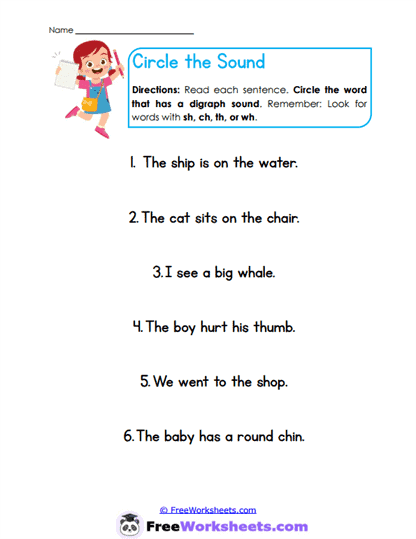
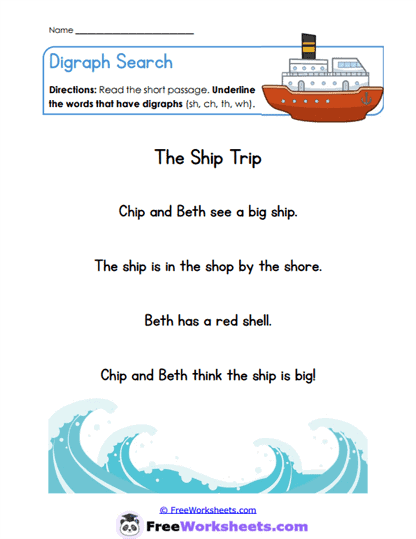
Circle the Sound
- What Kids Do:
Students read simple sentences and find the word that contains a target digraph sound. They carefully scan the sentence and circle the correct word, practicing both reading and sound recognition at the same time. - Target Skill:
This activity builds the ability to recognize digraphs within connected text. It supports early reading development by helping students apply phonics skills while reading sentences.
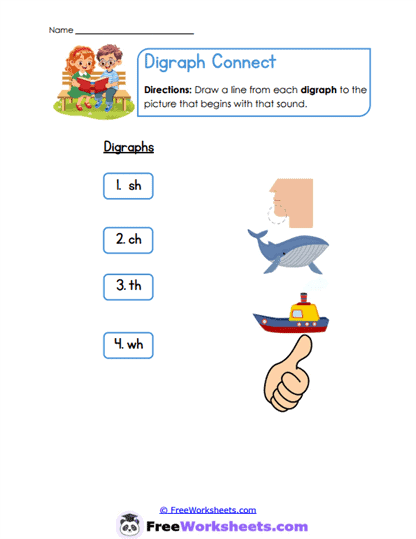
Digraph Connect
- What Kids Do:
Students match digraphs to pictures by drawing lines between letter pairs and images. They say each word aloud and listen for the correct beginning sound before making a match. - Target Skill:
This worksheet strengthens sound recognition and phonemic awareness. It aligns with early phonics standards such as RF.K.3 and helps students connect digraph sounds to real words.
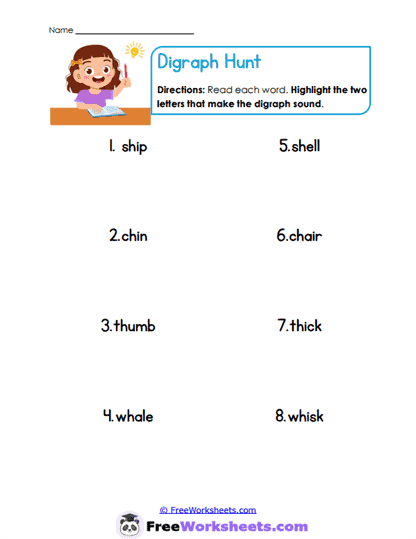
Digraph Hunt
- What Kids Do:
Students read words and find the two letters that make the digraph sound. They highlight or mark the correct letter pair, focusing on identifying sound patterns within words. - Target Skill:
This activity builds word analysis and phonics awareness. It helps students recognize digraphs within words, supporting decoding and early reading accuracy.
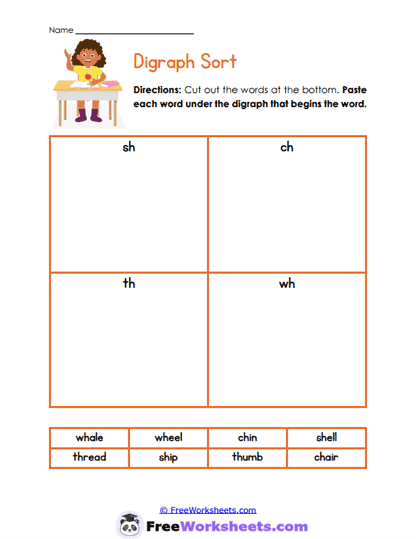
Digraph Sort
- What Kids Do:
Students cut out words and sort them into groups based on their beginning digraph sounds. They read each word and decide which category it belongs in, using careful listening and thinking. - Target Skill:
This worksheet develops categorization and phonemic awareness skills. It supports early reading by helping students group words based on shared sound patterns.
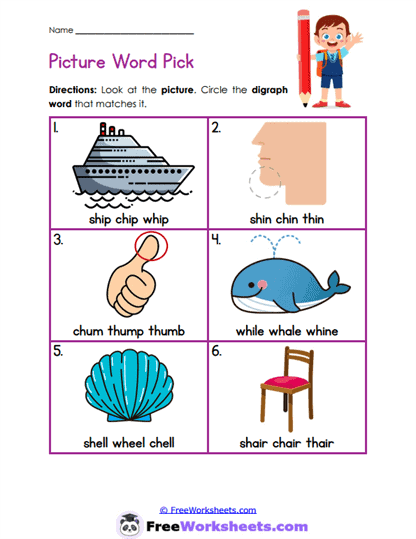
Picture Word Pick
- What Kids Do:
Students look at pictures and choose the correct word that matches both the image and its beginning sound. They compare options and select the best match. - Target Skill:
This activity strengthens decoding and word recognition. It helps students connect digraph sounds to complete words, improving reading fluency and accuracy.
Read and Choose
- What Kids Do:
Students examine pictures and read multiple word options before choosing the correct one. They rely on both visual clues and phonics knowledge to make accurate decisions. - Target Skill:
This worksheet builds decoding skills and sound recognition. It supports early reading development by helping students apply phonics knowledge to real words.
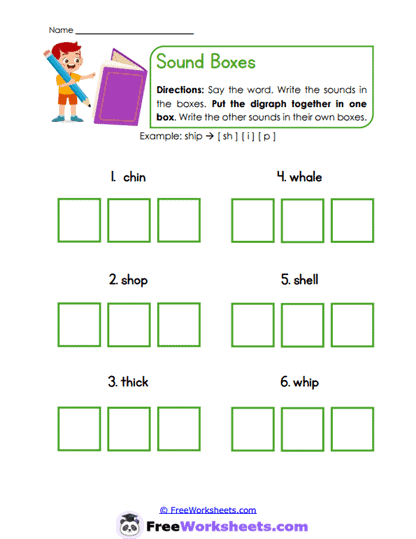
Sound Boxes
- What Kids Do:
Students break words into parts and place each sound into a box, keeping the digraph together as one unit. They say each word slowly to hear how the sounds fit. - Target Skill:
This activity strengthens sound segmentation and phonemic awareness. It aligns with foundational phonics skills like RF.K.3 and helps students understand how sounds work within words.
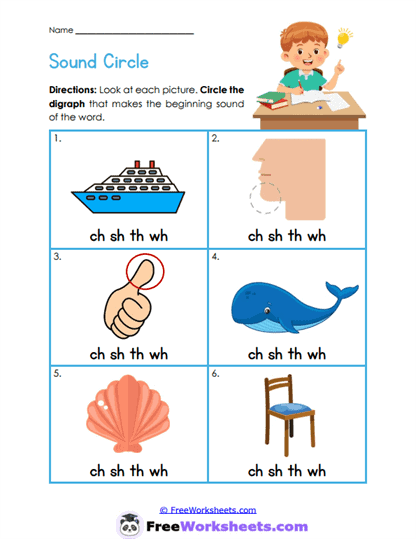
Sound Circle
- What Kids Do:
Students look at pictures and circle the correct digraph from a set of options. They listen for the beginning sound and choose the letters that match. - Target Skill:
This worksheet builds sound discrimination and phonics accuracy. It helps students recognize correct digraph sounds and distinguish between similar options.
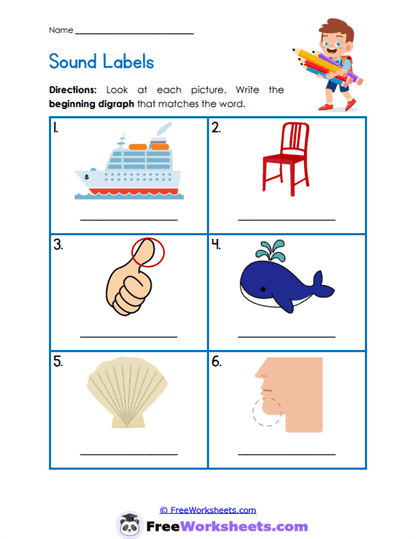
Sound Labels
- What Kids Do:
Students look at pictures and write the correct digraph that matches the beginning sound. They use visual clues and sound knowledge to complete each item. - Target Skill:
This activity supports sound-to-letter connections and early writing skills. It aligns with foundational phonics standards such as RF.K.3 and strengthens spelling development.
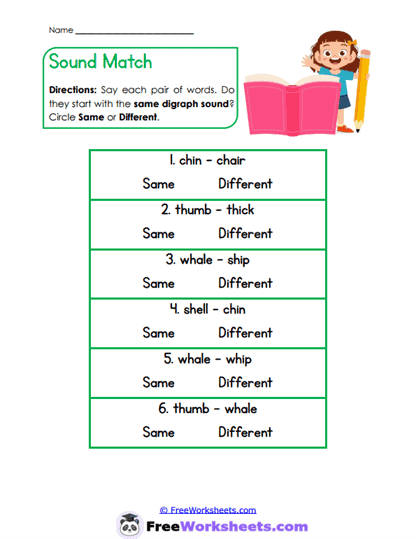
Sound Match
- What Kids Do:
Students compare pairs of words and decide if they begin with the same digraph sound. They circle whether the sounds are the same or different. - Target Skill:
This worksheet builds listening and comparison skills. It helps students recognize patterns in beginning sounds and strengthens phonemic awareness.
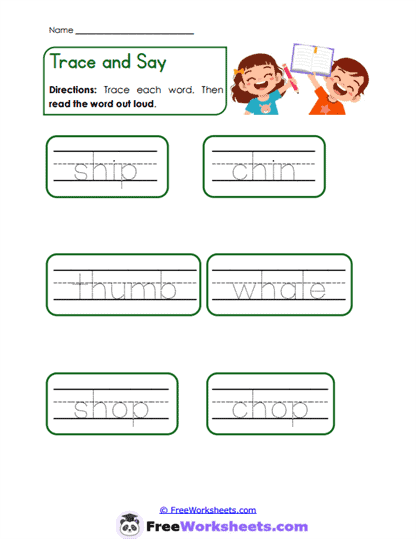
Trace and Say
- What Kids Do:
Students trace digraph words and say each word aloud as they write. They practice both handwriting and sound recognition through repetition. - Target Skill:
This activity supports letter formation and phonics development. It helps students connect writing with sound recognition and builds early reading fluency.
Write the Sound
- What Kids Do:
Students look at pictures and write the correct digraph to match the beginning sound. They carefully think about what they hear and record the letters. - Target Skill:
This worksheet strengthens sound-letter relationships and early spelling skills. It helps students apply phonics knowledge to build and write words confidently.