
Kindergarten Vocabulary Worksheets
Kindergarten vocabulary in kindergarten language arts helps children connect familiar words with pictures, meanings, categories, sounds, and simple sentences. These free, ready-to-print PDF worksheets are prepared for immediate classroom use, literacy centers, homeschool lessons, intervention, homework, or independent practice. Children strengthen word recognition, vocabulary meaning, and sentence comprehension while working toward important kindergarten curriculum goals.
About This Collection of Worksheets
Vocabulary growth in kindergarten is about more than memorizing individual words. Children need to connect a printed word with its meaning, recognize it in pictures and sentences, sort it into meaningful groups, and use sound knowledge to read unfamiliar examples. These early connections support reading comprehension, speaking, spelling, and greater confidence when children begin working with longer texts.
This collection gives students many ways to work with familiar vocabulary. Children match words with pictures, trace high-frequency words, identify beginning sounds, complete picture-supported sentences, sort words into categories, choose picture names, draw word meanings, answer yes-or-no questions, build sentences from a word bank, copy words, read familiar vocabulary aloud, and select missing vowels. The activities combine word meaning with phonics, handwriting, visual recognition, and simple comprehension. Pasted text
Teachers can use these worksheets during kindergarten vocabulary lessons, literacy centers, small groups, intervention, morning work, homework, or informal assessment. Parents and homeschool educators can choose individual pages depending on whether a child needs help recognizing printed words, understanding meanings, grouping related vocabulary, using words in sentences, or connecting sounds with spelling. The varied formats also make it easier to review the same vocabulary skills without relying on one repeated activity style.
Paul’s Teacher Tip
When introducing new vocabulary, have children say the word, point to its meaning, and use it in a short sentence whenever possible. That three-part routine helps the word become more than something they simply recognize on a worksheet. If a child can identify the picture but cannot read the word, use the beginning sound as a clue before giving the answer. For sorting activities, ask children to explain why a word belongs in a category so they practice meaning as well as recognition. When working with sentence pages, always have students reread the completed sentence aloud to make sure the chosen word makes sense.
Worksheet Collection Skill Spotlights
Draw Meaning
What Kids Do:
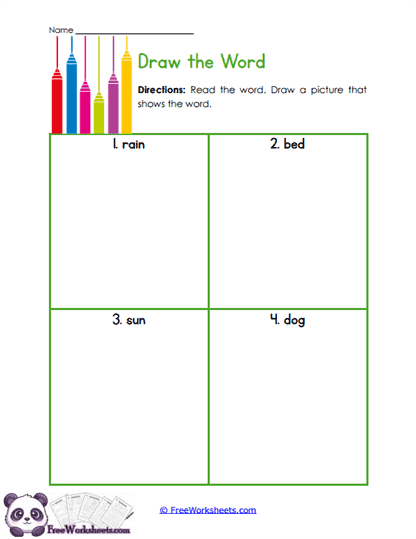
Children read four familiar vocabulary words-rain, bed, sun, and dog-and draw a picture that clearly represents each one. They think about what the printed word means, decide what details would show that meaning, and explain their drawing after finishing.
Target Skill:
This activity strengthens the connection between printed vocabulary and meaning rather than simple word recognition. Children practice reading comprehension, visual representation, and expressive language while using their own drawings to show that they understand each word.
Picture Matching
What Kids Do:
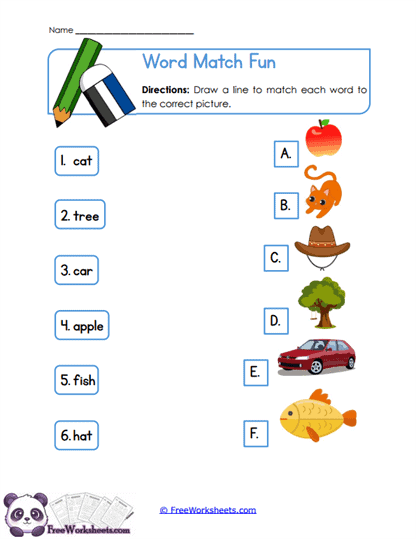
Children read six familiar words such as cat, tree, car, apple, fish, and hat and search for the matching picture on the opposite side of the page. They draw a line between each word and image and then reread the completed pairs aloud.
Target Skill:
The worksheet builds basic vocabulary recognition by connecting written words with familiar objects. Students strengthen visual word recognition, meaning, early reading confidence, and the ability to move between printed language and concrete picture representations.
Picture Sentences
What Kids Do:
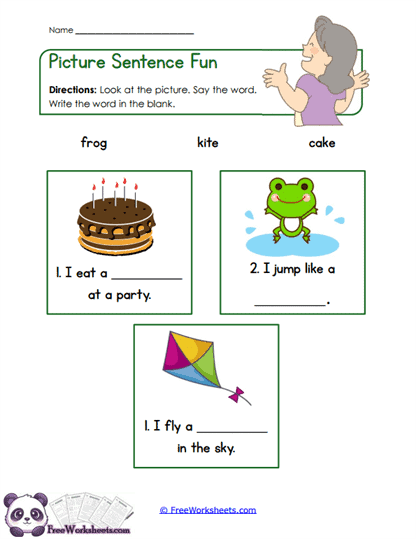
Children look at pictures of a cake, frog, and kite and use a small word bank to complete simple sentences beneath the pictures. They identify the picture, read the sentence, select the word that fits, write it on the blank, and reread the completed sentence.
Target Skill:
This activity develops vocabulary in context rather than as isolated labels. Students practice using picture clues, sentence meaning, word recognition, and copying skills together, helping them understand how familiar vocabulary functions inside complete ideas.
Picture Words
What Kids Do:
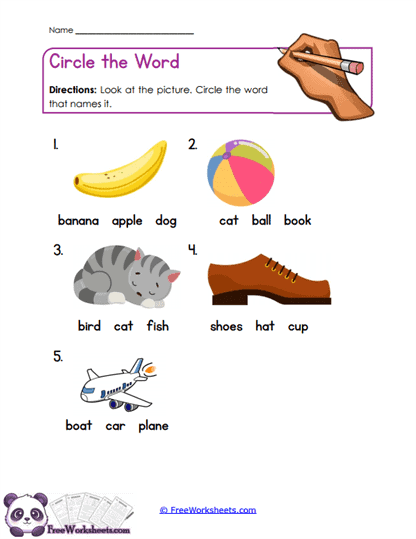
Children look at five familiar pictures, including a banana, ball, cat, shoe, and plane, and choose the word that correctly names each one from three printed options. They circle the answer and can read the selected word aloud afterward.
Target Skill:
The worksheet strengthens visual word discrimination and vocabulary recognition. Students learn to compare complete printed words rather than guessing from a first letter, while reinforcing the connection among spoken vocabulary, pictures, and written forms.
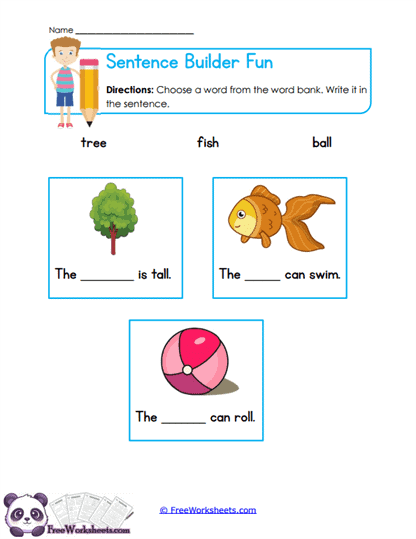
Sentence Builder
What Kids Do:
Children use a word bank containing tree, fish, and ball to complete three picture-supported sentences. They study each picture, read the sentence, choose the vocabulary word that makes sense, write it in the blank, and read the finished sentence aloud.
Target Skill:
This activity strengthens contextual vocabulary knowledge and early sentence comprehension. Students practice connecting pictures, printed words, and sentence meaning while also reinforcing handwriting, spelling, and the habit of checking whether a completed sentence makes sense.
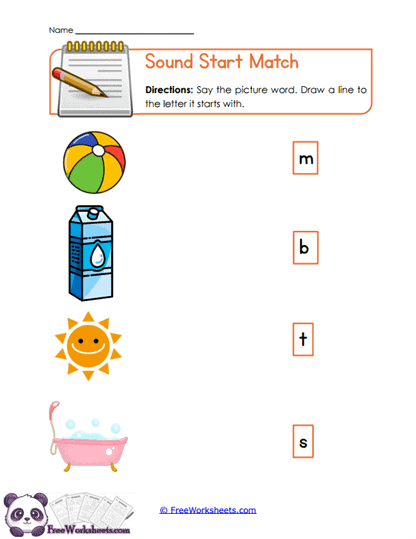
Starting Sounds
What Kids Do:
Children look at pictures such as a ball, milk, sun, and tub, say each name aloud, listen for the first sound, and connect the picture to the matching beginning letter. They can repeat the word and beginning sound together after each match.
Target Skill:
The worksheet connects vocabulary knowledge with phonemic awareness and letter-sound relationships. Students practice isolating the first sound in a familiar spoken word and matching that sound with its printed letter, supporting both reading and early spelling.
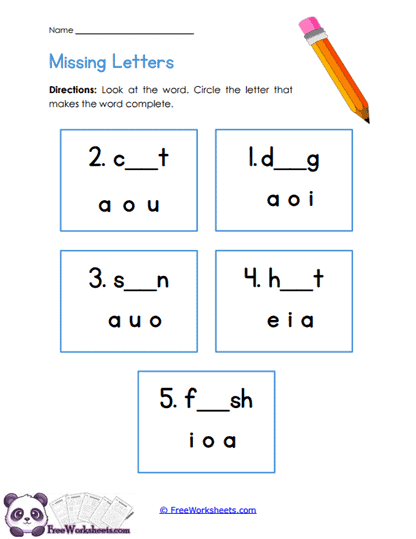
Vowel Choices
What Kids Do:
Children complete familiar words such as c_t, d_g, s_n, h_t, and f_sh by choosing the vowel that correctly fills the middle space. They say each word slowly, compare the available choices, circle the correct vowel, and read the finished word aloud.
Target Skill:
This activity strengthens short-vowel discrimination while reinforcing familiar vocabulary. Students practice listening closely to internal sounds, connecting those sounds with letters, and using meaning to confirm that the completed spelling forms a real word they know.
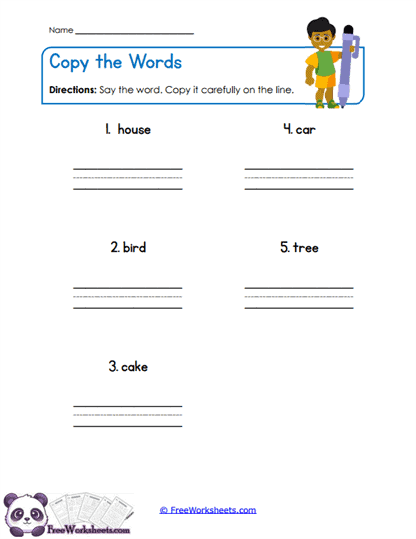
Word Copying
What Kids Do:
Children read familiar vocabulary words such as house, bird, cake, car, and tree and copy each one onto handwriting lines below the model. They work one word at a time, preserve the correct letter order, and reread the copied word after writing.
Target Skill:
The worksheet reinforces visual word memory, spelling order, handwriting, and recognition of common vocabulary. Students practice carefully reproducing a complete printed word while becoming more familiar with how frequently used words look in written form.
Word Reading
What Kids Do:
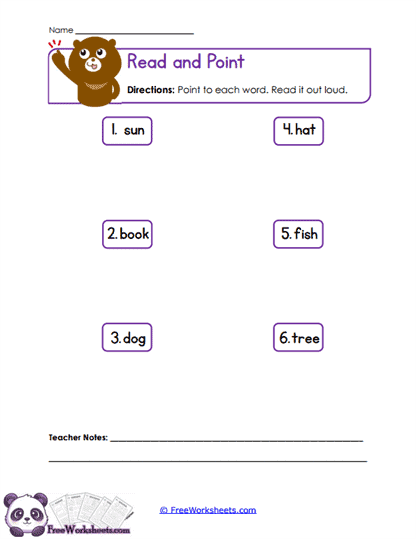
Children point to and read six familiar words aloud, including sun, book, dog, hat, fish, and tree. They move through the words one at a time and may use the beginning sound or familiar meaning as support when a word is difficult.
Target Skill:
This activity builds automatic recognition of common vocabulary in print. Students strengthen oral reading fluency, whole-word recognition, and confidence while giving teachers or parents a simple way to observe which words are becoming familiar and which need more review.
Word Sorting
What Kids Do:
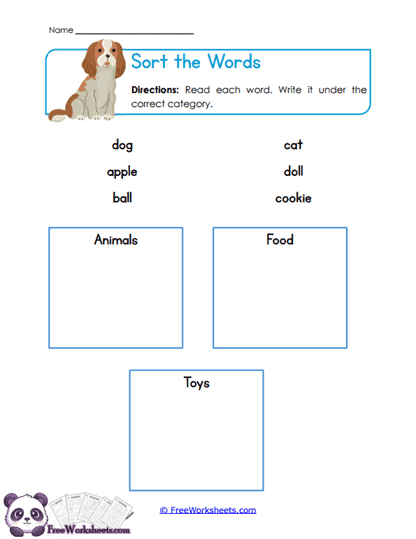
Children read six familiar words such as dog, cat, apple, cookie, ball, and doll and sort them into three categories: Animals, Food, and Toys. They write each word in the appropriate box and can explain why the items in each group belong together.
Target Skill:
The worksheet strengthens semantic vocabulary by helping students organize words according to meaning. Children practice classification, reasoning, word recognition, and understanding that individual vocabulary terms can belong to larger conceptual groups.
Word Tracing
What Kids Do:
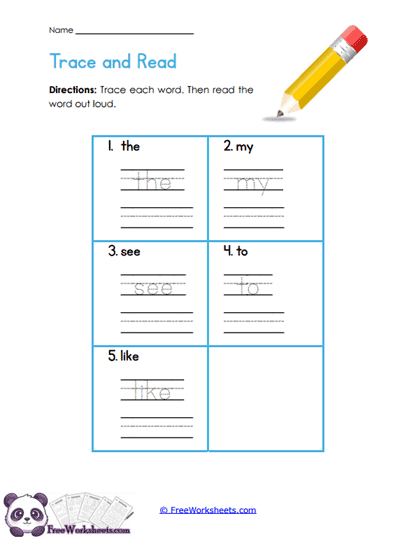
Children read and trace five common high-frequency words: the, my, see, to, and like. They say each word, follow the letters from left to right, and then read it again after tracing so the activity stays connected to meaning and recognition.
Target Skill:
This activity develops automatic recognition of common early-reading vocabulary while reinforcing letter order and handwriting. Repeated visual and motor exposure helps students remember whole-word forms that may not always be easy to decode using basic phonics alone.
Yes No
What Kids Do:
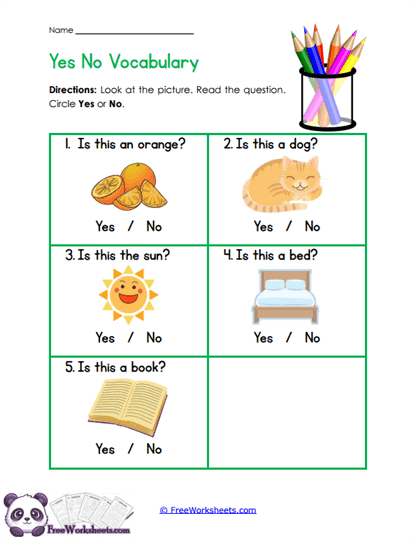
Children study pictures such as an orange, cat, sun, bed, and book and read a short question asking whether a particular word matches the picture. They circle Yes or No and can explain why the response is correct.
Target Skill:
The worksheet strengthens vocabulary recognition and simple reading comprehension by requiring children to compare a printed word or question with a visual meaning. Students also practice careful attention and understanding the response choices Yes and No.