
About This Worksheet
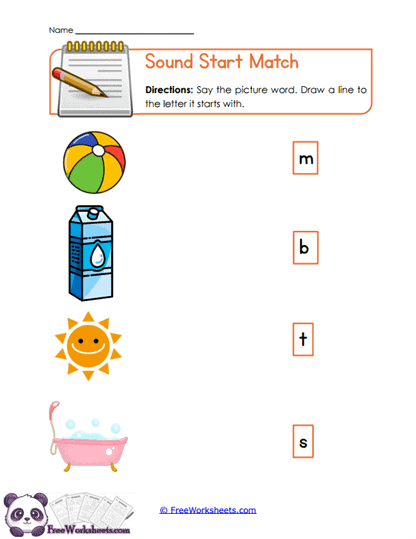
This kindergarten worksheet helps children connect familiar pictures with the first sound in each word. Students look at pictures such as a ball, milk, sun, and tub, say each word aloud, and find the letter it begins with. They then draw a line from the picture to the correct beginning letter. This gives children focused practice with an important early phonics and vocabulary skill.
Learning Goals
The main goal is to help children hear and recognize the beginning sound in familiar words. Students practice saying a picture name slowly and paying attention to the first sound they hear. They then connect that sound with its matching printed letter. This supports phonemic awareness, letter-sound knowledge, vocabulary, and early spelling.
Student Tasks
Children look at each picture and say its name aloud. They listen for the first sound and find the matching letter from the choices on the right. Students draw a line between the picture and its beginning letter. After matching, they can say the picture word and beginning sound together for extra review.
Common Challenges
Some children may focus on the whole word and have trouble separating just the first sound. Others may know the sound but not remember which printed letter represents it. Similar letter sounds can also cause confusion for beginning learners. A parent or teacher can stretch the first sound slightly, such as “ssssun,” without giving the answer immediately.
Teaching Suggestions
Teachers can model one picture by saying the word slowly and emphasizing its first sound. Parents and homeschool educators can ask, “What sound do you hear first?” before showing the letter choices. It may help to have children make the sound several times and then scan the letters. Encourage them to say the full word again after making each match.
Worksheet Features
The worksheet includes four colorful picture clues and four beginning-letter choices. The pictures are familiar enough that children can focus on sounds instead of difficult vocabulary. Wide spacing makes the matching lines easy to draw and follow. This printable works well for phonics centers, vocabulary development, kindergarten intervention, or home practice.