
Kindergarten Spelling Worksheets
Kindergarten spelling in kindergarten language arts helps children connect sounds, letters, and simple words as they build early reading and writing confidence. These free, ready-to-print PDF worksheets are prepared for immediate classroom use, literacy centers, homeschool lessons, intervention, homework, or independent practice. Children strengthen phonemic awareness, short-vowel spelling, and word recognition while working toward important kindergarten curriculum goals.
About This Collection of Worksheets
Early spelling practice helps kindergarten children understand that spoken words can be broken into sounds and represented with letters in a predictable order. Students begin with simple CVC words, listening carefully for beginning, middle, and ending sounds while learning to connect phonics with written spelling. This foundation supports decoding, handwriting, reading fluency, and greater confidence when children begin writing words independently.
This collection gives students several different ways to practice the same important spelling ideas. Children tap sounds, spell from picture clues, place letters into sound boxes, trace and copy words, choose correct spellings, identify short vowels, practice sight words, complete sentences, repair misspelled words, unscramble letters, rewrite CVC words, and fill in missing sounds. The activities repeatedly connect listening, reading, writing, and word analysis so children can approach spelling from more than one direction. Pasted text
Teachers can use these worksheets during kindergarten phonics lessons, literacy centers, small groups, intervention, morning work, homework, or spelling review. Parents and homeschool educators can select pages based on whether a child needs more support hearing individual sounds, distinguishing vowels, remembering letter order, recognizing common words, or writing independently. Because the collection moves from highly supported sound work toward more independent spelling and sentence use, it can also help adults see which skills are becoming secure and which still need practice.
Paul’s Teacher Tip
When a child gets stuck on a spelling word, have them say it slowly before looking at the letters. Ask, “What sound do you hear first, in the middle, and at the end?” so the child learns to work through the word instead of guessing. Short vowels often cause the most trouble, so stretching the middle sound can make a big difference. For CVC words, tapping one finger for each sound before writing can help prevent omitted or reversed letters. When sight words appear, point out that some words need to be remembered as whole words because they do not always follow the simplest sound-by-sound pattern.
Worksheet Collection Skill Spotlights
Letter Order
What Kids Do:
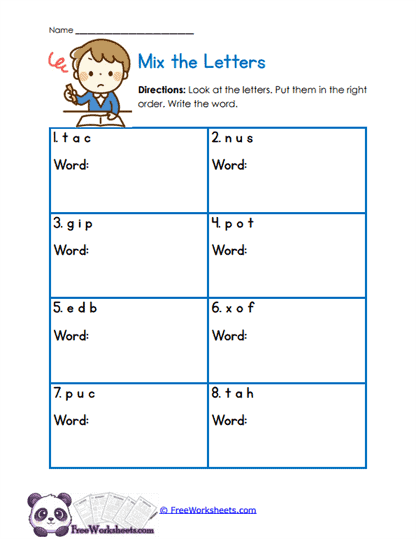
Children study eight groups of scrambled letters and rearrange each set to form a familiar three-letter word such as cat, sun, pig, top, bed, fox, cup, or hat. They think through the beginning, middle, and ending sounds before writing each completed word in the correct order.
Target Skill:
This activity strengthens understanding that spelling depends on both the correct letters and their sequence. Students reinforce CVC patterns, sound order, decoding, and visual word awareness while learning to check whether a completed letter arrangement forms a recognizable word.
Missing Letters
What Kids Do:
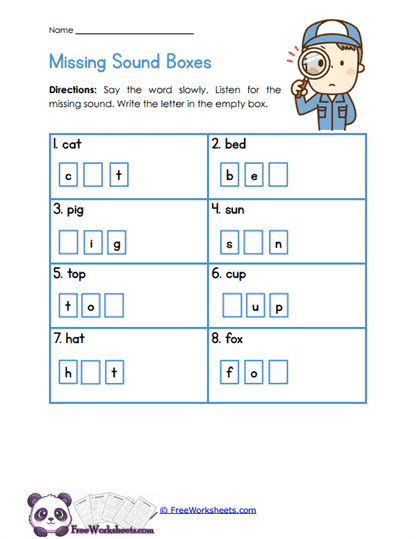
Children work with eight CVC words that each have one missing letter. They say the word slowly, inspect the two letters already provided, decide whether the missing sound belongs at the beginning, middle, or end, and write the correct letter in the open box.
Target Skill:
The worksheet strengthens phonemic awareness by requiring students to listen across the entire word rather than focusing on only one position. Children practice identifying consonants and short vowels while connecting missing spoken sounds with the written letters that represent them.
Picture Spelling
What Kids Do:
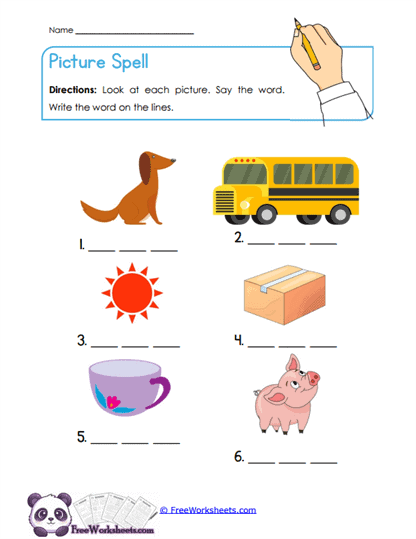
Children look at six familiar pictures, including a dog, bus, sun, box, cup, and pig, say each word aloud, listen for the sounds, and write the matching letters on the lines below the picture. The visual clue helps them know which word they are expected to spell.
Target Skill:
This activity connects vocabulary, phonics, and spelling by asking children to move from a known picture to its spoken and written form. Students strengthen sound segmentation, letter-sound correspondence, short-vowel awareness, and early independent word writing.
Rainbow Writing
What Kids Do:
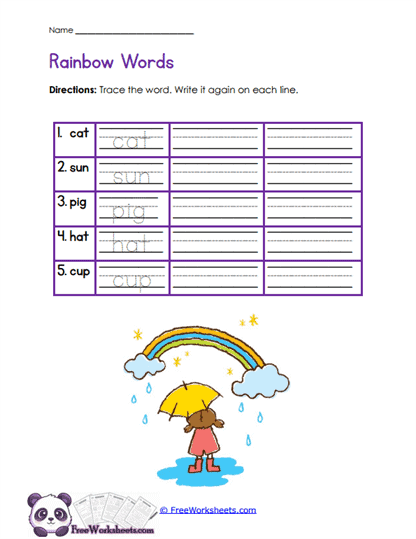
Children trace and rewrite familiar CVC words such as cat, sun, pig, hat, and cup. They follow each model from left to right, copy the same word onto the open writing lines, and can say the individual sounds as they write before reading the finished word aloud.
Target Skill:
The worksheet reinforces spelling memory through repeated visual and motor practice. Students strengthen letter order, handwriting, short-vowel patterns, and automatic recognition of common CVC words by seeing, tracing, saying, and rewriting the same spelling.
Sentence Choices
What Kids Do:
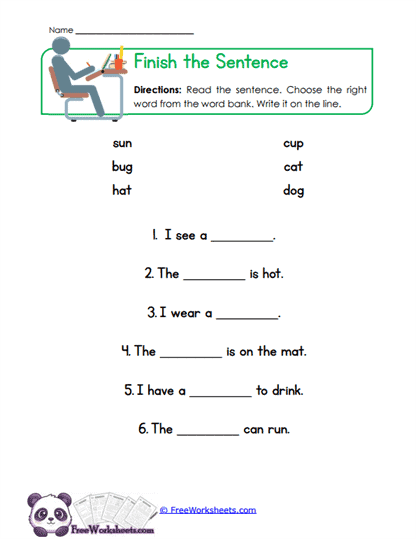
Children use a six-word bank containing familiar words such as sun, bug, hat, cup, cat, and dog to complete short sentences. They read or listen to each sentence, decide which word makes sense, copy it onto the blank, and reread the completed sentence.
Target Skill:
This activity connects spelling with early reading comprehension rather than treating words as isolated drills. Students strengthen vocabulary, sentence meaning, word recognition, and accurate copying while learning that the correct spelling choice must also fit the context.
Sight Words
What Kids Do:
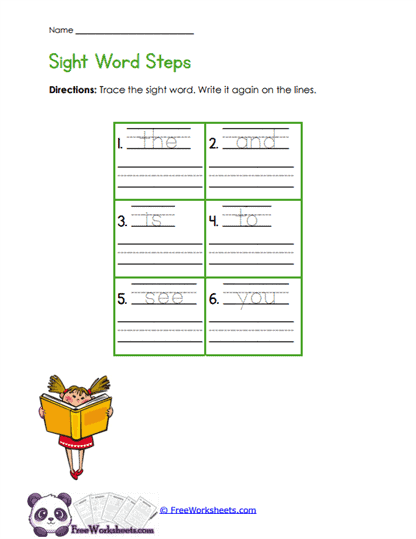
Children trace and then independently write six common sight words: the, and, is, to, see, and you. They practice reading each word as a whole, follow the letter pattern from left to right, and rewrite it on the blank lines underneath.
Target Skill:
The worksheet develops familiarity with high-frequency words that children benefit from recognizing quickly in early reading. Students strengthen visual word memory, handwriting, spelling recall, and reading fluency through repeated exposure to the same commonly used words.
Sound Boxes
What Kids Do:
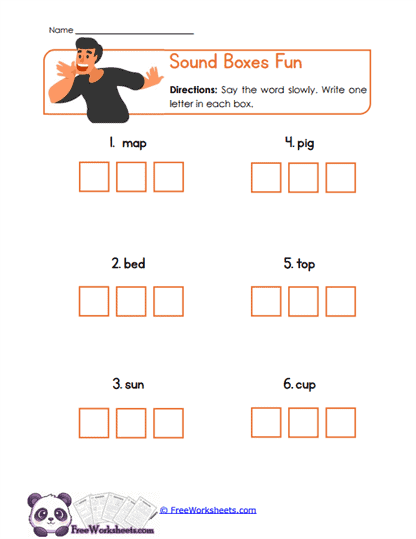
Children spell six three-sound words such as map, bed, sun, pig, top, and cup by writing one letter in each of three boxes. They stretch each word, listen for the first, middle, and final sounds, and then blend the completed letters back together.
Target Skill:
This activity strengthens phoneme segmentation and reinforces the idea that each sound in a simple CVC word has a corresponding place in the spelling. The box structure also supports left-to-right order and helps students avoid leaving out sounds.
Sound Tapping
What Kids Do:
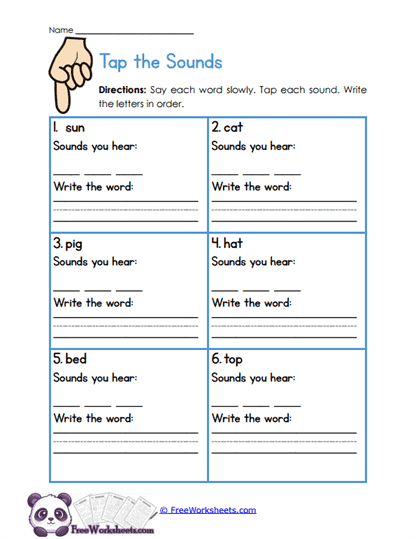
Children say six CVC words slowly, tap once for each sound they hear, record the matching letters in sequence, and then write the complete word. The repeated routine encourages them to work through the word one sound at a time rather than guessing.
Target Skill:
The worksheet builds phonemic awareness and sound-to-letter mapping by helping students isolate beginning, middle, and ending sounds. Children strengthen segmentation, short-vowel listening, letter order, and the habit of using spoken sounds as a spelling strategy.
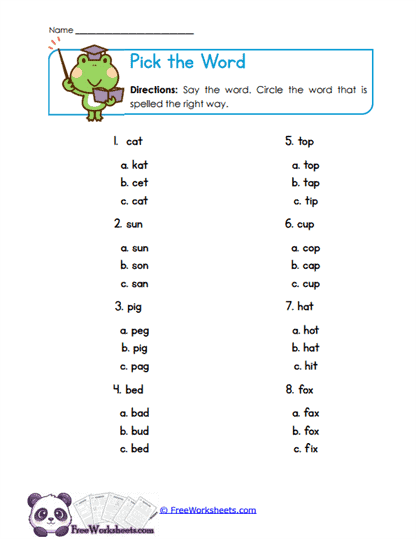
Spelling Choices
What Kids Do:
Children look at eight familiar target words and compare three spelling choices for each one. They say the word, inspect the beginning, middle, and ending letters, and circle the option that correctly represents words such as cat, sun, pig, bed, top, cup, hat, and fox.
Target Skill:
This activity strengthens visual spelling accuracy and careful letter-by-letter checking. Students practice distinguishing correct CVC patterns from close distractors, especially when only a beginning consonant, short vowel, or ending consonant has been changed.
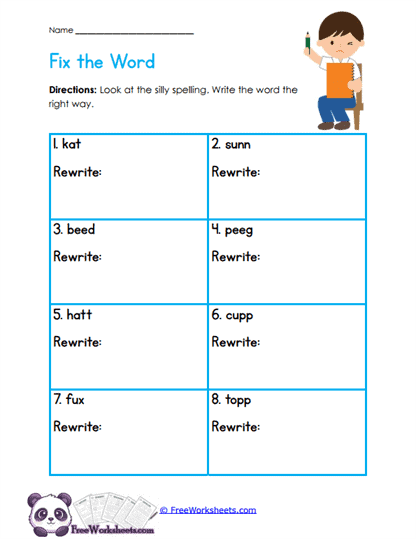
Spelling Repair
What Kids Do:
Children examine eight silly or incorrect spellings such as kat, sunn, beed, or peeg and rewrite each word correctly. They compare the written letters with the sounds they hear, identify what is extra or incorrect, and record the repaired CVC word.
Target Skill:
The worksheet introduces early proofreading and word analysis. Students strengthen phonics knowledge by comparing sounds with letters, noticing substitutions and unnecessary letters, and using familiar CVC patterns to explain why a spelling needs to be corrected.
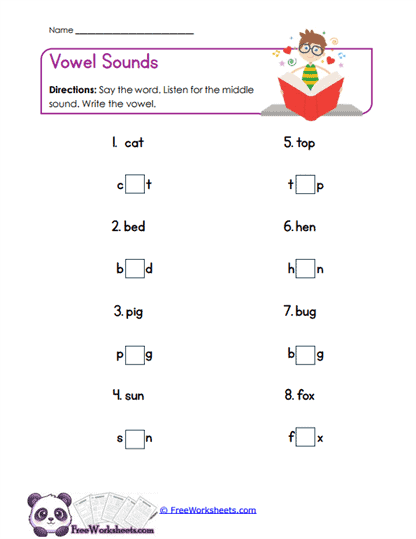
Vowel Listening
What Kids Do:
Children complete eight CVC words by listening for the missing middle vowel. The beginning and ending consonants are already provided, so students stretch words such as cat, bed, pig, sun, top, hen, bug, and fox and write the vowel they hear in the open box.
Target Skill:
This activity gives focused practice distinguishing short vowel sounds in the middle of words. Students strengthen phonemic discrimination, vowel-letter correspondence, decoding, and spelling accuracy while learning how changing the vowel can create a completely different word.
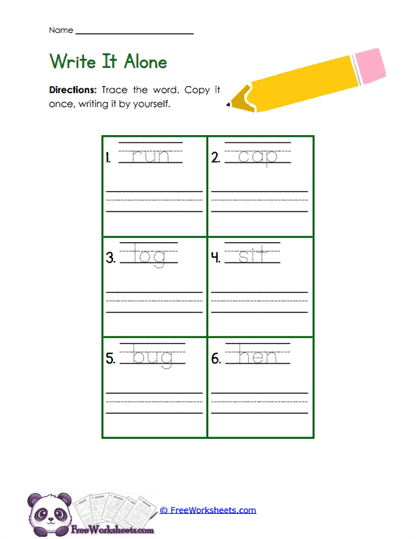
Word Copying
What Kids Do:
Children trace six short words such as run, cap, log, sit, bug, and hen and then copy each word independently onto blank handwriting lines. They follow the model carefully, write each letter in order, and can read the completed word aloud afterward.
Target Skill:
The worksheet bridges guided tracing and independent word writing. Students strengthen handwriting, visual memory, letter order, and recognition of common short-vowel spelling patterns while learning to reproduce a complete word accurately from a model.