
Kindergarten Writing Prompts Worksheets
Kindergarten writing prompts in kindergarten language arts help children turn personal ideas, observations, and experiences into simple written sentences. These free, ready-to-print PDF worksheets are prepared for immediate classroom use, writing centers, homeschool lessons, journals, morning work, or independent practice. Children strengthen sentence formation, vocabulary use, and written expression while working toward important kindergarten curriculum goals.
About This Collection of Worksheets
Writing prompts give kindergarten children a manageable way to move from spoken ideas into written language. Simple sentence starters, picture planning, familiar topics, and short personal responses help beginning writers focus on expressing one clear idea at a time. These activities also support handwriting, vocabulary, oral language, and the early understanding that writing can describe experiences, preferences, observations, and feelings.
This collection includes personal, seasonal, descriptive, and picture-supported writing tasks. Children write about favorite things, themselves, ocean pictures, favorite foods, abilities, weekend experiences, spring observations, feelings, weather, favorite places, and their own names, while one activity adds sentence tracing for extra handwriting and fluency practice. Many pages begin with drawing or speaking before writing, giving children a useful bridge from ideas to sentences. Pasted text
Teachers can use these worksheets in kindergarten writing centers, journal time, morning work, seasonal units, social-emotional lessons, or small groups. Parents and homeschool educators can encourage children to say the whole sentence aloud before writing and provide spelling support when needed without taking over the idea. Because the prompts range from highly supported sentence frames to more independent responses, the collection can help children gradually build confidence as writers.
Paul’s Teacher Tip
For beginning writers, help children say the sentence before they write it. Once the idea sounds clear aloud, have them repeat it slowly and write one part at a time. Drawing first can be especially helpful because the picture gives children something concrete to refer back to when they forget their idea. Invented spelling is appropriate when the goal is getting thoughts onto paper, especially if perfect spelling would interrupt the writing process. After the sentence is finished, have children point to each word and read it aloud so they can hear whether the writing matches what they intended to say.
Worksheet Collection Skill Spotlights
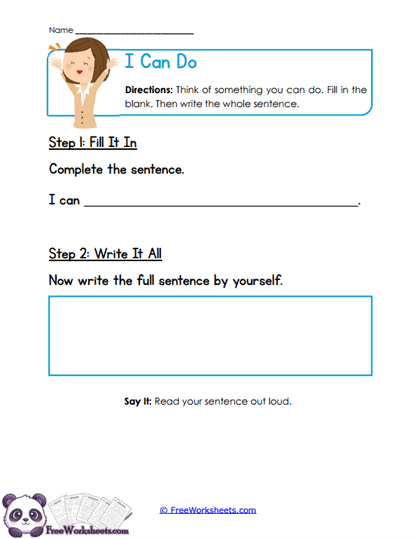
Ability Writing
What Kids Do:
Children think of something they can do, complete the sentence starter “I can ______,” and then rewrite the full sentence in a larger writing space. They finish by reading their completed sentence aloud and checking that the idea still makes sense.
Target Skill:
This activity strengthens complete-sentence construction, personal writing, and writing independence. Students practice choosing an action word, using a familiar sentence structure, copying the full thought accurately, and maintaining correct word order as they move from supported to more independent writing.
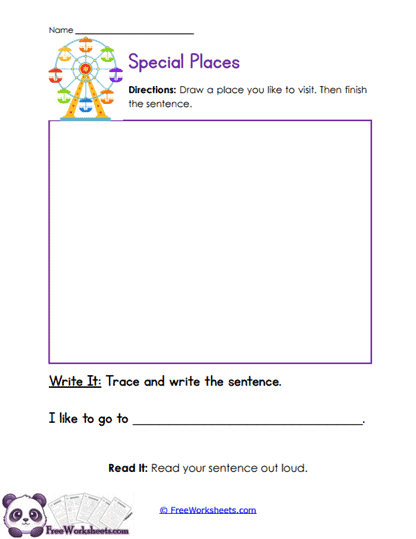
Favorite Place
What Kids Do:
Children think about a place they enjoy visiting, draw that place in a large picture box, and complete the sentence starter “I like to go to ______.” They then read the finished sentence aloud and connect their drawing with the written idea.
Target Skill:
The worksheet develops personal response writing by helping students move from a familiar experience to a picture and then to a sentence. Children strengthen vocabulary, sentence formation, and the ability to express one clear idea about a place that matters to them.
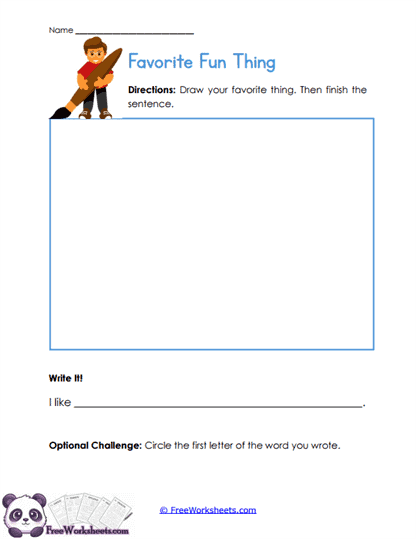
Favorite Things
What Kids Do:
Children choose one favorite thing, draw it in the picture space, and complete the sentence “I like ______.” An optional challenge asks them to circle the first letter of the word they wrote, and they can read the completed sentence aloud afterward.
Target Skill:
This activity introduces simple opinion writing and helps students connect personal preferences with written language. Children practice selecting one topic, using a sentence frame, writing a meaningful word, and understanding how a picture can support planning before writing.
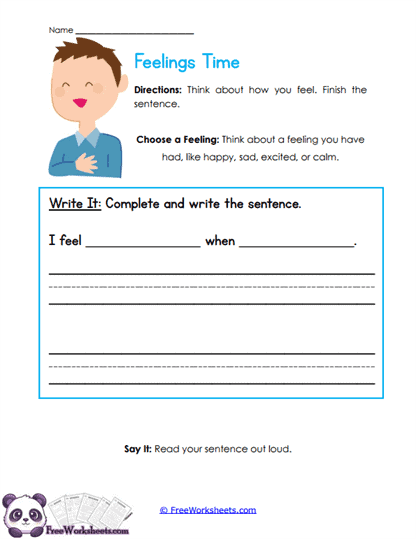
Feeling Words
What Kids Do:
Children complete the sentence frame “I feel ______ when ______” by naming an emotion and then explaining a situation that causes that feeling. They use handwriting lines to finish the full thought and read the sentence aloud when they are done.
Target Skill:
The worksheet strengthens emotional vocabulary and more complete sentence development. Students practice linking a feeling with a reason, extending a basic sentence into a fuller thought, and translating spoken personal experiences into written language.
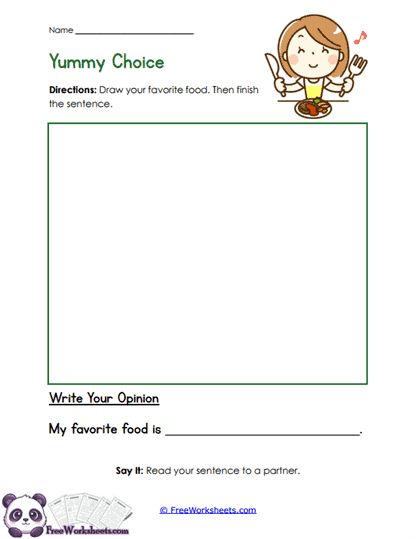
Food Favorite
What Kids Do:
Children draw a food they enjoy and complete the sentence starter “My favorite food is ______.” After writing the food name, they read the full sentence to a partner and connect their picture with their written opinion.
Target Skill:
This activity supports early opinion writing by helping students state a clear preference in sentence form. Children strengthen vocabulary, handwriting, sentence structure, and the ability to move from an idea to a picture and then into written language.
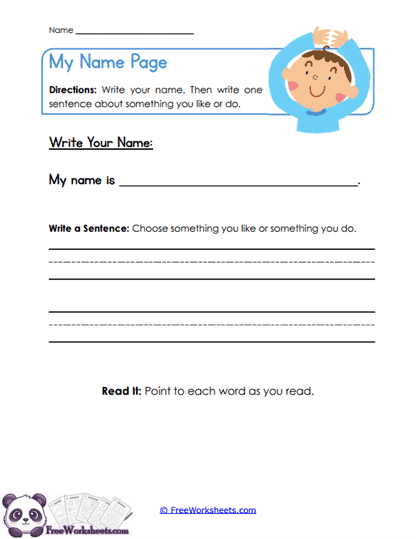
Name Writing
What Kids Do:
Children complete the sentence “My name is ______” and then write another simple sentence about something they like or do. They finish by pointing to each word and reading their writing aloud from beginning to end.
Target Skill:
The worksheet builds confidence with personal writing and sentence formation using a highly familiar topic. Students practice writing their names, creating a second independent thought, maintaining word order, and connecting spoken language with their own written sentences.
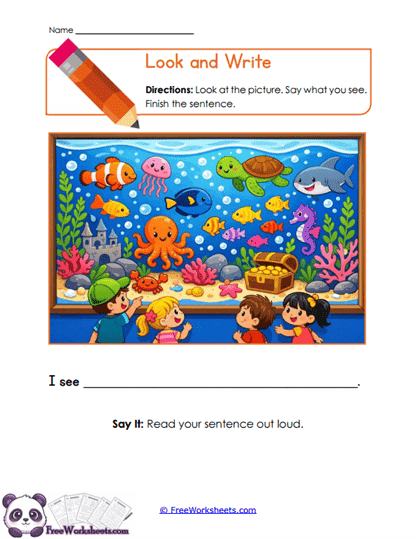
Ocean Writing
What Kids Do:
Children study a detailed ocean scene, choose one object they notice, and complete the sentence starter “I see ______.” They can use words such as fish, turtle, shark, octopus, or treasure and then read the full sentence aloud.
Target Skill:
This activity strengthens observation-based writing and vocabulary development. Students practice selecting one detail from a busy picture, naming it clearly, and turning that observation into a complete sentence with the support of a predictable sentence frame.
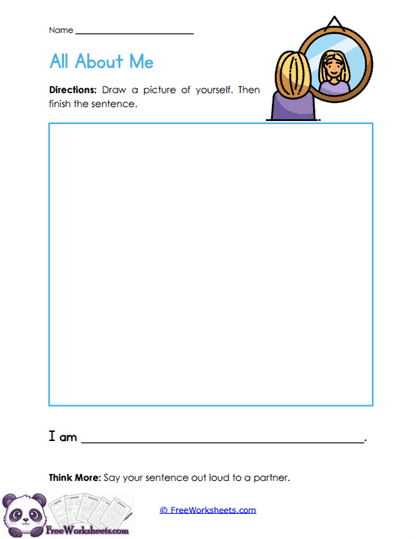
Self Portrait
What Kids Do:
Children draw a self-portrait and finish the sentence starter “I am ______” with a word or short phrase that describes them. They then share the finished sentence with a partner, giving the activity an oral language component as well.
Target Skill:
The worksheet develops personal writing, descriptive vocabulary, and basic sentence construction. Students practice choosing an appropriate describing word or phrase, connecting self-awareness with written language, and sharing a complete sentence with an audience.
Sentence Tracing
What Kids Do:
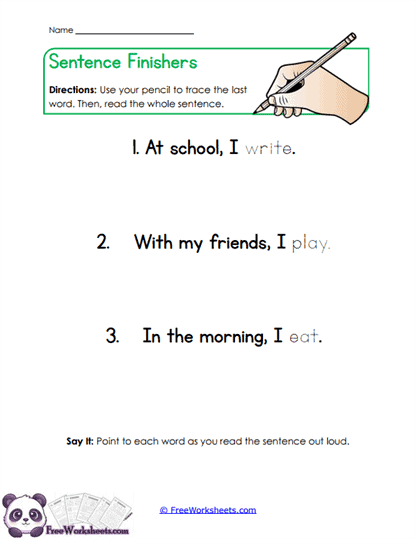
Children read three short sentences and trace the final action word in each one, including words such as write, play, and eat. After tracing, they point to each word and reread the whole sentence from beginning to end.
Target Skill:
This activity combines handwriting practice with sentence fluency and meaning. Students strengthen letter formation, left-to-right tracking, action-word recognition, and the ability to read a complete sentence rather than focusing only on an isolated traced word.
Spring Writing
What Kids Do:
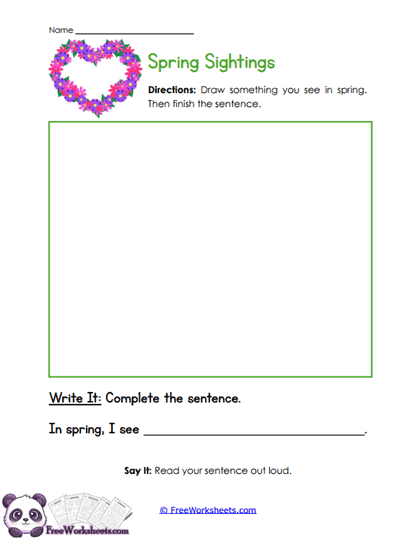
Children think about something they notice during spring, draw it in the picture box, and complete the sentence starter “In spring, I see ______.” They then read the full sentence aloud and connect the seasonal picture with the written response.
Target Skill:
The worksheet develops descriptive writing through seasonal observation. Students practice choosing one relevant detail, using topic vocabulary, and expressing that idea in a complete sentence while strengthening the connection between visual planning and written language.
Weather Writing
What Kids Do:
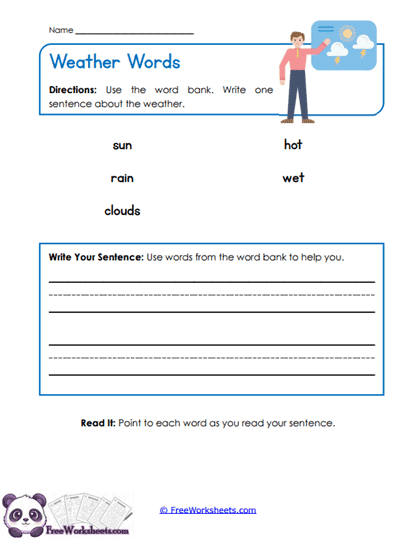
Children use a small weather word bank with choices such as sun, rain, clouds, hot, and wet to create one sentence about the weather. They write their sentence on the handwriting lines and then point to each word while reading it aloud.
Target Skill:
This activity introduces supported nonfiction writing by helping students use topic-specific vocabulary in a complete thought. Children practice selecting appropriate words, organizing them into sentence form, using spaces between words, and rereading for meaning.
Weekend Writing
What Kids Do:
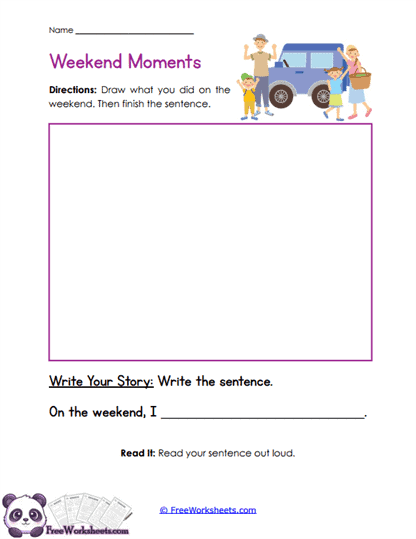
Children think about one thing they did over the weekend, draw the event, and complete the sentence starter “On the weekend, I ______.” They choose one experience to focus on and read the completed sentence aloud after writing.
Target Skill:
The worksheet supports early personal narrative writing by helping students recall a real event and express it in a short sentence. Children practice selecting one important idea, using past-experience vocabulary, and connecting oral storytelling with written expression.