
About This Worksheet
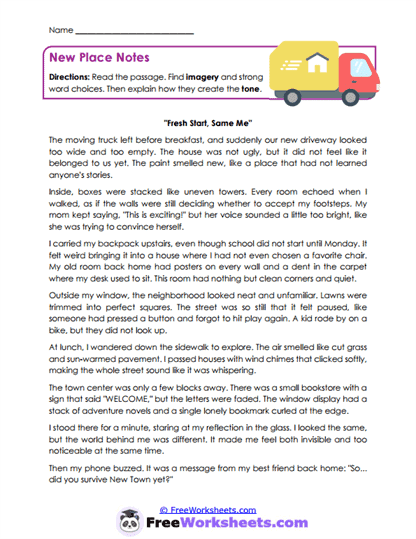
This worksheet is a literary analysis activity focused on imagery and word choice in narrative writing. It is designed for Grade 8 students learning how descriptive language helps readers visualize settings and understand emotions. The passage explores a student’s experience moving to a new place, using detailed descriptions to create tone. For example, “the street was so still it felt paused” becomes “the street was very quiet.” This comparison helps students see how word choice shapes meaning and mood.
Curriculum and Grade Alignment
This worksheet aligns with Grade 8 standards for analyzing language and its effect on tone and meaning. It supports CCSS.ELA-LITERACY.RL.8.4, which focuses on word choice and figurative language. Students should already understand basic descriptive writing techniques. The next step is evaluating how specific words influence mood and reader interpretation. It also connects to TEKS 8.6(D), which emphasizes analyzing how language contributes to meaning.
Student Tasks
On this worksheet, students will read a descriptive passage about moving to a new place. They are asked to find examples of imagery and strong word choices within the text. Students then explain how these details contribute to the tone of the passage. They will connect specific phrases to the emotions they create for the reader. The task encourages careful reading and thoughtful analysis.
Common Challenges and Misconceptions
Students may confuse general description with strong imagery. Some might identify examples but struggle to explain how they affect tone. Others may give answers that are too vague or not supported by the text. It is also common for students to overlook subtle word choices that carry meaning. Teachers can support students by modeling how to connect specific language to emotional impact.
Implementation Guidance
Teachers can use this worksheet during lessons on descriptive writing or tone analysis. It works well as a transition between reading and writing instruction. In class, students can compare how different word choices change the feel of a passage. Parents can use it to help students strengthen both comprehension and expressive writing skills. This activity supports deeper understanding of how language works in real texts.
Details and Features
The worksheet includes a relatable narrative passage about adjusting to a new environment. It provides clear directions for identifying and analyzing descriptive language. The format encourages written explanations supported by text evidence. It is easy to print and use in both classroom and home settings. The activity promotes critical thinking and attention to detail.