
Nonfiction Book Study Worksheets
These worksheets help students dive deeper into full-length texts while building strong comprehension and analysis skills. These free, ready-to-print PDF format worksheets are perfect for classroom novel studies or at-home reading support. Students develop skills in analyzing arguments, tracking themes, evaluating evidence, and understanding author's craft across complex nonfiction texts.
About This Collection of Worksheets
This collection is designed to help students move beyond basic reading and into thoughtful analysis of nonfiction books. Instead of just answering simple questions, students are guided to think about how ideas develop across chapters and how authors build arguments. Each worksheet focuses on a different aspect of nonfiction reading, such as claims, evidence, structure, and perspective.
The texts featured in these activities are engaging and meaningful, often based on real stories and important global topics. Students explore issues like education, justice, resilience, and innovation while practicing critical reading skills. This makes learning feel relevant and helps students connect ideas from the text to the real world.
These worksheets also support stronger writing skills. Students are asked to explain their thinking, support ideas with evidence, and organize their responses clearly. Over time, they become more confident in analyzing nonfiction texts and expressing their understanding in meaningful ways.
Paul’s Teacher Tip
When students are working with a full nonfiction book, it’s easy for them to get lost in the details. I always encourage them to pause after each section and ask, “What is the author really trying to show here?” Keeping a running note of the main idea or claim for each chapter can make a huge difference. Another helpful strategy is to track evidence as they read, not after. This way, when it’s time to respond, they already have strong examples ready to go. These small habits build much stronger readers over time.
Worksheet Collection Skill Spotlights
Debate the Dinner
- What Kids Do:
Students read about industrial farming and identify the author’s main claim along with a counterclaim. They track how the author responds to opposing viewpoints and explain how the rebuttal strengthens the overall argument. - Target Skill:
Students build the ability to analyze argument structure by identifying claims, counterclaims, and rebuttals. This supports deeper understanding of persuasive writing.
Echoes of Identity
- What Kids Do:
Students read poems and analyze tone, word choice, and theme. They examine how specific phrases reveal ideas about identity and support their thinking with evidence. - Target Skill:
Students strengthen their ability to analyze tone and theme in literary nonfiction. This supports deeper interpretation of complex texts.
Food System Focus
- What Kids Do:
Students explore ideas about food production and identify the author’s main claim. They support their understanding with evidence and analyze how examples shape the argument. - Target Skill:
Students develop skills in identifying claims and evaluating evidence in nonfiction texts. This supports critical reading and reasoning.
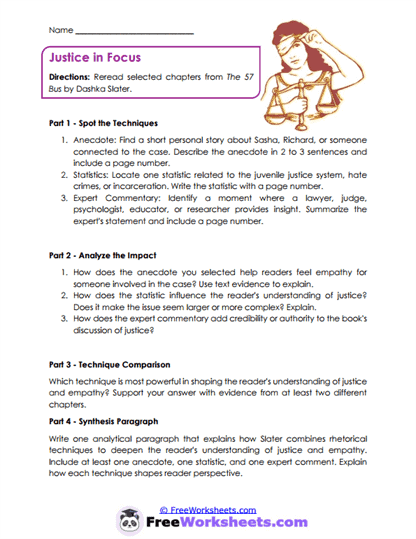
Justice in Focus
- What Kids Do:
Students identify rhetorical techniques such as anecdotes and statistics. They explain how each technique affects the reader’s understanding and emotional response. - Target Skill:
Students build skill in analyzing author’s craft and evaluating how different techniques influence meaning and impact.
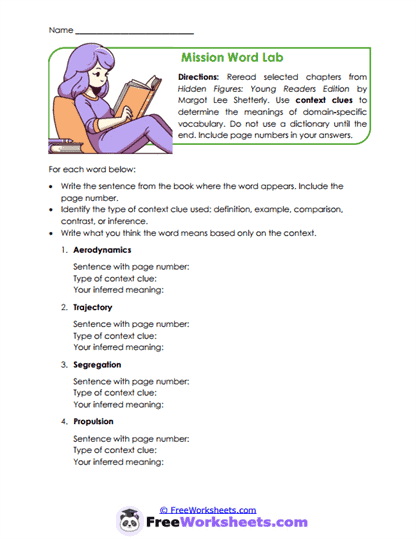
Mission Word Lab
- What Kids Do:
Students use context clues to determine the meaning of unfamiliar vocabulary. They identify how the text provides hints and explain their reasoning. - Target Skill:
Students strengthen vocabulary skills by using context clues to infer meaning. This supports comprehension of complex nonfiction texts.
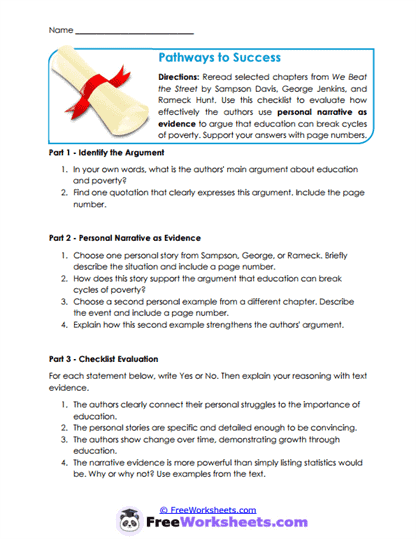
Pathways to Success
- What Kids Do:
Students read personal stories and identify the main argument about education and opportunity. They analyze how these stories support the larger claim. - Target Skill:
Students develop the ability to evaluate how narrative evidence supports an argument. This builds deeper understanding of persuasive techniques.
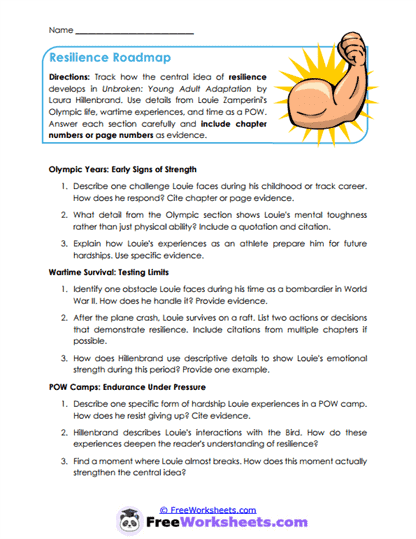
Resilience Roadmap
- What Kids Do:
Students track examples of resilience across different stages of a person’s life. They connect events to a larger theme and support their ideas with evidence. - Target Skill:
Students build skill in tracing themes across a text. This supports deeper comprehension and analysis.
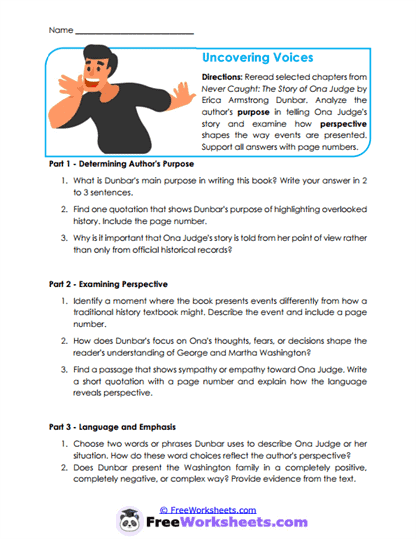
Uncovering Voices
- What Kids Do:
Students analyze the author’s purpose and perspective in a historical narrative. They identify how language and details shape the reader’s understanding. - Target Skill:
Students strengthen their ability to analyze perspective and author’s purpose. This supports critical thinking about how texts are constructed.
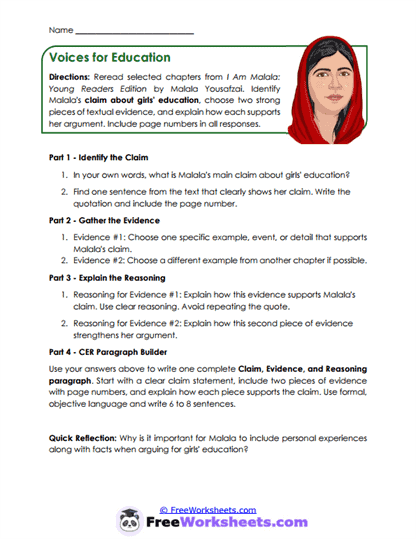
Voices for Education
- What Kids Do:
Students identify a central claim about education and support it with evidence. They explain how both personal stories and facts strengthen the argument. - Target Skill:
Students develop skills in analyzing claim, evidence, and reasoning. This supports both reading and writing development.
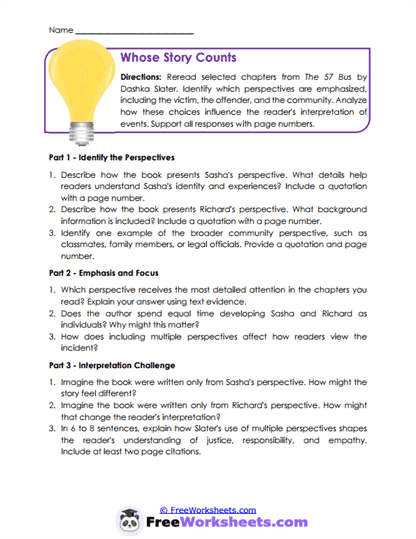
Whose Story Counts
- What Kids Do:
Students identify multiple perspectives within a text and compare how each viewpoint is presented. They explain how these perspectives shape understanding. - Target Skill:
Students build the ability to analyze multiple perspectives. This supports deeper comprehension of complex nonfiction texts.
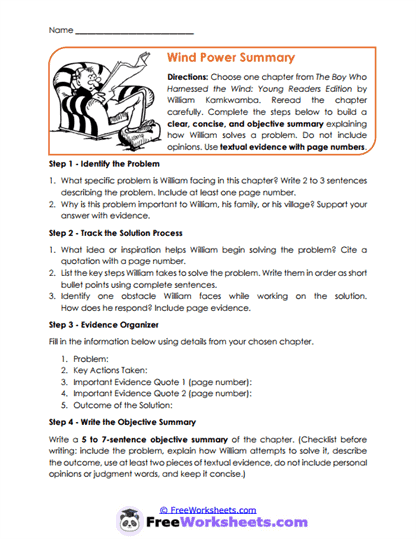
Wind Power Summary
- What Kids Do:
Students identify a problem and track how it is solved within a text. They organize details and write a clear, objective summary. - Target Skill:
Students strengthen summarizing skills by organizing information into a structured response. This supports both reading and writing.
Identity in Verse
- What Kids Do:
Students analyze how identity is developed through poetic storytelling. They organize ideas and write a paragraph supported by evidence. - Target Skill:
Students build skill in analyzing theme and writing structured responses. This supports deeper literary understanding and expression.