
Author's Perspective Worksheets
These worksheets help students understand how writers share opinions, beliefs, and viewpoints in texts. These free, ready-to-print PDF format worksheets are perfect for immediate classroom use or at-home learning. Students build skills in analyzing tone, identifying bias, and evaluating perspective aligned to key standards.
About This Collection of Worksheets
This collection is designed to help students recognize that every text is written from a point of view. As students work through these worksheets, they learn to identify what an author believes and how those beliefs shape the message. Each activity focuses on a different way perspective appears, from word choice and tone to missing viewpoints and intended audience.
The passages cover real-world topics that matter to middle school students, making it easier for them to connect with the ideas. Students are encouraged to read closely, look for clues in the language, and think about what the author is trying to say beneath the surface. This kind of thinking helps students become more aware and thoughtful readers.
By practicing these skills, students also become better writers. They begin to understand how perspective influences communication and how to support their own ideas clearly. Over time, they gain confidence in evaluating information, recognizing bias, and forming their own well-supported opinions.
Paul’s Teacher Tip
When teaching author’s perspective, I always remind students to “read like a detective.” Encourage them to look for clues in word choice, tone, and what the author chooses to include-or leave out. One strategy that works well is having students highlight sentences that clearly show opinion versus neutral information. You can also ask students to explain how they know something is the author’s viewpoint, not just the topic. This pushes them to use evidence instead of guessing. With practice, students become much more confident spotting bias and understanding perspective.
Worksheet Collection Skill Spotlights
Balanced Vs. One-sided
- What Kids Do:
Students read a news-style passage about school food policies and determine whether the text presents multiple viewpoints or focuses on only one side. They carefully examine details in the article and identify evidence that supports their conclusion about the text’s balance. - Target Skill:
Students build the ability to evaluate bias and completeness in informational texts. This includes analyzing whether an author presents multiple perspectives and determining how evidence supports or limits a fair and balanced argument.
Belief Blueprint
- What Kids Do:
Students read an essay about arts programs and identify the author’s beliefs and values. They look closely at key statements and explain how those ideas reflect what the author thinks is important and worth supporting. - Target Skill:
This activity strengthens students’ ability to analyze deeper author perspective by identifying beliefs and values. It supports understanding how opinions are shaped and communicated through evidence and reasoning.
Gap Spotters
- What Kids Do:
Students read an article about city transportation improvements and think beyond what is written. They identify perspectives that are missing and explain how leaving out those viewpoints affects the reader’s understanding. - Target Skill:
Students develop critical thinking skills by evaluating incomplete information and identifying bias. This includes recognizing missing viewpoints and analyzing how they impact the overall message of a text.
Loaded Language
- What Kids Do:
Students read an opinion article and search for emotionally charged words that reveal the author’s attitude. They identify specific examples of loaded language and explain how those words influence how the reader feels about the topic. - Target Skill:
Students build skill in analyzing word choice and recognizing bias through language. This supports deeper understanding of how tone and connotation shape an author’s perspective.
Perspective And Viewpoint
- What Kids Do:
Students read a narrative about a student adjusting to a new school and analyze how personal experiences shape the narrator’s perspective. They use details from the text to explain how feelings and events influence the story. - Target Skill:
Students strengthen their understanding of point of view by analyzing how experiences shape perspective. This supports comprehension of how narration influences meaning in literary texts.
Perspective Patrol
- What Kids Do:
Students read an opinion passage about phone use during lunch and identify the author’s viewpoint. They select the correct answer and support it by finding a sentence that clearly shows the author’s stance. - Target Skill:
Students develop the ability to identify an author’s viewpoint and support it with text evidence. This aligns with standards focused on analyzing point of view and understanding how arguments are structured.
Perspective Wrap-Up
- What Kids Do:
Students read a reflective essay and summarize the author’s perspective in their own words. They explain how the author’s experiences shaped their viewpoint and connect ideas across the text. - Target Skill:
Students build skills in summarizing and analyzing perspective by connecting experiences to viewpoint. This supports deeper comprehension and the ability to synthesize ideas from a text.
Sneaky Opinions
- What Kids Do:
Students read an article about standardized testing and identify statements that sound factual but actually express opinions. They explain how these statements reveal the author’s hidden perspective. - Target Skill:
Students strengthen their ability to distinguish between fact and opinion, especially when opinions are subtly presented. This supports critical reading and evaluation of persuasive texts.
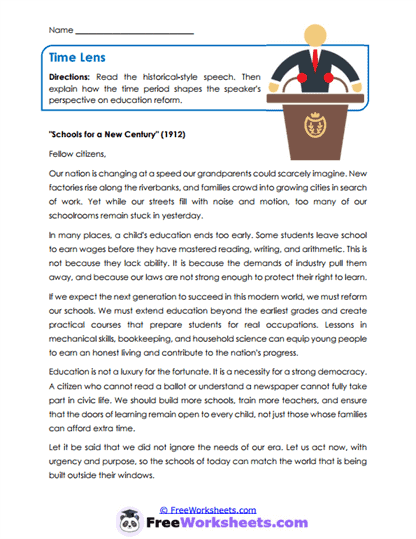
Time Lens
- What Kids Do:
Students read a historical-style speech and analyze how the time period influences the speaker’s ideas. They identify clues that connect the message to its historical context and explain their reasoning. - Target Skill:
Students develop the ability to analyze how context shapes perspective. This includes understanding how historical, social, and cultural factors influence an author’s viewpoint.
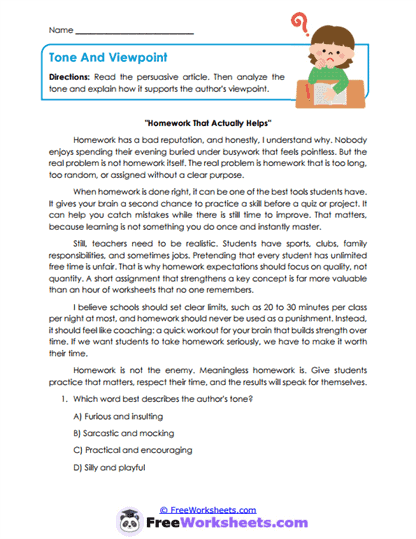
Tone And Viewpoint
- What Kids Do:
Students read a passage about homework and identify the tone by selecting the best descriptive word. They then explain how that tone supports the author’s viewpoint using evidence from the text. - Target Skill:
Students build skill in connecting tone to perspective by analyzing word choice and attitude. This supports deeper understanding of how authors communicate ideas through language.
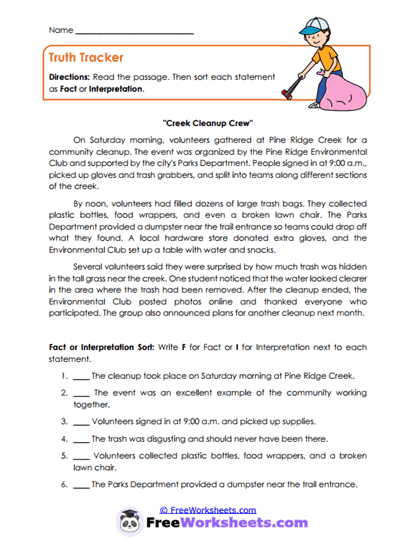
Truth Tracker
- What Kids Do:
Students read a passage about a community event and classify statements as fact or interpretation. They carefully evaluate each statement and explain their reasoning based on the text. - Target Skill:
Students strengthen their ability to distinguish between factual information and interpretation. This supports critical evaluation of claims and understanding of how perspective shapes information.
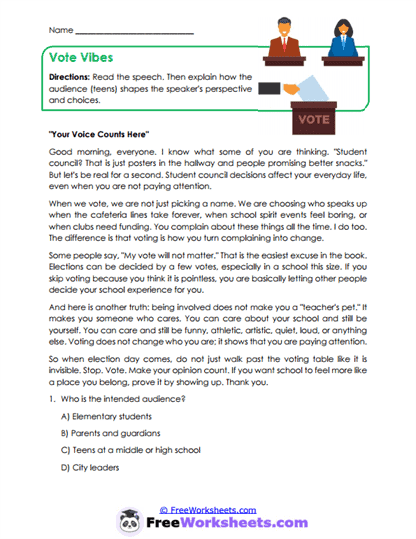
Vote Vibes
- What Kids Do:
Students read a speech encouraging student voting and identify the intended audience. They use clues from the text, such as tone and examples, to explain who the message is meant for. - Target Skill:
Students develop the ability to analyze how audience influences writing. This includes understanding how authors adjust language and ideas to connect with specific readers.