
Themes Worksheets
These worksheets help students move beyond basic comprehension to understand the deeper messages in a text. These free, ready-to-print PDF format worksheets are perfect for classroom lessons or at-home learning. Students build skills in identifying themes, supporting ideas with evidence, and connecting meaning to real-world experiences.
About This Collection of Worksheets
This collection is designed to help students understand that theme is more than just what a story is about-it’s what the story is saying about life. At this level, students learn to move from simple topics to clear, meaningful theme statements supported by evidence.
The passages explore relatable situations like friendships, personal growth, challenges, and decision-making. This makes it easier for students to connect with the text while thinking deeply about meaning. Each worksheet guides students step by step, helping them identify key events, analyze character choices, and connect those ideas to a larger message.
As students work through these activities, they build confidence in both reading and writing. They learn how to support their ideas clearly, explain their thinking, and make meaningful connections. These are essential skills that carry across all subjects.
Paul’s Teacher Tip
Theme can be tricky because students often stop at the topic. I always remind them: “A theme is a complete thought about life.” If they can add “This shows that…” to their answer, they’re on the right track. Another helpful strategy is to have students find two strong pieces of evidence first, then ask what those details have in common. That usually leads them right to a strong theme.
Worksheet Collection Skill Spotlights
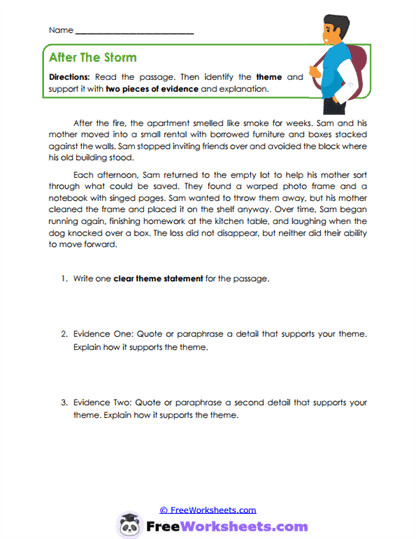
After The Storm
- What Kids Do:
Students read a story about recovery after a difficult event and identify the central message. They support their theme with evidence and explain how the details connect to the idea. - Target Skill:
Students build the ability to identify and support a theme using textual evidence. This strengthens both comprehension and explanation skills.
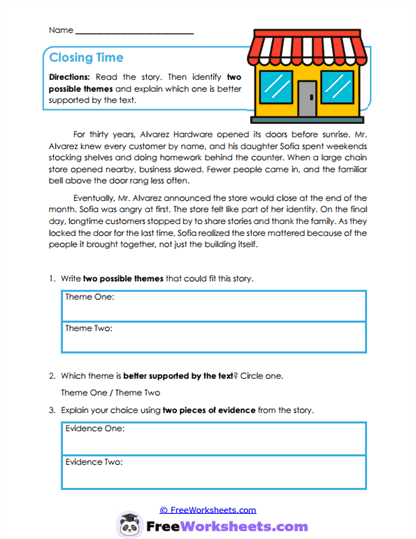
Closing Time
- What Kids Do:
Students read about a family business closing and develop more than one possible theme. They evaluate which theme is best supported and explain their reasoning with evidence. - Target Skill:
Students strengthen their ability to analyze and evaluate themes. This supports deeper literary thinking and justification of ideas.
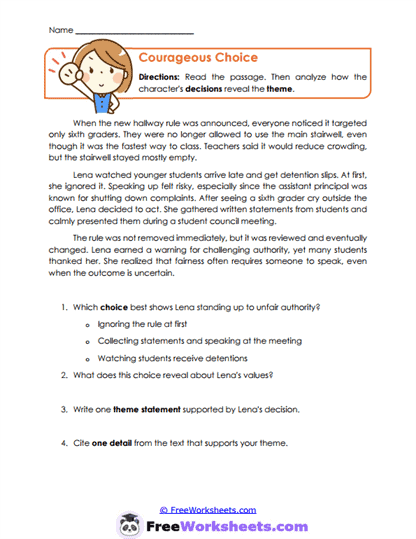
Courageous Choice
- What Kids Do:
Students analyze a character’s decision and explain what it reveals about values. They connect this action to a clear theme and support it with evidence. - Target Skill:
Students build skills in connecting character actions to theme. This supports deeper understanding of how meaning develops.
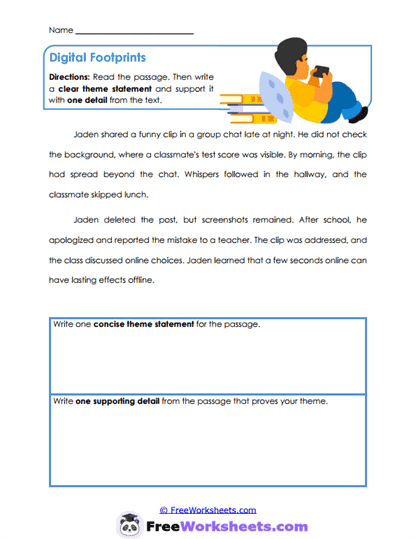
Digital Footprints
- What Kids Do:
Students read a short passage about online behavior and write a concise theme statement. They support their idea with one strong detail from the text. - Target Skill:
Students develop precision in writing clear and focused theme statements. This supports strong comprehension and writing.
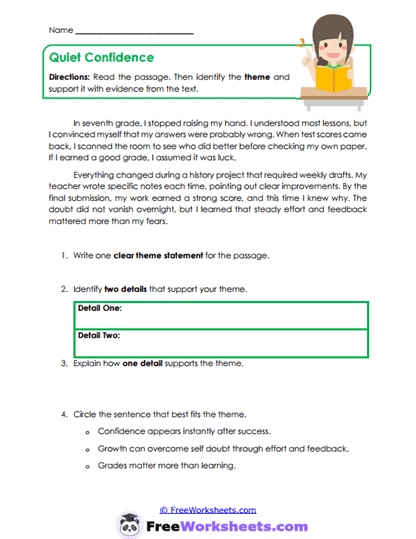
Quiet Confidence
- What Kids Do:
Students read about building confidence and identify a theme based on personal growth. They select supporting details and explain how those details connect. - Target Skill:
Students strengthen their ability to connect evidence to theme. This supports deeper analysis and understanding.
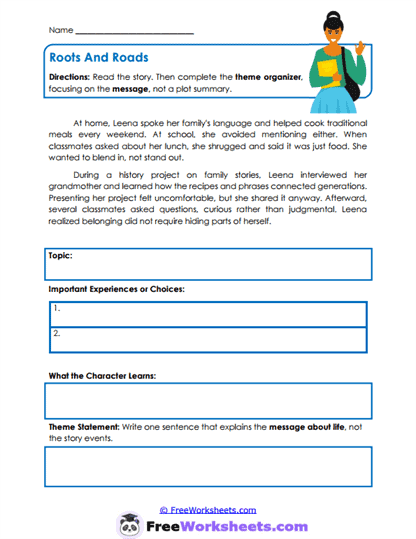
Roots and Roads
- What Kids Do:
Students track a character’s experiences and explain what the character learns. They use these ideas to build a clear theme statement. - Target Skill:
Students develop skills in moving from events to meaning. This supports stronger comprehension and writing.
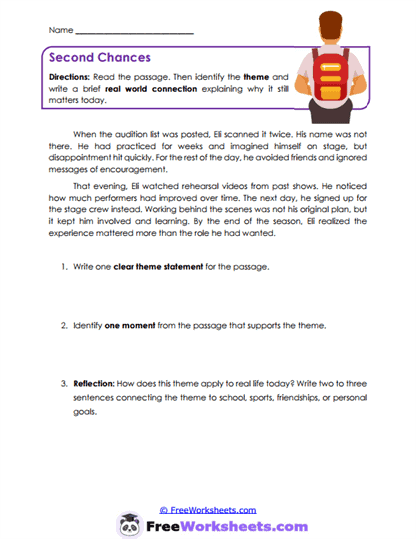
Second Chances
- What Kids Do:
Students identify a theme and connect it to real-life situations. They explain how the message applies beyond the text. - Target Skill:
Students build the ability to connect literature to real-world ideas. This supports deeper understanding and reflection.
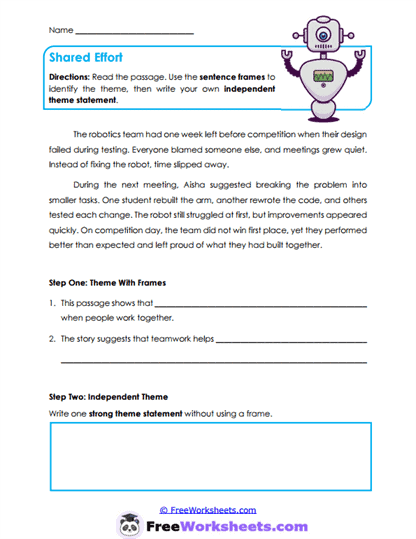
Shared Effort
- What Kids Do:
Students use sentence frames to develop a theme, then write their own independent statement. They practice both guided and independent thinking. - Target Skill:
Students strengthen their ability to write clear theme statements. This builds confidence and independence.
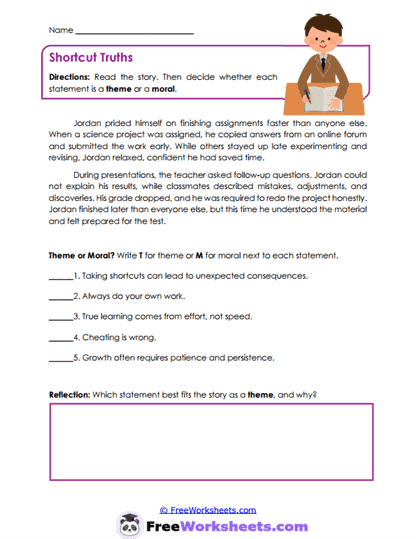
Shortcut Truths
- What Kids Do:
Students read a story and decide whether statements represent a theme or a moral. They reflect on which idea best captures the deeper meaning. - Target Skill:
Students build skill in distinguishing between theme and moral. This supports accurate interpretation of texts.
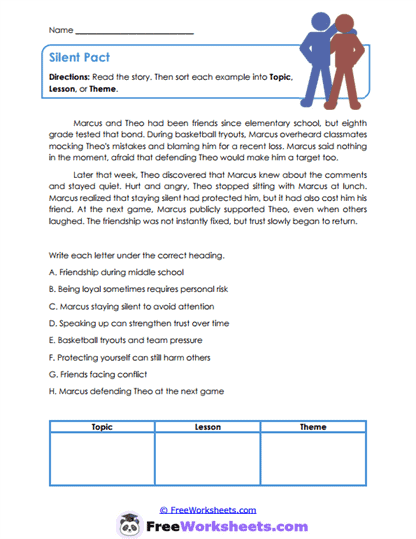
Silent Pact
- What Kids Do:
Students sort ideas into topic, lesson, or theme categories. They think carefully about the level of meaning each statement represents. - Target Skill:
Students develop the ability to distinguish between different levels of meaning. This is key for deeper literary analysis.
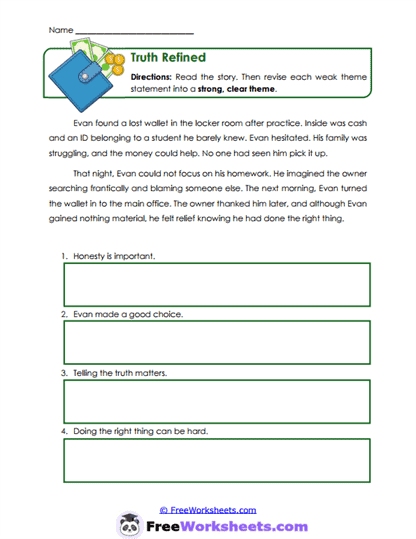
Truth Refined
- What Kids Do:
Students revise weak theme statements to make them stronger and more meaningful. They focus on clarity and depth. - Target Skill:
Students build precision in writing clear, specific theme statements. This supports stronger analytical writing.
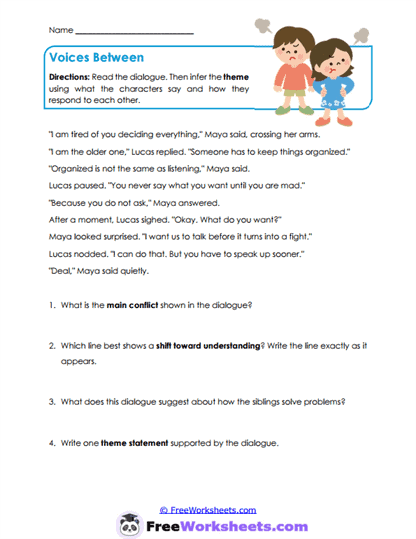
Voices Between
- What Kids Do:
Students analyze dialogue to identify conflict and meaning. They use these ideas to write a theme supported by evidence. - Target Skill:
Students strengthen their ability to infer theme from dialogue. This supports deeper comprehension of character interactions.