
Main Idea Worksheets
These worksheets help students identify central ideas and connect them to supporting details in both informational and literary texts. These free, ready-to-print PDF format worksheets are perfect for classroom instruction or at-home practice. Students build strong comprehension skills by learning how to analyze, organize, and clearly explain the main message of a text.
About This Collection of Worksheets
This collection is designed to help students move from simply understanding a topic to clearly identifying what the text is really saying about that topic. At the 8th grade level, this means going beyond basic summaries and writing strong, complete central idea statements supported by evidence.
The worksheets cover a range of real-world and relatable topics, from digital communication and school life to environmental issues. Students practice identifying main ideas, distinguishing them from topics, and combining details into clear, meaningful statements. The structured activities also help students see how ideas develop across paragraphs and entire texts.
As students work through these activities, they build confidence in both reading and writing. They learn how to organize their thinking, support their ideas with evidence, and explain their reasoning clearly. These are essential skills that carry across all subjects.
Paul’s Teacher Tip
One of the biggest hurdles with main idea is getting students to stop writing topics and start writing full thoughts. I always tell them: “A main idea answers what about it?” If they just write a phrase, they’re not done yet. Another helpful strategy is having students underline two strong details first-then ask, “What do these have in common?” That usually leads them right to the central idea. Over time, this becomes a habit and their responses get much stronger.
Worksheet Collection Skill Spotlights
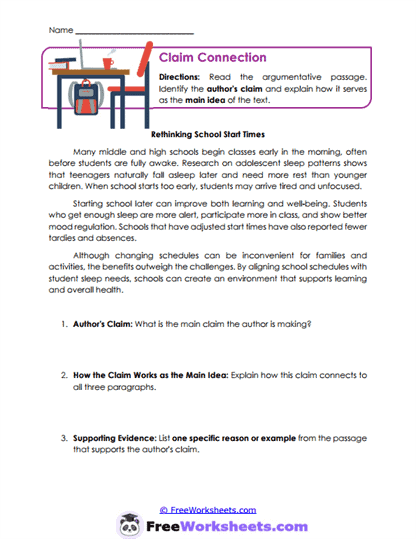
Claim Connection
- What Kids Do:
Students read an argumentative passage about school start times and identify the author’s main claim. They connect that claim to ideas across the text and support it with evidence from the passage. - Target Skill:
Students build the ability to identify a claim as the central idea in persuasive texts. This supports deeper understanding of argument structure and evidence.
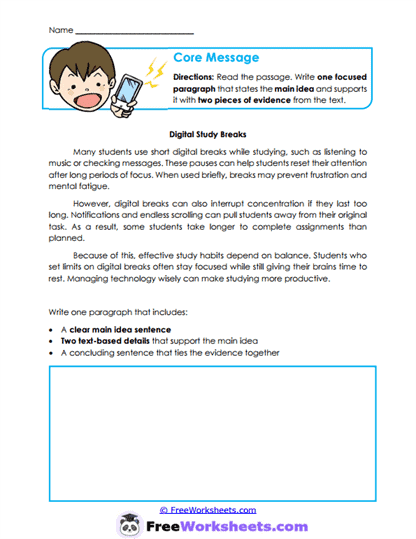
Core Message
- What Kids Do:
Students read an informational passage and write a full paragraph explaining the main idea. They include supporting evidence and a concluding sentence to tie their ideas together. - Target Skill:
Students strengthen their ability to express central ideas through structured writing. This supports both comprehension and writing development.
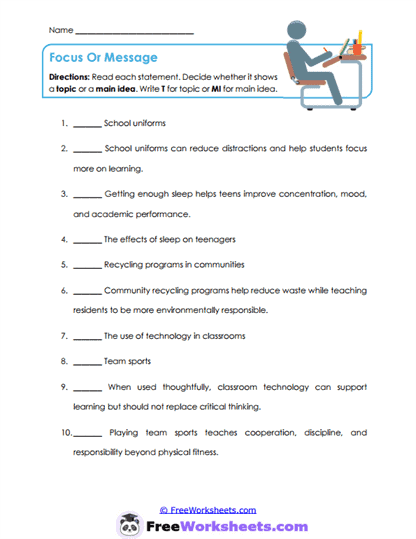
Focus Or Message
- What Kids Do:
Students read a list of statements and decide whether each one is a topic or a main idea. They analyze how much information each statement provides before making their choice. - Target Skill:
Students develop the ability to distinguish between a general topic and a complete main idea. This is a key step in building strong comprehension skills.
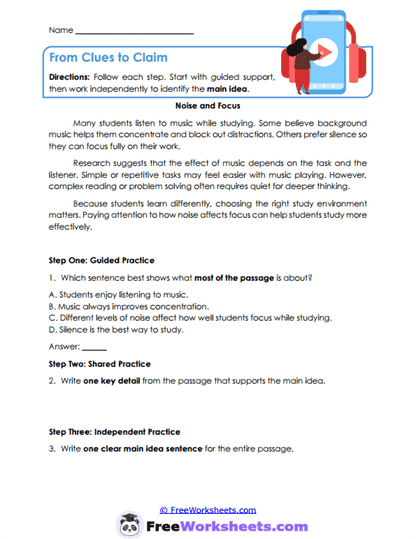
From Clues to Claim
- What Kids Do:
Students follow a step-by-step process to identify the main idea of a passage about study environments. They move from identifying a general idea to writing a complete central idea sentence. - Target Skill:
Students build confidence in identifying central ideas through guided practice. This supports independent comprehension over time.
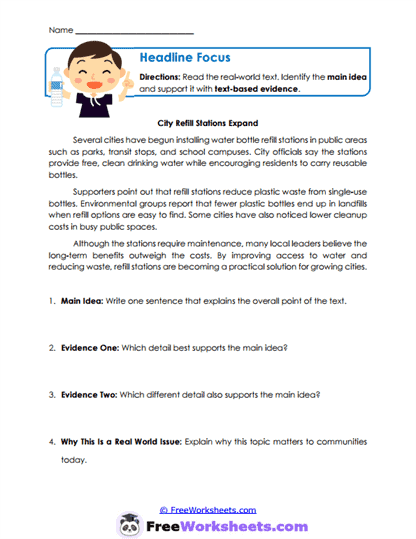
Headline Focus
- What Kids Do:
Students read a real-world passage about water refill stations and determine the main idea. They support their thinking with evidence and explain why the topic matters today. - Target Skill:
Students strengthen their ability to connect central ideas to real-world relevance. This supports deeper understanding and engagement.
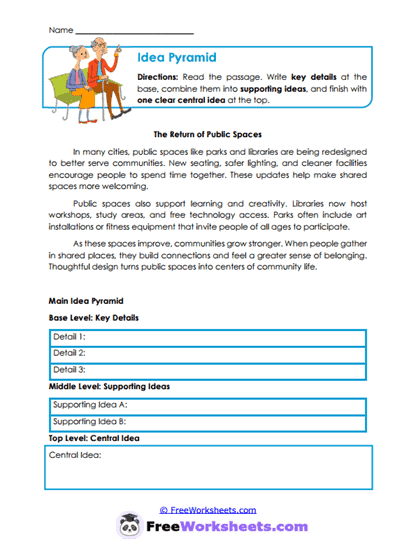
Idea Pyramid
- What Kids Do:
Students organize details from a passage into a pyramid structure, building from specific points up to a central idea. They reflect on how details connect to form a larger message. - Target Skill:
Students develop skills in organizing information and synthesizing ideas. This supports clear and logical thinking.
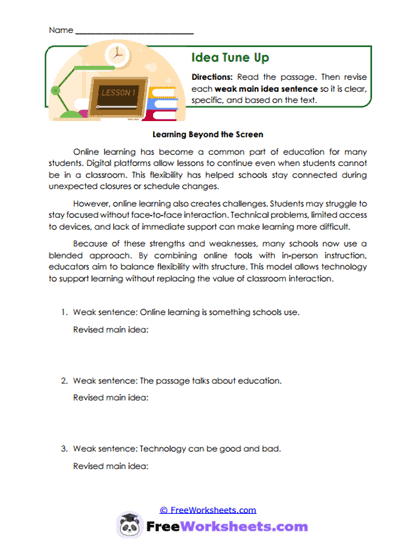
Idea Tune Up
- What Kids Do:
Students revise weak or unclear main idea sentences to make them stronger and more precise. They use evidence from the text to improve clarity. - Target Skill:
Students build skill in refining central ideas and writing clear, accurate statements. This supports stronger written responses.
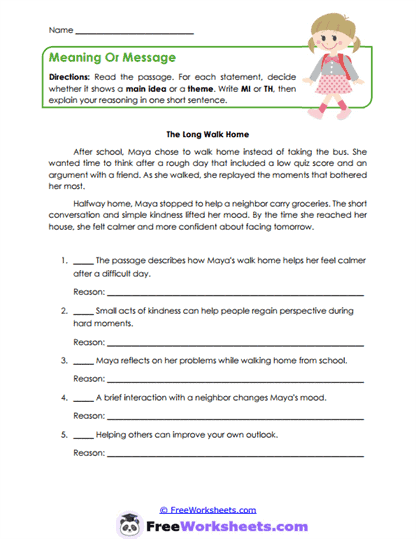
Meaning Or Message
- What Kids Do:
Students read a narrative and decide whether statements represent a topic or a deeper message. They explain their reasoning using evidence from the text. - Target Skill:
Students strengthen their ability to distinguish between topic and theme. This supports deeper literary comprehension.
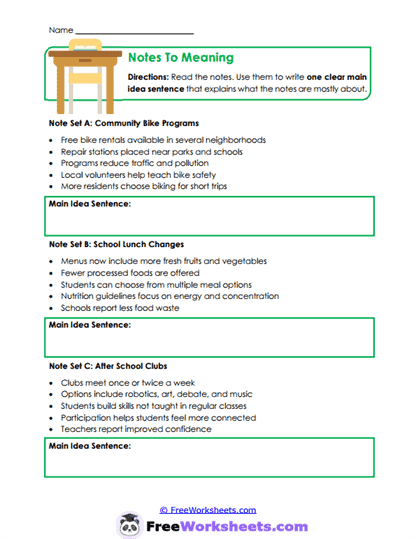
Notes To Meaning
- What Kids Do:
Students combine sets of notes into clear main idea sentences. They think about how details connect rather than simply listing information. - Target Skill:
Students develop synthesis skills by turning multiple details into one clear central idea. This supports summarizing and organization.
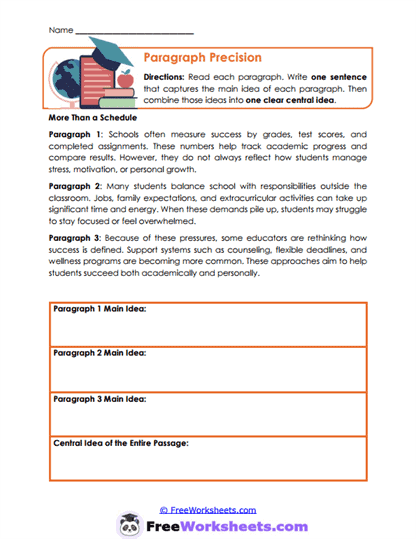
Paragraph Precision
- What Kids Do:
Students identify the main idea of each paragraph in a passage and then combine them into one central idea for the entire text. - Target Skill:
Students build the ability to analyze how ideas develop across a text. This supports deeper comprehension and summarizing skills.
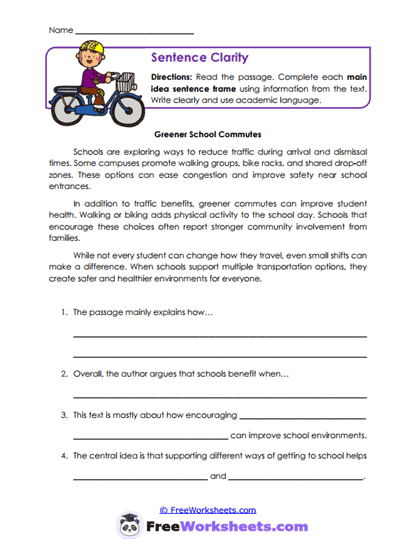
Sentence Clarity
- What Kids Do:
Students complete sentence frames to express the main idea of a passage. They focus on using clear and accurate language. - Target Skill:
Students strengthen their ability to clearly state central ideas using structured support. This builds confidence in writing.
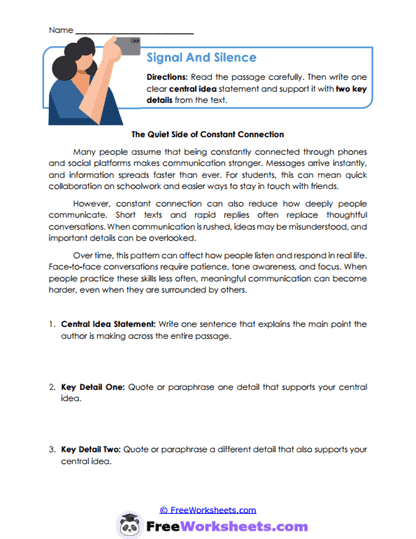
Signal And Silence
- What Kids Do:
Students read about digital communication and write a central idea sentence supported by evidence. They connect details back to the main message. - Target Skill:
Students develop the ability to identify and support central ideas using text evidence. This supports strong comprehension skills.