
8th Grade Reading Fluency Worksheets
These worksheets help students build smooth, expressive reading through structured and meaningful activities. These free, ready-to-print PDF format worksheets are perfect for immediate classroom use or at-home learning. Students develop skills in pacing, expression, and comprehension while strengthening overall reading fluency.
About This Collection of Worksheets
This collection is designed to help students become confident, natural readers who understand what they are reading. Fluency at this level goes beyond simply reading words correctly-it’s about reading with expression, clarity, and purpose. Each worksheet provides structured practice that helps students improve how their reading sounds and feels.
The activities include a variety of formats, such as scripts, informational passages, and partner reading exercises. This keeps students engaged while giving them multiple ways to practice fluency skills. Students also reflect on their reading, helping them become more aware of their strengths and areas for growth.
By working through these worksheets, students begin to connect comprehension with fluency. They learn that understanding a text helps them read it more clearly and expressively. Over time, they build confidence, improve pacing, and develop stronger reading habits that carry into all subjects.
Paul’s Teacher Tip
Fluency really improves when students hear themselves read and think about how it sounds. I always encourage recording a quick read on a phone or tablet so students can listen back-it’s eye-opening for them. Another simple strategy is to model expressive reading first so they know what to aim for. Pairing students up works well too, especially when they give each other specific feedback. Remind them that fluency is not about speed-it’s about clarity and meaning. When students focus on sounding like they understand the text, everything else starts to fall into place.
Worksheet Collection Skill Spotlights
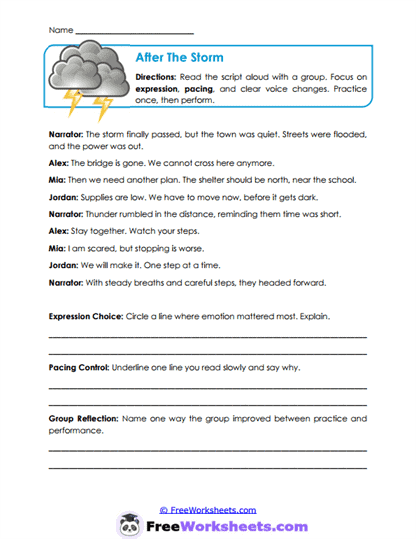
After The Storm
- What Kids Do:
Students read a short script aloud, taking on different roles and focusing on pacing and expression. They practice once, then reread with improvements, thinking carefully about how emotion and urgency should sound in their voice. - Target Skill:
Students build expressive reading skills by adjusting pacing and tone based on context. This supports performance reading and helps them connect meaning with how text should sound.
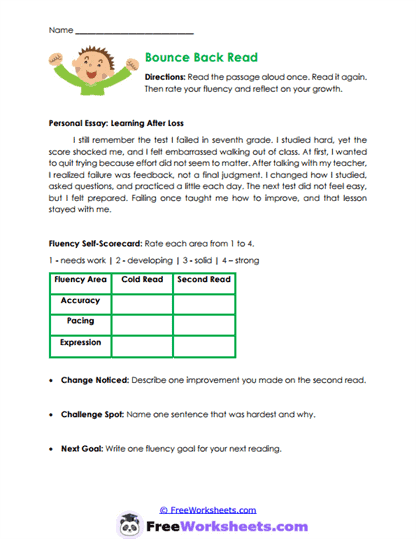
Bounce Back Read
- What Kids Do:
Students read a personal essay twice and reflect on how their fluency improves. They score themselves on accuracy, pacing, and expression, then set a goal for continued improvement based on their reading experience. - Target Skill:
Students develop self-monitoring skills by evaluating their own fluency. This supports independent reading growth and helps students take ownership of their progress.
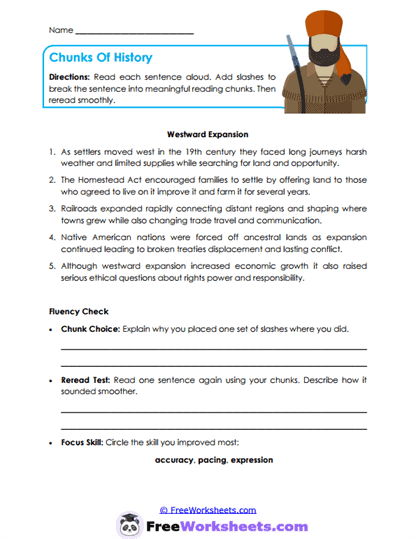
Chunks Of History
- What Kids Do:
Students practice breaking longer sentences into smaller, meaningful parts. They mark natural pauses, reread the sentences, and reflect on how chunking helped them read more smoothly and clearly. - Target Skill:
Students strengthen phrasing and pacing by learning how to chunk complex sentences. This improves both fluency and comprehension of challenging texts.
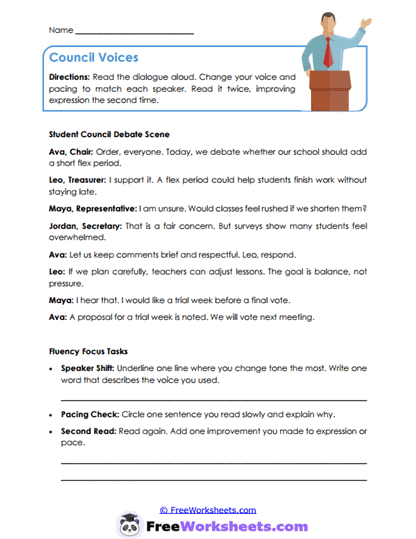
Council Voices
- What Kids Do:
Students read a dialogue from a student council debate and adjust their voice for each speaker. They practice reading twice and reflect on how their tone and pacing improved between readings. - Target Skill:
Students build fluency through expressive reading by changing voice and pacing based on speaker roles. This supports comprehension and engagement with dialogue.
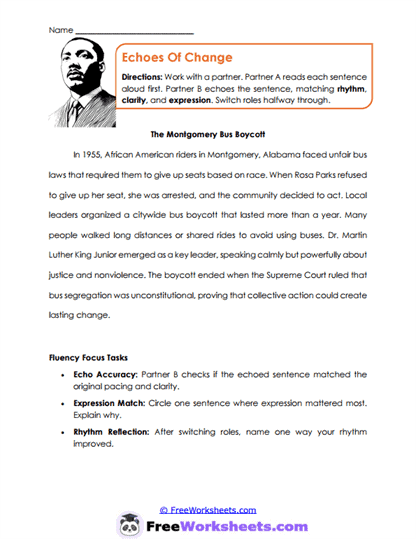
Echoes Of Change
- What Kids Do:
Students work in pairs to practice echo reading, where one reads and the other repeats. They focus on matching tone, rhythm, and clarity while reflecting on how their reading improves through repetition. - Target Skill:
Students develop fluency through listening and repetition, improving pacing and expression. This supports collaborative learning and confidence in reading aloud.
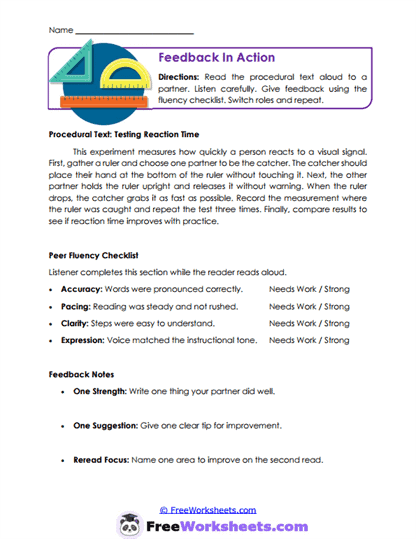
Feedback In Action
- What Kids Do:
Students read a passage aloud to a partner and receive feedback on accuracy, pacing, and expression. They then switch roles and apply suggestions to improve their reading. - Target Skill:
Students strengthen fluency through peer feedback by identifying areas for improvement and refining their reading. This builds both communication and reading skills.
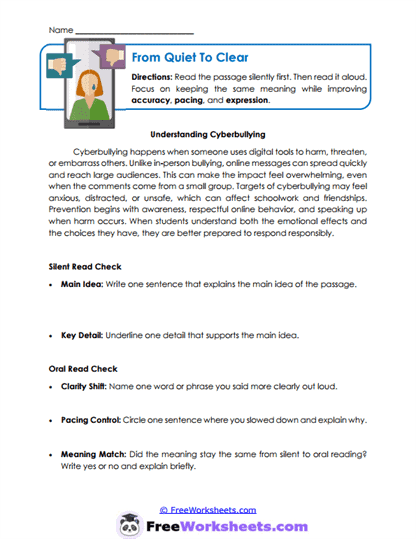
From Quiet To Clear
- What Kids Do:
Students first read a passage silently to understand it, then read it aloud with improved clarity. They identify the main idea and reflect on how comprehension changed their oral reading. - Target Skill:
Students connect comprehension with fluency by using understanding to guide expression and pacing. This supports more meaningful and effective reading.
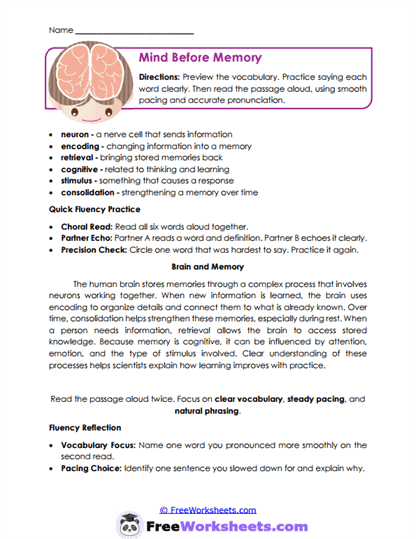
Mind Before Memory
- What Kids Do:
Students preview vocabulary words, practice pronunciation, and then read a passage twice. They reflect on how learning key terms helped them read more smoothly and confidently. - Target Skill:
Students improve fluency by strengthening vocabulary and pronunciation. This supports accurate and confident reading of academic language.
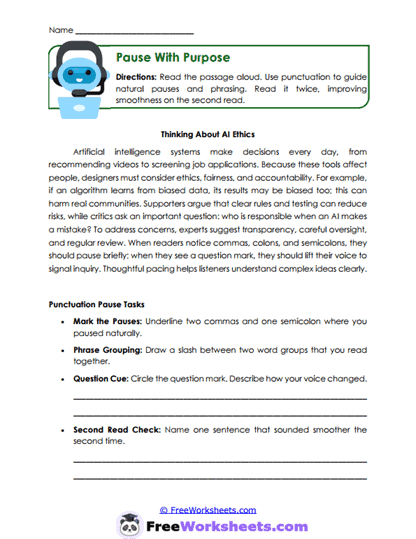
Pause With Purpose
- What Kids Do:
Students read a passage aloud while focusing on punctuation. They mark pauses, reread with improvements, and reflect on how punctuation guided their reading. - Target Skill:
Students develop fluency by using punctuation to guide pacing and expression. This helps them read more naturally and clearly.
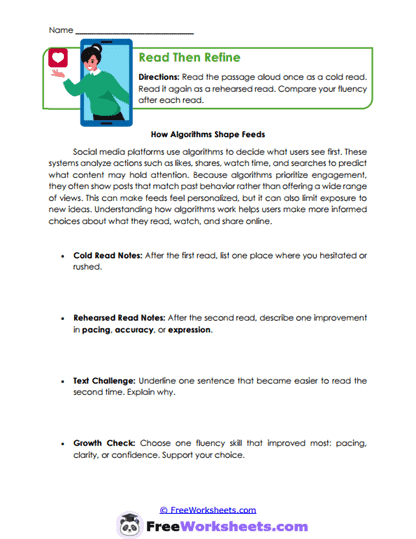
Read Then Refine
- What Kids Do:
Students complete a cold read followed by a second, improved reading of the same passage. They reflect on where they hesitated and how their fluency improved with practice. - Target Skill:
Students build fluency through repeated reading and self-reflection. This supports awareness of reading habits and encourages steady improvement.
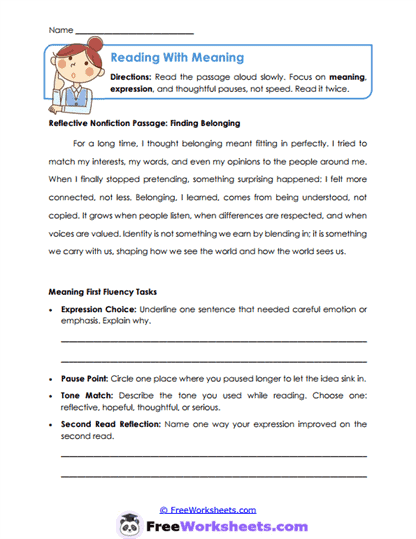
Reading With Meaning
- What Kids Do:
Students read a reflective passage twice, focusing on expression and tone. They mark where they paused and explain how meaning influenced how they read. - Target Skill:
Students strengthen expressive reading by connecting tone and meaning. This supports deeper comprehension and more natural fluency.
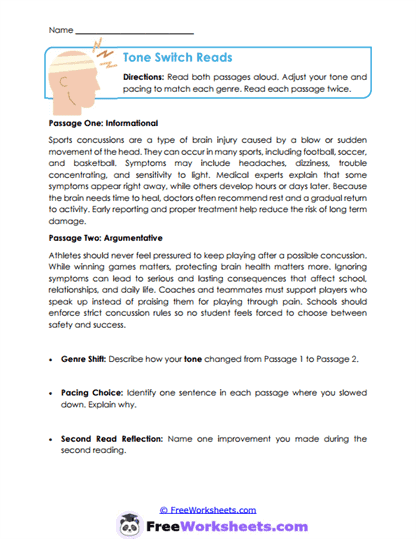
Tone Switch Reads
- What Kids Do:
Students read two passages with different purposes and adjust their tone accordingly. They reflect on how their voice changed between readings and identify improvements. - Target Skill:
Students build the ability to adjust tone based on text type, improving fluency across genres. This supports understanding of how purpose affects reading style.