
Text Structure Worksheets
These worksheets help students understand how authors organize ideas in informational and persuasive texts. These free, ready-to-print PDF format worksheets are perfect for classroom instruction or at-home practice. Students build skills in identifying structures like cause and effect, problem and solution, chronological order, and comparison.
About This Collection of Worksheets
This collection is designed to help students recognize that how a text is organized is just as important as what it says. At the 8th Grade level, students move beyond simple comprehension and begin analyzing how structure shapes meaning. Each worksheet gives students practice identifying patterns in how ideas are presented and understanding why authors choose certain structures.
The topics are engaging and relevant, covering real-world issues like environmental challenges, social media, and school-related topics. This helps students stay interested while practicing important reading skills. As they work through the activities, they learn to spot signal words, track how ideas connect, and explain how structure supports understanding.
These worksheets also help students become stronger writers. When students understand how texts are organized, they can apply those same structures in their own writing. Over time, they become more confident in both reading and organizing their ideas clearly.
Paul’s Teacher Tip
One of the easiest ways to help students understand text structure is to focus on signal words. Words like “because,” “first,” “as a result,” or “for example” can give strong clues about how a text is organized. I also like to have students ask, “What is the author doing here?” Are they explaining a problem? Showing steps? Comparing ideas? When students start asking those questions, they naturally begin to recognize structure more clearly.
Worksheet Collection Skill Spotlights
Boycott Blueprint
- What Kids Do:
Students read a historical passage and analyze how each paragraph contributes to the overall structure. They identify roles like introduction, cause, and outcome to understand how ideas build. - Target Skill:
Students develop the ability to analyze how paragraphs function within a text. This supports deeper comprehension of informational structure.
Fashion Structure Power
- What Kids Do:
Students read a persuasive article and examine how the author organizes reasons and examples. They explain how the structure supports the argument. - Target Skill:
Students build skills in analyzing how structure strengthens persuasive writing. This supports understanding of argument organization.
Heat Island Hunt
- What Kids Do:
Students read about urban heat islands and determine how the information is organized. They identify the dominant structure used in the passage. - Target Skill:
Students strengthen their ability to recognize cause-and-effect structure in informational texts. This supports comprehension of complex topics.
Lunch Debt Duel
- What Kids Do:
Students read two passages on the same topic and compare how each is structured. They analyze differences in how ideas are presented. - Target Skill:
Students build the ability to compare text structures across multiple texts. This supports higher-level analysis skills.
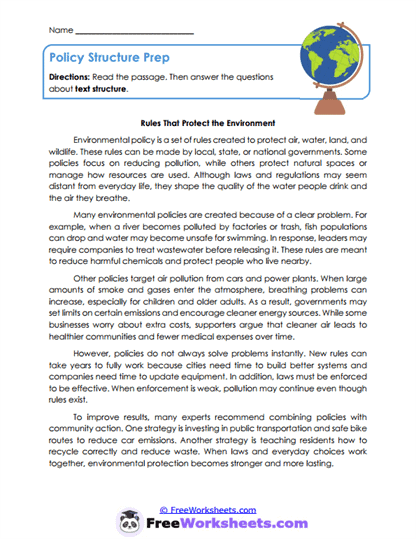
Policy Structure Prep
- What Kids Do:
Students read about environmental policies and identify the problems and solutions presented. They explain how solutions address the issues. - Target Skill:
Students develop understanding of problem-and-solution structure. This supports real-world reading comprehension.
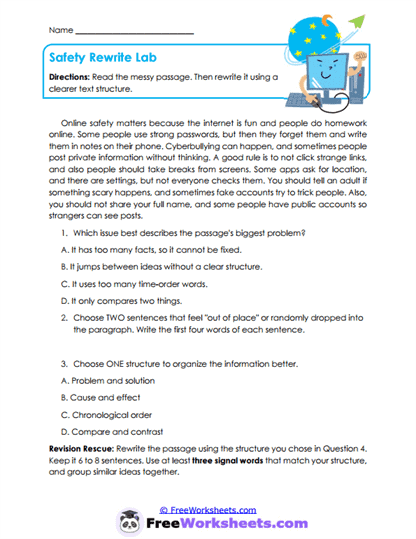
Safety Rewrite Lab
- What Kids Do:
Students read a disorganized paragraph and rewrite it using a clear structure. They focus on improving organization and clarity. - Target Skill:
Students strengthen writing skills by applying text structure to improve clarity. This supports both reading and writing development.
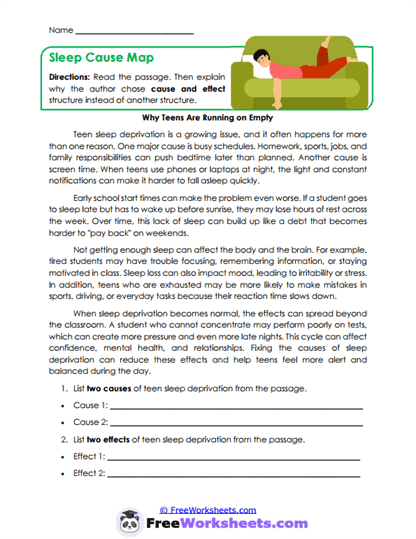
Sleep Cause Map
- What Kids Do:
Students read a passage about sleep habits and identify causes and effects. They connect specific details to outcomes described in the text. - Target Skill:
Students build skill in analyzing cause-and-effect relationships. This supports understanding of how ideas connect.
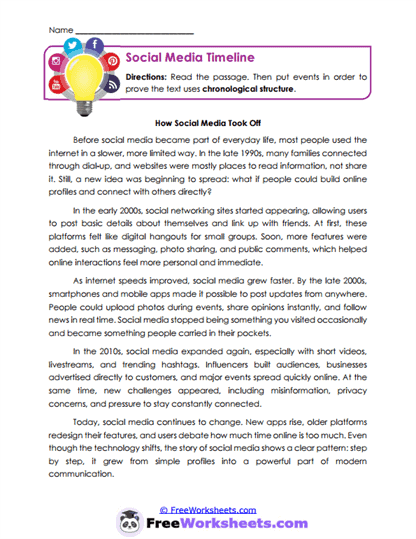
Social Media Timeline
- What Kids Do:
Students read about the development of social media and track events over time. They analyze how ideas build in sequence. - Target Skill:
Students strengthen their ability to recognize chronological structure. This supports comprehension of informational texts.
Structure Shift Scan
- What Kids Do:
Students read a passage and identify where the text structure changes. They explain why the author shifts organization. - Target Skill:
Students develop advanced skills in analyzing how structure changes support meaning. This builds deeper comprehension.
Transit Structure Trio
- What Kids Do:
Students read three passages and identify the structure used in each. They compare which structure is most effective and explain why. - Target Skill:
Students build the ability to evaluate text structures and their effectiveness. This supports critical thinking.
Vaccine Word Hunt
- What Kids Do:
Students read a passage and identify signal words that show sequence. They use these clues to determine the structure. - Target Skill:
Students strengthen their ability to use signal words to identify structure. This supports accurate text analysis.
Waste Watch Mission
- What Kids Do:
Students read about food waste and analyze the problem and solutions presented. They evaluate how well the solutions address the issue. - Target Skill:
Students build skills in analyzing problem-and-solution relationships. This supports deeper understanding of informational texts.