
Literary Devices Worksheets
These worksheets help students understand how authors use language to create meaning, emotion, and impact. These free, ready-to-print PDF format worksheets are perfect for classroom lessons or at-home learning. Students build skills in analyzing figurative language, symbolism, imagery, and tone aligned to key standards.
About This Collection of Worksheets
This collection is designed to help students look closely at how authors use language in creative and meaningful ways. Instead of just understanding what a story says, students begin to notice how it is written. Each worksheet focuses on a different literary device, helping students build a strong foundation in analyzing language and author’s craft.
The passages are engaging and relatable, often centered around real-life situations or emotional moments that middle school students understand. This makes it easier for students to connect with the text while practicing deeper analysis. As they work through the activities, students learn to recognize patterns in writing and explain how specific language choices affect meaning.
These worksheets also help bridge reading and writing. When students understand how authors use literary devices, they begin to apply those same techniques in their own writing. Over time, they become more thoughtful readers and more expressive writers.
Paul’s Teacher Tip
When teaching literary devices, I always tell students to ask, “Why did the author say it this way?” instead of just “What does it mean?” That simple shift helps them focus on the author’s choices. It also helps to compare a figurative sentence with a plain version so students can really see the difference. Another great strategy is to have students explain how a device changes the feeling of a passage. The more they talk about it, the more natural this thinking becomes.
Worksheet Collection Skill Spotlights
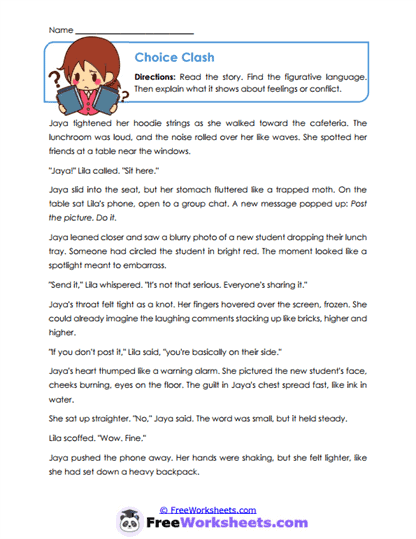
Choice Clash
- What Kids Do:
Students read a narrative about a difficult decision and identify examples of figurative language. They explain how these details reveal the character’s emotions and connect to the central conflict in the story. - Target Skill:
Students build the ability to analyze how figurative language reveals character emotions and conflict. This supports deeper understanding of narrative meaning.
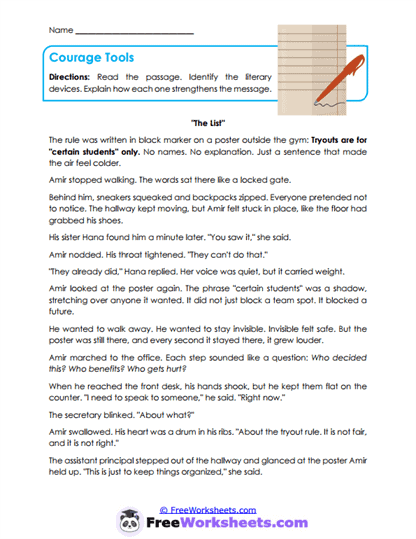
Courage Tools
- What Kids Do:
Students read a passage about a challenging moment and identify figurative language that reflects the character’s struggle. They connect these examples to the overall theme of courage. - Target Skill:
Students strengthen their ability to connect literary devices to theme. This helps them understand how language supports deeper meaning.
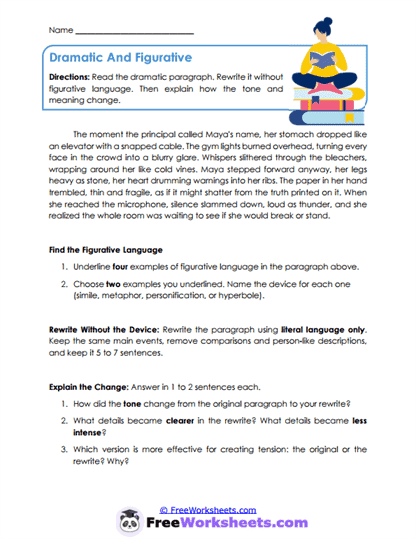
Dramatic And Figurative
- What Kids Do:
Students read a paragraph rich in figurative language, then rewrite it using literal language. They compare both versions and reflect on how tone and meaning change. - Target Skill:
Students develop understanding of how figurative language shapes tone and reader experience. This supports analysis of author’s craft.
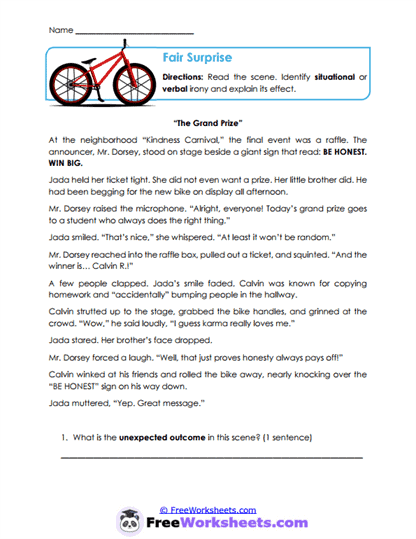
Fair Surprise
- What Kids Do:
Students read a story with an unexpected ending and identify the situational irony. They explain how the outcome differs from expectations and what it reveals about the story. - Target Skill:
Students build skill in identifying and explaining irony. This supports deeper comprehension of narrative techniques.
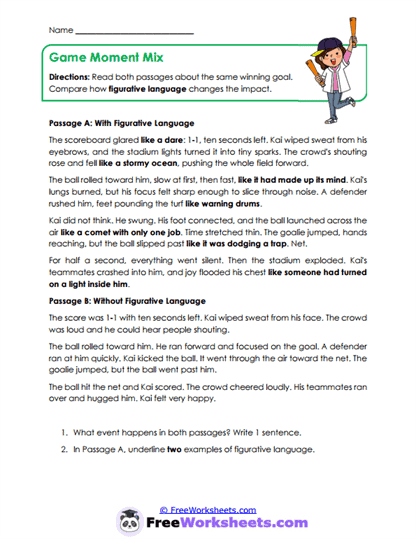
Game Moment Mix
- What Kids Do:
Students compare two versions of the same scene-one with figurative language and one without. They analyze how the differences affect tone and excitement. - Target Skill:
Students strengthen their ability to compare writing styles and analyze how language choices impact meaning.
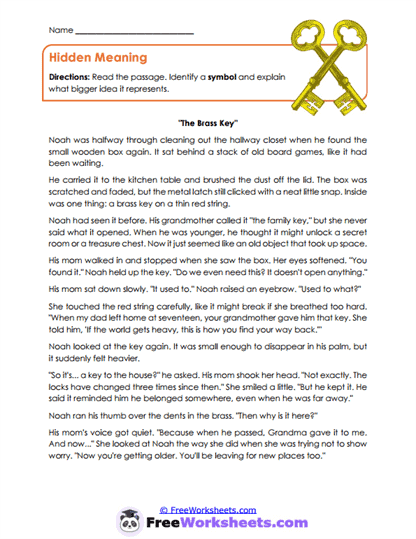
Hidden Meaning
- What Kids Do:
Students read a story and identify a symbolic object. They explain what it represents and how it connects to the overall message. - Target Skill:
Students build skill in analyzing symbolism and connecting it to theme. This supports deeper interpretation of texts.
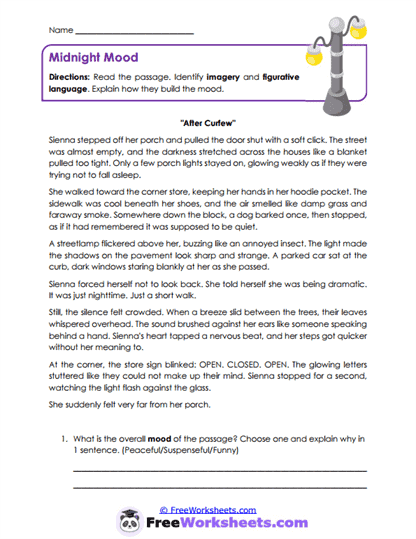
Midnight Mood
- What Kids Do:
Students read a descriptive nighttime passage and identify imagery and figurative language. They explain how these details create a specific mood. - Target Skill:
Students develop the ability to analyze how imagery and language create mood. This supports understanding of tone and atmosphere.
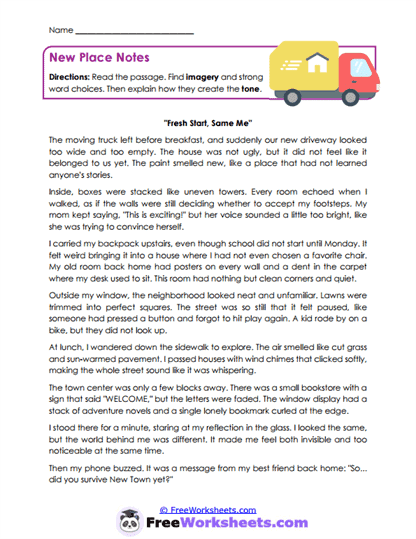
New Place Notes
- What Kids Do:
Students read a passage about moving to a new place and identify strong word choices and imagery. They explain how these details shape the tone. - Target Skill:
Students strengthen their ability to analyze word choice and its impact on tone and meaning.
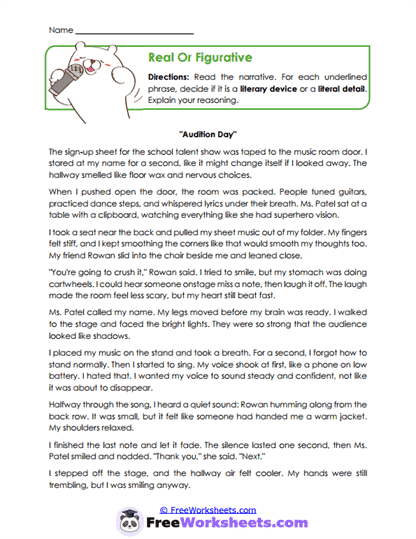
Real Or Figurative
- What Kids Do:
Students read a passage with underlined phrases and decide whether each is literal or figurative. They explain their reasoning using context. - Target Skill:
Students build skill in distinguishing between literal and figurative language. This supports accurate interpretation of text.
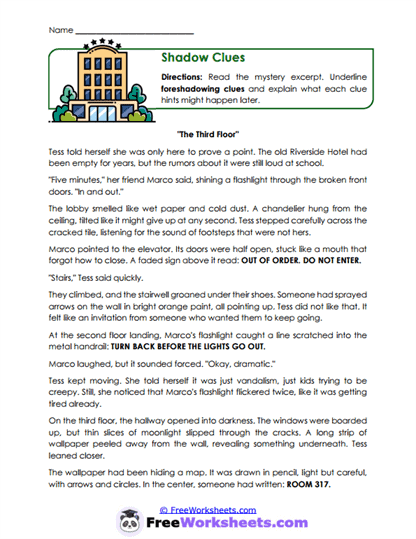
Shadow Clues
- What Kids Do:
Students read a mystery passage and identify clues that hint at future events. They explain how these details build suspense. - Target Skill:
Students develop the ability to analyze foreshadowing and predict outcomes. This supports understanding of plot development.
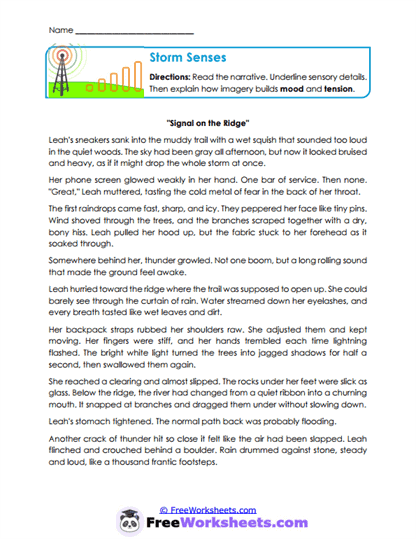
Storm Senses
- What Kids Do:
Students read a passage describing a storm and identify sensory details. They explain how these details create mood and tension. - Target Skill:
Students strengthen their ability to analyze imagery and connect it to emotional impact.
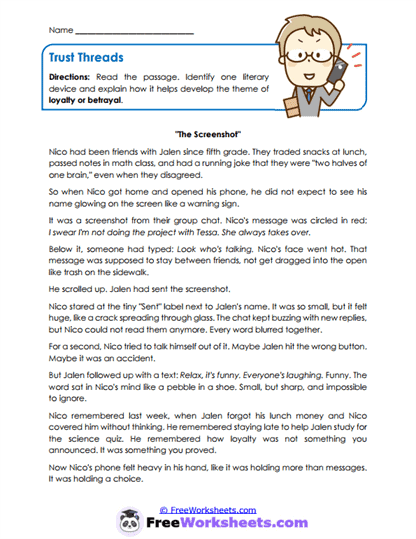
Trust Threads
- What Kids Do:
Students read a story about friendship and identify a literary device. They explain how it helps develop the theme of trust or betrayal. - Target Skill:
Students build skill in connecting literary devices to theme and meaning. This supports deeper literary analysis.