
Units of Measurement Worksheets
These worksheets help students strengthen conversion fluency, proportional reasoning, and practical measurement problem-solving skills. These free, ready-to-print worksheets come in PDF format for immediate classroom use during review, intervention, homework, or independent practice. Students develop curriculum aligned skills including metric conversions, unit rates, geometry measurements, and estimation strategies.
About This Collection of Worksheets
This collection of Units of Measurement worksheets gives students meaningful practice with metric conversions, proportional reasoning, geometry applications, and real-world measurement situations. Learners work with length, mass, volume, time, rates, capacity, and scaling problems while strengthening practical mathematical reasoning. The worksheets combine conversion fluency with contextual problem solving so students can apply measurement skills in realistic situations involving travel, shopping, sports, cooking, construction, and science.
Teachers can use these printable worksheets during measurement units, geometry lessons, intervention groups, math stations, review practice, or assessment preparation. Activities involving elapsed time, rates, scaling, area, perimeter, and estimation encourage students to connect measurement concepts to everyday life. Real-world scenarios help learners build confidence organizing multi-step calculations while understanding why accurate units and conversions matter in practical situations.
These worksheets align closely with Common Core standards involving ratios, proportional relationships, geometry, and measurement reasoning while supporting important middle school quantitative reasoning skills. Students practice converting units accurately, comparing measurements, solving multi-step problems, calculating unit rates, and selecting appropriate measurement units for real situations. The printable format makes this collection useful for classrooms, tutoring sessions, homeschool instruction, and additional math reinforcement at home.
Paul’s Teacher Tip
One of the best ways to improve measurement confidence is to encourage students to label units during every step of their calculations. Many mistakes happen because learners focus only on the numbers and forget to track whether they are working with meters, liters, grams, or time units. Real-world examples involving recipes, travel distances, sports statistics, and shopping costs make conversions much more meaningful for students. Multi-step conversion problems also become easier when students organize their work carefully and write conversion relationships before solving. Estimation activities are especially valuable because they help learners decide whether answers are reasonable instead of relying only on calculators. Frequent practice comparing measurements in different units strengthens both number sense and practical problem-solving skills.
Worksheet Collection Skill Spotlights
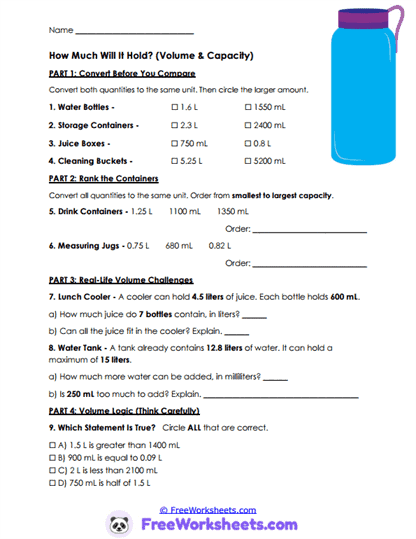
Capacity Reasoning
- What Kids Do:
Students compare, convert, and reason about volume and capacity measurements involving liters and milliliters. Learners rank containers, determine whether quantities fit within capacity limits, and solve real-world problems connected to tanks, coolers, and storage situations. - Target Skill:
This worksheet strengthens measurement conversion fluency, quantitative reasoning, and practical volume understanding aligned to middle school measurement standards. Students improve their ability to compare capacities accurately while reinforcing metric relationships and real-world problem-solving confidence.
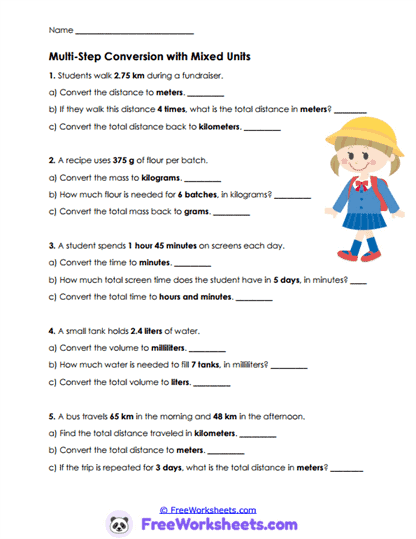
Conversion Chains
- What Kids Do:
Students complete multi-step conversion problems involving distance, mass, volume, and time while carefully tracking changing units throughout several calculations. Learners organize conversion steps, solve contextual problems, and convert answers between multiple measurement forms. - Target Skill:
This activity reinforces multi-step problem solving, metric conversion accuracy, and proportional reasoning aligned to measurement standards. Students strengthen organization skills, unit analysis understanding, and procedural fluency while solving realistic conversion-based mathematical situations.
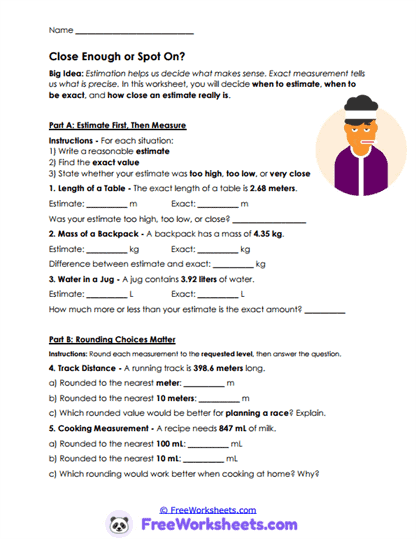
Estimate Wisely
- What Kids Do:
Students compare estimated and exact measurements using rounding and approximation strategies in practical situations involving recipes, backpacks, tracks, and classroom objects. Learners analyze which estimates are most useful and explain why certain approximations are reasonable. - Target Skill:
This worksheet strengthens number sense, estimation reasoning, and measurement judgment aligned to quantitative reasoning standards. Students improve rounding accuracy, practical decision-making skills, and understanding of when estimation is more appropriate than exact calculations.
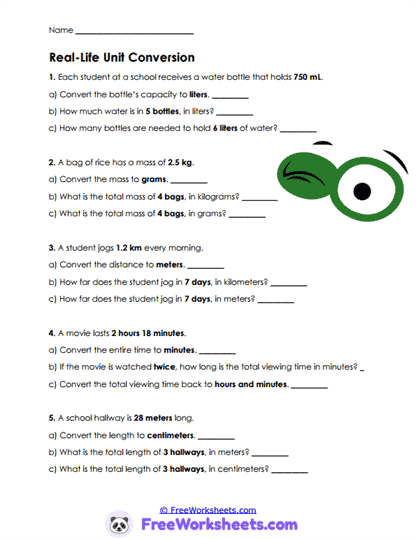
Everyday Conversions
- What Kids Do:
Students solve practical conversion problems involving liters, milliliters, kilograms, grams, kilometers, meters, and elapsed time. Learners complete multi-step scenarios connected to jogging, movies, shopping, and everyday activities while organizing units carefully throughout calculations. - Target Skill:
This worksheet develops metric conversion fluency, proportional reasoning, and real-world measurement application aligned to middle school standards. Students strengthen procedural accuracy and practical reasoning while building confidence solving contextual unit-conversion problems independently.
Measurement Basics
- What Kids Do:
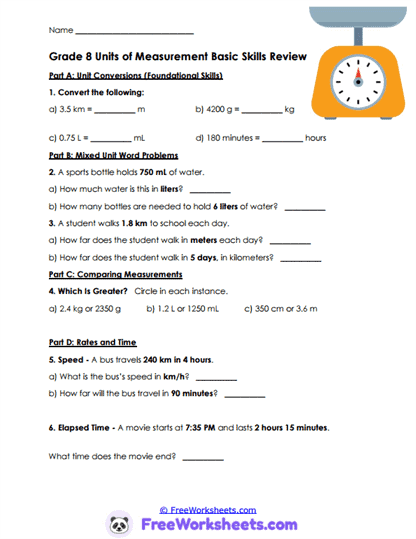
Students practice metric conversions, elapsed time, rates, and measurement comparisons involving distance, volume, mass, and speed. Learners solve real-world problems connected to travel, sports, and daily routines while strengthening practical measurement and conversion reasoning. - Target Skill:
This activity strengthens foundational measurement fluency, unit comparison skills, and proportional reasoning aligned to Common Core measurement standards. Students improve accuracy with metric relationships, elapsed time calculations, and practical unit problem solving.
Measurement Mastery
- What Kids Do:
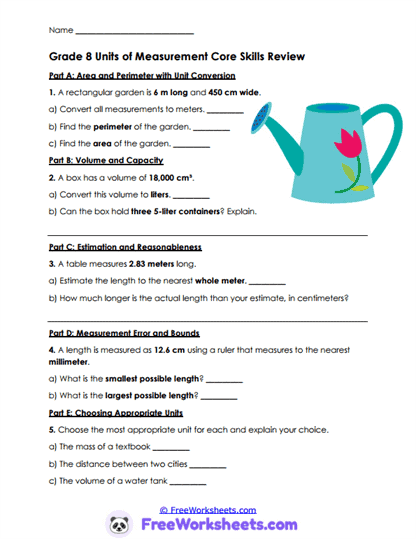
Students apply unit conversions to geometry problems involving area, perimeter, volume, estimation, and appropriate unit selection. Learners solve practical measurement tasks connected to gardens, storage containers, and classroom objects while reasoning about realistic measurements. - Target Skill:
This worksheet reinforces geometry measurement reasoning, conversion fluency, and practical estimation aligned to measurement and geometry standards. Students strengthen understanding of square units, cubic units, and contextual problem solving involving real-world measurements.
Measurement Missions
- What Kids Do:
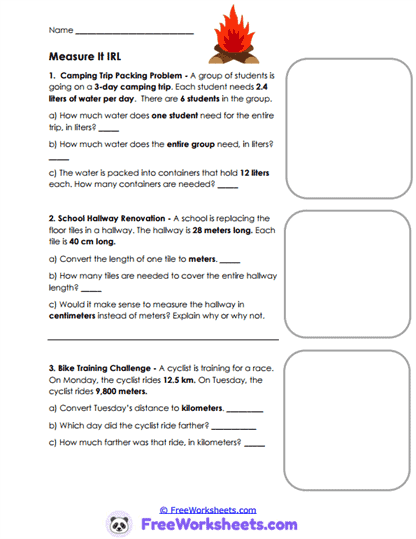
Students solve multi-step real-world measurement challenges involving travel, renovations, athletic training, and group planning situations. Learners complete conversions, compare quantities, and explain why certain measurement choices make sense in practical scenarios. - Target Skill:
This worksheet strengthens mathematical modeling, conversion reasoning, and practical problem-solving skills aligned to middle school measurement standards. Students improve organization, unit analysis, and contextual reasoning while solving realistic planning and measurement tasks.
Measurement Review
- What Kids Do:
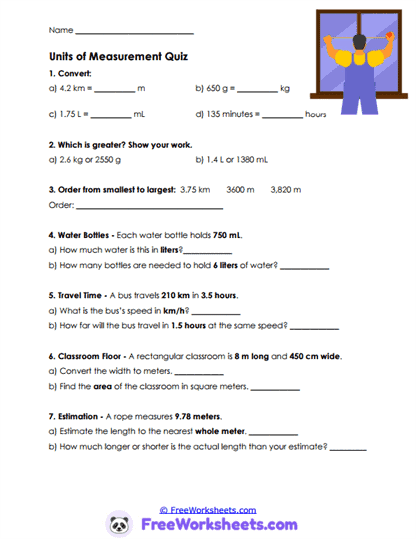
Students complete a mixed review involving conversions, geometry, estimation, elapsed time, rates, and measurement comparisons. Learners apply multiple measurement concepts together while solving contextual problems and organizing calculations involving several different unit types. - Target Skill:
This activity reinforces cumulative measurement fluency and quantitative reasoning aligned to Common Core standards involving geometry, proportional relationships, and unit conversions. Students strengthen long-term retention of practical measurement skills through broad mixed review practice.
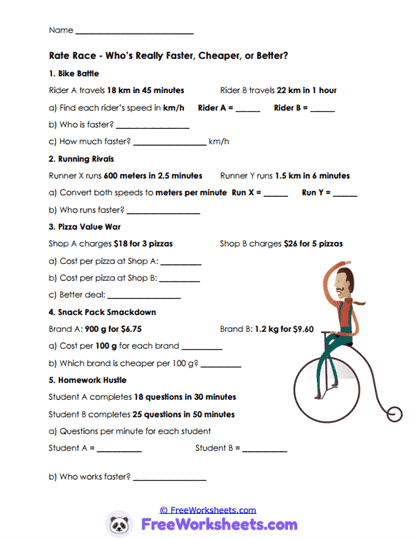
Rate Challenges
- What Kids Do:
Students calculate and compare unit rates involving speed, cost, productivity, and travel distances using proportional reasoning. Learners determine which options are faster, cheaper, or more efficient while solving practical problems connected to sports, shopping, and work output. - Target Skill:
This worksheet develops proportional reasoning, unit-rate fluency, and real-world comparison skills aligned to middle school algebra readiness standards. Students strengthen their ability to analyze rates fairly while improving quantitative reasoning and decision-making confidence.
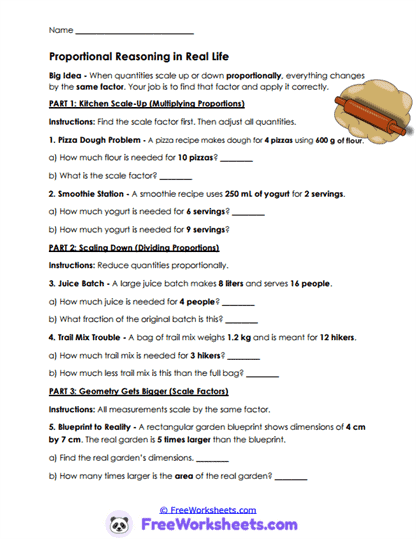
Scaling Situations
- What Kids Do:
Students solve proportional scaling problems involving recipes, serving sizes, geometric measurements, and blueprint dimensions. Learners apply scale factors to enlarge or reduce quantities while reasoning about how measurements change proportionally in practical situations. - Target Skill:
This worksheet strengthens scaling fluency, proportional reasoning, and geometric understanding aligned to standards involving ratios and proportions. Students improve their ability to apply multiplication and division strategically while modeling real-world scaling relationships accurately.
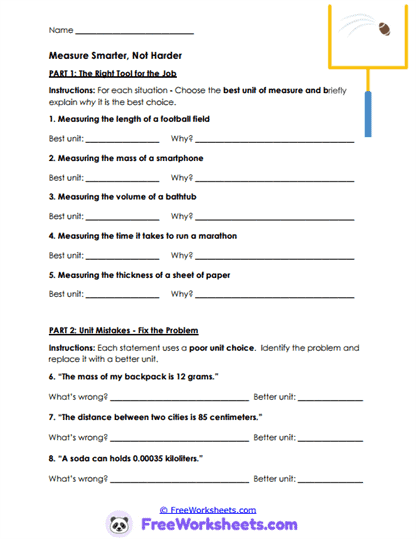
Smart Measuring
- What Kids Do:
Students select appropriate measurement units for real-world situations involving length, mass, volume, and time. Learners identify unrealistic measurement statements, explain correct unit choices, and compare practical examples connected to everyday objects and activities. - Target Skill:
This activity reinforces measurement reasoning, unit-selection fluency, and practical quantitative thinking aligned to middle school standards. Students strengthen their ability to evaluate realistic measurements while improving mathematical communication and contextual reasoning skills.
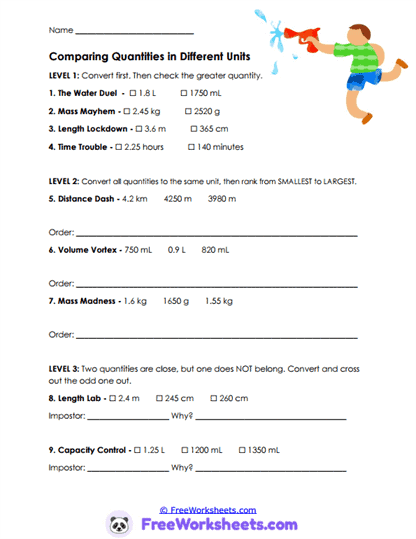
Unit Comparisons
- What Kids Do:
Students compare and order measurements written in different units by converting them into matching forms first. Learners rank values, identify “impostor” measurements, and solve comparison tasks involving liters, meters, grams, hours, and minutes. - Target Skill:
This worksheet strengthens conversion accuracy, comparison reasoning, and metric fluency aligned to measurement and proportional reasoning standards. Students improve their ability to compare quantities logically while reinforcing consistent unit analysis and numerical organization skills.